A Father's Love: Kim Atienza on Fatherhood, Grief, and Purpose
Less than a year after the passing of his daughter, Emman, Kim chooses to find the good amid their family's loss. He talks about being a 'safe space' in this exclusive Father's Day interview.

Published on Jun 16, 2026
Trigger warning: This article discusses suicide, mental illness, and death, which some readers may find distressing.
It’s our Father’s Day shoot for Smart Parenting, and there’s a noticeable weight behind Kim Atienza’s smile. It still has the same warmth, but there’s a before-and-after that’s hard to ignore.
For decades, many have come to know “Kuya Kim” as the great explainer—a TV host and news anchor who’s built his career on making complicated things understandable. Whether it’s nature, weather, or current events, he makes learning feel more like a conversation than a lesson.

On camera and on social media, Kuya Kim’s public image has always been anchored on curiosity and accessibility. He’s beloved not because he had all the answers, but because he made information approachable.
Today, that same generosity has taken on a deeper purpose.
In the wake of his youngest daughter Emman’s passing, he has become a powerful voice in conversations about grief, mental health, and parenting. Already an effective educator, Kim now uses his knowledge, patience, and empathy to connect with parents and children alike. He speaks candidly about grief, not as an authority or expert, but as a father learning to live with loss.
Kim, husband to Felicia and father to Eliana, Jose, and Emman, spoke to Smart Parenting on fatherhood, losing Emman, and finding purpose amid grief.
Kim Atienza, in loving memory of Emman for Smart Parenting June 2026 Cover
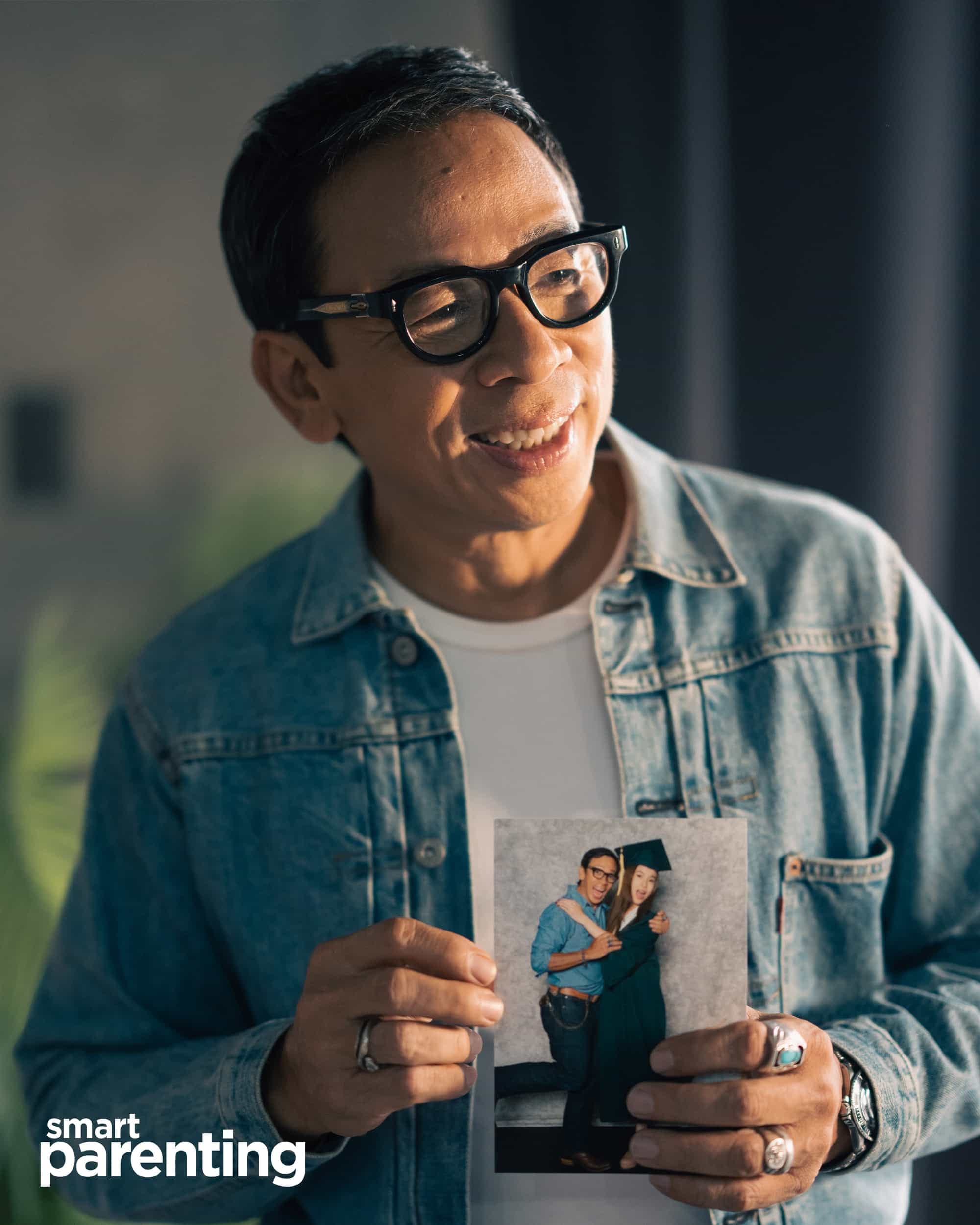
Since sharing Emman’s story, you’ve become someone people turn to with their stories of mental illness and loss. How do you have those conversations without being consumed by them?
Kim Atienza (KA): Since Emman passed away, I actually took a course. Because there are now so many kids who see me as a safe space, as someone they can talk to. And I know that being a celebrity, it can be a matter of life and death whenever I speak with these kids. So I took a course to be able to handle it well.
[I learned] the most important thing I can do is listen without judging, but the goal is to refer them to a professional. I don’t know the medicine and science behind healing mental illnesses, so I listen and eventually refer to a professional.
Is there a particular experience that showed you how much impact a simple response can have?
KA: There’s this one letter sender who wrote so well, so I engaged. I said, “You know, I have time tomorrow. You might want to meet up with me in a coffee shop.”
Then I saw her, [ang] ganda niya, ang ayos. She looked so happy. ’Di mo alam, eh. Then, pumunta sa akin, “Kuya Kim, I wanna let you know na I have Bipolar 1 and I’ve [made] several attempts in my life already.” One time, 10 years ago, she was going to jump off the roof of a building. “I’ve been on meds all my life, but I stopped taking [them] two years ago. I’m down again now.” She told me, “I find no purpose, [so] I planned everything. I put it down on paper. As a final clause, I said, ‘I will send a message to Kuya Kim. If he replies, I will postpone my plan.’”
Imagine kung hindi ko nag-reply? So I listened to her. I was able to refer her to a psychologist. According to her friend, she’s doing good.
After losing Emman and the conversations it opened up, what change would you like to see happen that would make you feel like the conversation actually went somewhere?
KA: I want the stigma to lessen. I want the kids to be able to express themselves, not only through social media, but to their parents.
I want the parents to understand that our kids are not like us. There are different factors that the kids are born into that are not like ours. They are not us. They do not think like us. Therefore, whatever worked for us during our time as Boomers and Gen Xers will not work with our kids who are Gen Z and Gen Alpha now. There are different rules and there are different techniques to be able to guide them and protect them.

What do you say when older generations refer to younger generations as “weak”?
KA: Our kids are not weak. They are different. There’s a big difference between weak and different.
Our kids were born into social media, into the digital age. Therefore, it’s part of them. It’s very simple to say, “Cut off social media, and they’ll be okay.” No. If you cut off social media, they’ll be even more ill because you’re cutting off their social life from all their friends. You’re cutting off their ability to learn by cutting off their digital life. So there's a way, and the way is not how we were brought up.
Has your faith influenced how you understand mental health?
KA: As a Born Again Christian, I learned from my experience that mental health has nothing to do with faith. A lot of Christians think it’s a lack of faith—that when you lack faith, you will be suicidal. It has absolutely nothing to do with that.
A lot of Christians say that kids are suicidal because they are far from God, that they don’t read the Bible, don’t pray, don’t have a relationship with Jesus Christ…
So many things still need to be understood. [Mental illness] is a disease. People get cancer. Pastors get cancer. That has nothing to do with their faith. They could also have mental health issues.
What can a parent realistically do after suffering child loss?
KA: A parent can only do so much. Man plans and plans, but God always guides our steps. What happens will happen.
We do our best. Our kids are smart. Our kids are their own persons at a certain point. We can only pray and guide them however we can.
As for what happened to my family, there’s always [a] good purpose [for] whatever bad thing happened. That’s what I’m looking at now, and that’s what I’m looking forward to as well.

Is there something you learned about Emman only after she was gone that surprised you as a father?
KA: Oh, yeah. Emman has a fan club. I only became aware of it during the wake. I saw kids that I never knew were touched by Emman, and I found out that despite her illness, despite her pain, she was giving advice to kids. She was direct messaging kids and helping them, despite the fact that she was ill herself.
My Emman was a passionate advocate for mental health. I did not know how deep it was and how committed she was until she passed. That’s the purpose that I am pursuing now—to be as passionate, even more, than my Emman.
During the shoot, you brought some mementos of Emman. Tell us about them.
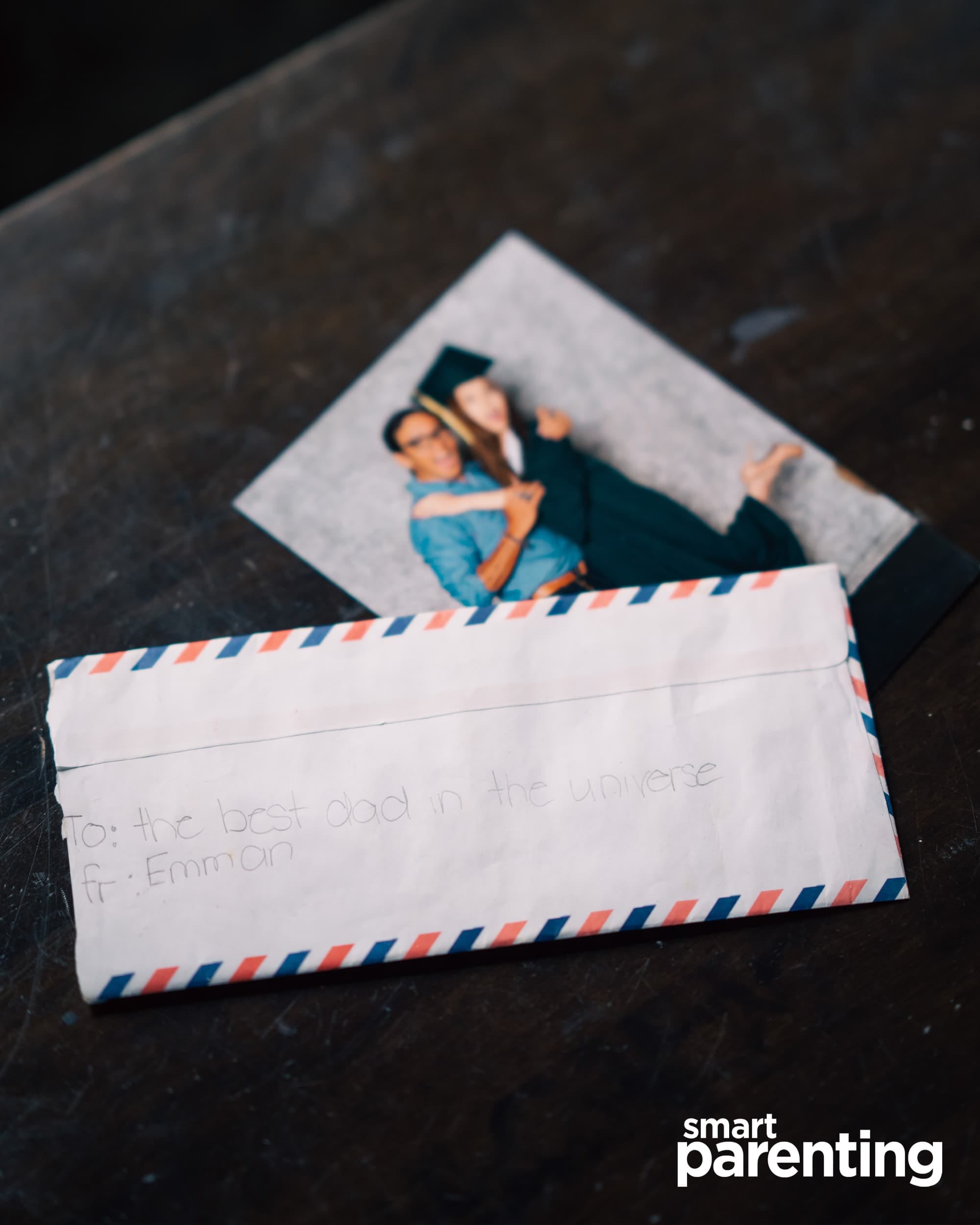
KA: This picture was taken after she finished a very successful treatment in LA. And then a month after that was her graduation. This was the time when we felt nice na. I was very happy, really happy.
Actually, she didn’t want this photo posted. I told her, “Emman, I’m going to post this.” And she said, “No, don’t post it.” So I didn’t. This picture has not been posted for two years. But now—Emman, wala ka nang choice.
You also brought a letter she wrote you.
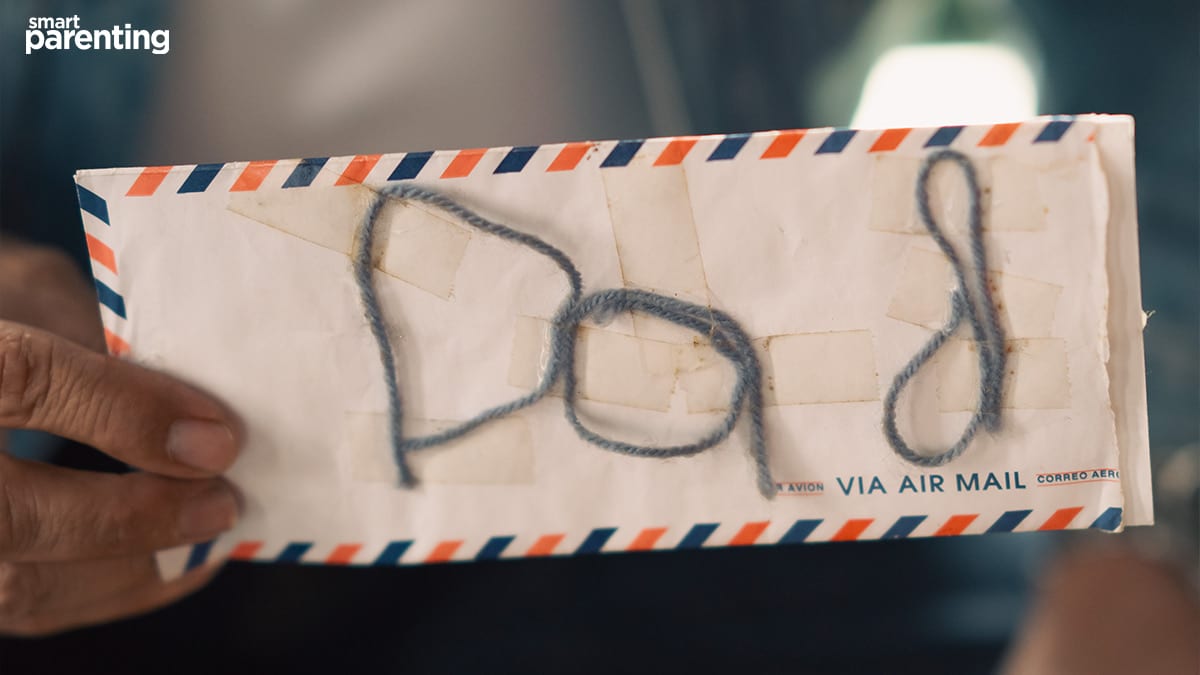
KA: She gave this to me for Father’s Day when she was 9.
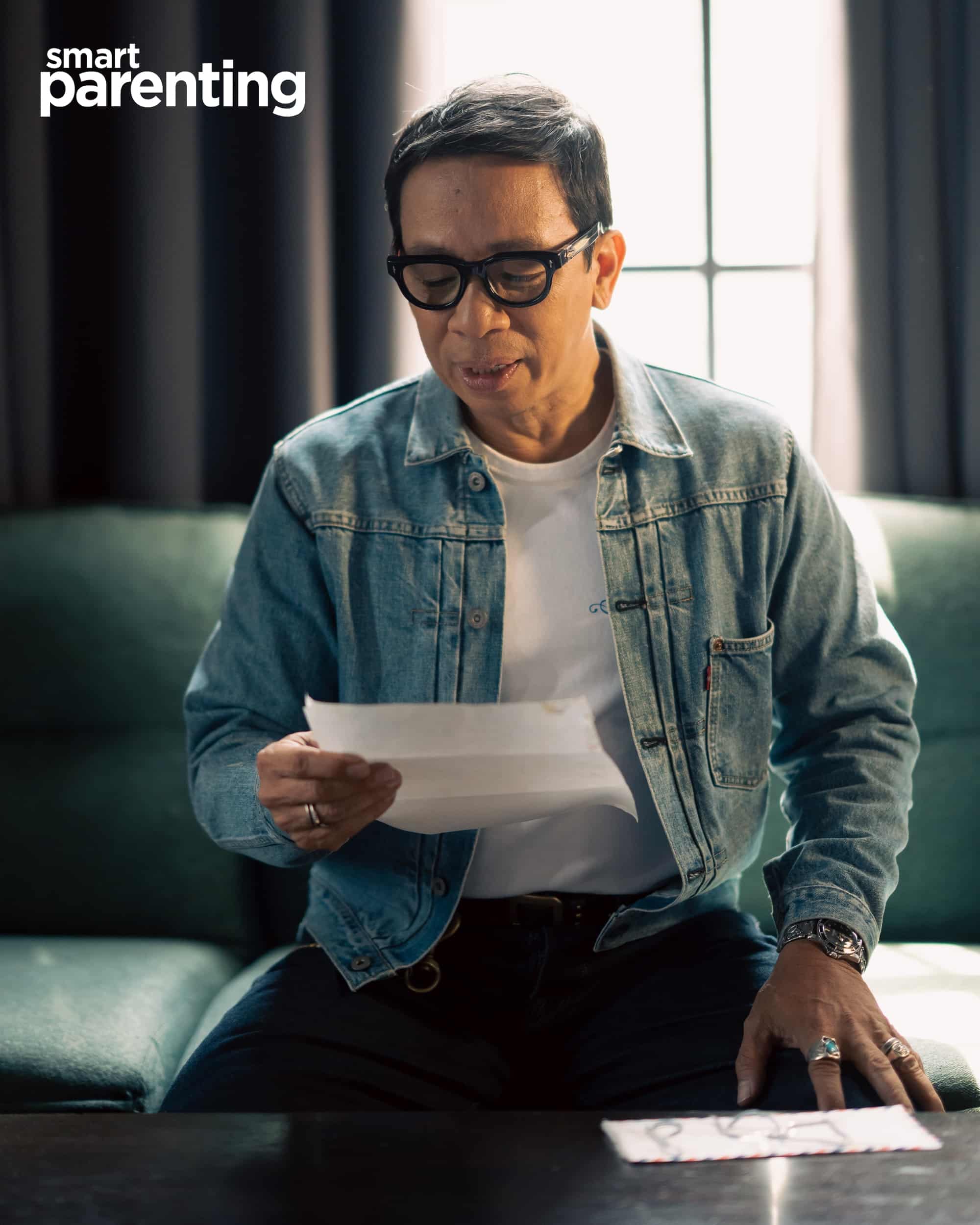
“Dear Papa, I know this is not much, but I try my best to make you happy. And that's what we call happiness. I know I really didn’t get you a real car or a painting by Picasso, but we tried and that shows that we are a loving family. And I know there’s a billion different dads, but know Dad, congratulations, you’re the best.”
Emman’s really gifted. She was always very good with words.
How do you live with grief today?
KA: [Emman’s room] is still the way it is. She has so much stuff. Even her whiteboard [still] has her notes—her requirements for social media. Nakapaskil her deadlines. Her room is as it is. It actually still has her smell.
You’ve mentioned in other interviews that you still go into her room every morning.
As much as I can, yes. [I go in] every morning because I put all my shoes there, so I have no choice but to go inside. But the early stages of grief, the first few weeks, were the toughest because I was avoiding the room. But I forced myself to be in that room and do my quiet time. My Bible is beside her bed. I would read my Bible, and I’d weep.
I was given advice by a father who lost a son the same way as Emman. He told me to tear off the bandage. You have two choices: You can keep the bandage and hurt for a long time by protecting the wound, or you can tear off the bandage and expose the wound and heal. So I will tear off the bandage every day and weep if I have to.
Grief is not linear. Sometimes it’s like Day 1; but, sometimes, you’re totally joyful. The toughest for me and the family was last Christmas. It was the first Christmas without Emman, eh. We went to the same place we were at with Emman last time. Every place that we enter, they remember the last time that we were together. That was tough. But I had to go through it, and the kids had to as well.
Has anything changed in your fatherhood?
KA: I’ve become more accepting of things that come. I realized there are things I can and can’t control because our kids are their own persons, I leave those things to God. I can advise them, but I can never, ever, ever control them. If I try to control them at their age now, that’s trouble.
What’s the best advice one of your kids has given you?
KA: “Papa, chill.” Parents are not chill, eh. Parents tend to be helicopter parents. But, you know, just give them respect and chill.
Since it’s Father's Day, do you have a message of encouragement to fathers?
KA: Sa lahat ng mga tatay, have fun with your kids. We work so hard to provide for our family, and that’s fine, but whatever free time we have, [let’s] enjoy our kids, especially when they’re young. Because when they’re older, even if you wanna enjoy them, they do not enjoy us anymore. They’ll enjoy their friends. So while we have that window to enjoy our kids, have fun, play with them, spend time with them, and read a book to them…Because, at a certain point, we can't [anymore]. Even if you want to, too late.
There may be a before-and-after to Kim Atienza now, but he remains the same person on- and off-camera who has the same genuine interest in people. Only now, he’s been directed toward a different mission. The grief is still there, but so is his purpose of listening, advocating, and creating space for difficult conversations.
Editor’s Note: Quotes have been edited for clarity and brevity. Interview by Ronna Capili Bonifacio
Produced by The Smart Parenting Team
Editor-in-Chief: Ronna Capili Bonifacio
Co-Producer: Em Cruz
Art Director: Yela Lao
Multimedia Producer: Rheyabel Adel
Social Media: Justine Cruz
Videographer and Video Editor: Rolando Pingco Jr.
Videographer: Greeko Junio
Associate Publisher: Bettina Santos
Photographs by Jayjay Lucas
Makeup by Mapet Palaruan
Hairstyling by Baba Parma
Elaine is the epitome of an almost-geriatric millennial: a regular 9-5 (8-4 on DST), a semi-adaptive accent, and a shopping problem. As a former magazine editor, she developed a taste for the finer things in life, even if she can’t always afford them. Her current obsessions include healing her inner child, paying off bills, and joining rewards programs.
Read more stories about