Secondhand Shoes for Kids: Why You May Want to Reconsider
Shoes are often handed down between siblings because “sayang, hindi naman masyadong nagamit.” But experts explain why that might not be the best idea.
Published on Mar 2, 2026
In this economy, it seems wise to pass down secondhand shoes. Kids grow fast, and some of their shoes and clothes are barely used. It feels like a waste to buy brand-new shoes every year for every child. “Hindi naman masyadong nagamit,” we think.
It’s also easy to find secondhand children’s shoes online. One search on Facebook Marketplace gives you many options in different sizes, colors, and styles. You’ll find parents selling their child’s preloved shoes in online parenting communities.
Most of the time, you don’t even really need to go online to find secondhand kids' shoes. Parents pass shoes down from older siblings to younger siblings. Relatives and friends offer their child’s “barely used” shoes.
As appealing as the savings may be, specialists warn that secondhand shoes could negatively affect children’s foot development.
According to Leanna Spektor, Co-Founder & Style Expert at Brand House Direct, a leading Australian online retailer specializing in footwear, “Every child has their own unique gait and foot structure.” She further explains, “When you pass shoes from one child to another, you're asking the second child to walk in someone else's footprint.”
A baby’s foot is still mostly cartilage at six months of age. Even as the child grows and reaches 10 years old, their feet are still not fully formed. Children’s feet are continuously developing, which makes them vulnerable to damage from poorly fitted footwear.
AC Podiatry reminds parents about children’s foot development: “Due to rapid growth in length and width while young, frequent changes in the size of shoes and socks may be necessary. Do a size check at least every 1 to 3 months up to the age of three, every 4 months up to the age of five, and then every 6 months until your child stops growing.”
Once a shoe has been worn, it molds to a child’s unique foot shape and gait, making it unsuitable for another child.
Spektor also cautions that shoes are “the only piece of clothing that acts as a medical device for growing children.”
Buying Rubber Shoes For Your Child? Moms Share Tips Before Buying Online Or In-Store
Read hereRisks of Using Secondhand Shoes for Kids
Here are the three main risks parents need to understand before using secondhand shoes for kids:
The Biomechanical Blueprint
Spektor explains, “The shoe creates a custom footbed for that child. A second child forced to walk in those shoes takes a path that wasn't designed for them. This can lead to inward-rolling ankles, flat foot development, or poor posture that follows them into adulthood.”
According to Patel Podiatry, shoes are designed to form-fit a child’s feet, helping prevent foot and joint pain while providing personalized support. If a child wears secondhand shoes, they miss out on the customized support that new shoes can provide. Everyone’s feet are different. Wearing shoes that have already been shaped to another child’s foot may bring more discomfort than comfort.
Every child walks differently. Some roll their ankles inward, while others place more pressure on their heels. Once the first child wears a pair of shoes, the midsole compresses to support their specific pressure points and gait pattern.
Shoes that are already molded to another child’s foot structure may contribute to misalignment and may have lasting effects on a child’s foot development.
The Sizing Illusion
We often hear and say about secondhand shoes, “Hindi pa naman masyadong nagamit.” On the outside, the shoes look perfectly fine. The outer soles are not overly worn. You look at them, and they can pass as “very good condition” in online marketplaces.
But Spektor warns, “Parents see a shoe that looks barely worn and think it's fine. But the internal support structures have already collapsed for the first child's foot shape. The second child is walking in a shoe with zero actual support, which can be worse than wearing no shoes at all.”
A shoe might look perfectly fine on the outside, but the inside can tell a different story. The arch support, heel counter, and cushioning all break down with wear, even if the exterior shows minimal signs of use.
Patel Podiatry adds, “Midsoles and insoles get compressed, soles lose their traction, and the shoes just can’t provide the level of cushioning and support that your little one needs.”
Andi Dresses Lilo, Koa In Secondhand Clothes: Here's Why You Can Do The Same For Your Kids
Read hereThe Microbial Reservoir
The most obvious reason not to let your child wear secondhand shoes is simple: bacteria. Secondhand shoes create the perfect environment for microbial growth. They are dark, warm, and often moist. This makes them a breeding ground for fungi, bacteria, and even viruses.
A study by Kidoshoe shows that kids’ feet sweat about two to three times more than adults’ feet. Because of this, secondhand shoes that have absorbed sweat are more likely to carry foot viruses and infections.
When a child passes down shoes, possible infections may be passed along as well.
Spektor explains, “Athlete's foot and verrucas can remain dormant in shoe materials for months. The moment a new child's warm foot enters that shoe, those fungi reactivate. Around 30% of children are affected by fungal foot infections, and shared footwear is a major transmission route.”
Even if the original owner of the shoes had no obvious foot problems, children can react differently to bacterial exposure. Fungus can grow in shoes just like it does in public pool areas and locker rooms. The safest way to protect your child’s feet from infections is to start with a new pair.
Exceptions
Spektor outlines a few exceptions where handing down shoes may be done safely. She says, “If you must pass down footwear, stick to rigid items worn only a handful of times, like patent leather party shoes or wellingtons that haven't molded to a specific gait. But everyday trainers, school shoes, or anything worn regularly should always be bought new for each child.”
Patel Podiatry discusses another possible exception: baby shoes. “Most very young children don’t run around as much as toddlers do, so if a pair of baby shoes is in good condition and shows no signs of forming to another child’s feet, they’re probably okay as hand-me-downs.”
When passing down or using toddler shoes, it’s best to exercise good judgment. For children learning to walk, it is often recommended that they go barefoot indoors and wear shoes only for outdoor protection. This way, they may outgrow their shoes with very little wear and tear.
Does your child have stinky feet? Read about the causes and learn what you can do to avoid it.
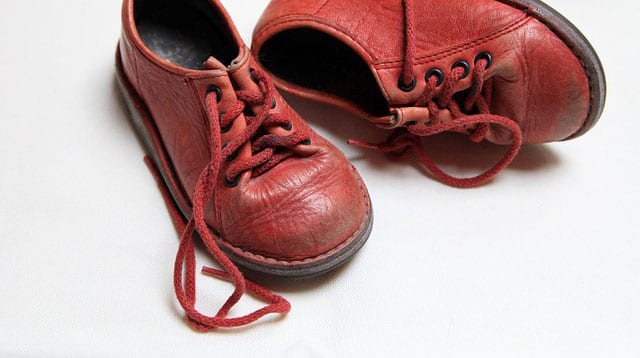
All You Need to Know on How to Buy the Right Shoes for Your Toddler
Read hereHomeschooling mom to a talkative little girl. Pyschometrician by profession. Loves K-Drama, coffee and pasta. In-house chef.
Read more stories about