My Kids Don't Have Smartphones, This Uncomfortable Feeling is Why
A father of two tweens explains how they push for a phone-free childhood

Published on Feb 11, 2026
My kids, fourteen and eleven, don’t have smartphones. They never did. I suppose that is why, as I would observe them go about their day-to-day lives, they never know any real discomfort of not having one.
There are occasions, few as they are, when my daughter talks about her classmates playing games on their phones. She peers over their shoulders and watches them match jellybeans or build virtual castles. She learned that Candy Crush goes up to 21,000 levels. But she, like her brother, has made up her mind the way children do: it's not for them. Screens are experience blockers, I tell them. It’s not for them, they say, but what is? They could be doing something else instead. But what?
Enter unstructured time. I have watched them encounter unstructured time, hours-long or afternoons-long stretches that happen especially during weekends and school breaks. They recognize these stretches of stasis; they can even feel it. We all know it as boredom.
We filled some of that time with books and board games, which the children took to fully. Both are constantly reading. We have also grown a somewhat irresponsible collection of board games. Cousins and classmates come over to play.
But on the occasions when you can sense that they become restless, on the times where one or two would mutter “I am bored” over and over again, we, like most parents, feel a need to “rescue” them from this malaise of boredom. Perhaps this is fed somewhat by a latent guilt of not filling that space with an activity, or even a screen.
I remember telling myself I would avoid saying “well, when I was your age,” but here it is: I unapologetically recall never being bored as a child. My parents both worked, and on summer days when hours are not structured, when you can wake up after 7:00 AM and decide to go back to sleep if you want to, I do not remember a time when I felt like there was absolutely nothing to fill my day with, or my mind with.
Let me bring us back to the now. How much have things changed since my own summers? Recent studies in the United States show children now get an average of only four to seven minutes of unstructured outdoor time per day, compared to seven to eight hours of screen time. My children, at least their peers, are spending less time “being bored” and more time glued to their Minecrafting.
Another study: 70% of mothers surveyed reported playing outdoors daily as children; only 31% of their children do. The marked difference, I conclude, once again is screens.

In theory, drastically reduced screen time should, at least in the small in vivo test space that is our family, increase these unstructured hours. I have read boredom, thus resulting from unstructured hours, is not the enemy. It is rather the doorway to many other things. I do remember playing with neighbors, cousins, siblings; building pillow fortresses, pretend puppet shows, hunting frogs, walking around the village.
Benefits of boredom
Thus, theory into practice, we allow the kids to get bored. Do what you will. It is unstructured time. But no screens. Before I write further, I want you to know that there is a good ending. The boredom does not cause them to lose their minds. In fact, they find them. To that point, I need to talk about the Default Mode Network (DMN) and what happens to the brain when it gets bored.
What is the DMN? Scientists identify the DMN as a brain network that activates when we're not focused on external tasks—during daydreaming, mind-wandering, introspection. That is, when we’re bored.
There in the depths of the DMN, lives a deep creative well, a kind of Totoro that if you let your child chase into the woods, through a tunnel and down into a giant camphor tree you will wake it and it will follow you everywhere you go.
The authors of The Journey of the Default Mode Network: Development, Function, and Impact on Mental Health wrote:
'When a person is at rest or involved in tasks that do not require external attention, the DMN becomes active, allowing the mind to wander and explore different mental scenarios... DMN activity during these periods can promote the association of seemingly disconnected concepts, leading to insights and innovative solutions.'
At this point, the family was fully aware of the dangers and negative effects of screen time and social media. But the DMN and boredom was new to me, and it unsettled something I had not questioned: the assumption that empty hours were my failure, that a “good parent” fills the time. Now, I was learning that the opposite might not be as bad. It turns out there is great value in the kids learning to fill their own time.
I learned from the research that allowing the kids to let Totoro out of the cave capacitates creativity, problem-solving, and self-regulation. When we protect children from boredom and “empty hours,” we are, studies show, and experts say, not depriving them of something as much as we are allowing them access to their minds. The literature also shows that children who never experience boredom become adults who cannot sit with themselves.
Let your kids get bored
So, my kids got bored. And we let them. You could see them, once in a while, lying on a bed, staring at the ceiling. They’re all right. Because that’s exactly how it looks when their minds wander. I read that their minds would ideally be incubating new ideas. I imagine it would be a kind of creative composting bin where they recycle ideas into new ones. Or maybe the DMN is a pause button—not a reset—that allows thoughts to brew, questions to form, and curiosity aroused.
One is often told, “Idle hands are the work of the devil,” but boredom creates the mental gap that creativity and curiosity instinctively fill. There is growing evidence that "boredom operates similarly to feeling happy or excited. It results in you trying to approach something that is more meaningful or interesting."
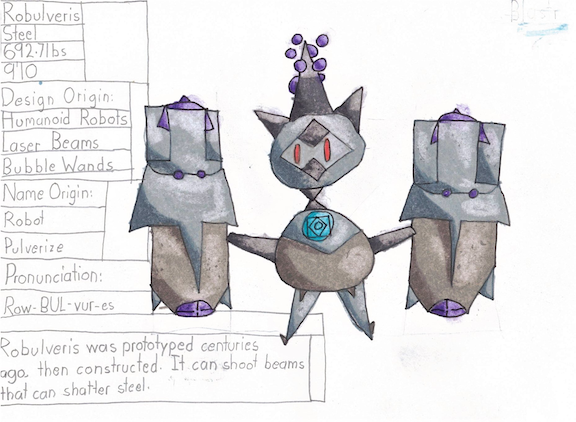
What did boredom do to my screenless kids? Two summers ago my fourteen year-old picked up a Rubik’s cube. He picked it up and started twisting it. Now, on weekends when able he joins local competitions. He can solve a three-by-three cube in nine seconds—in less time than it took me to write this sentence. Now, when we are waiting for food at a restaurant or at the airport gates, he has it with him, along with whatever book he is reading. He also started writing, and drawing. Creating “fakemons” or fake Pokemon.
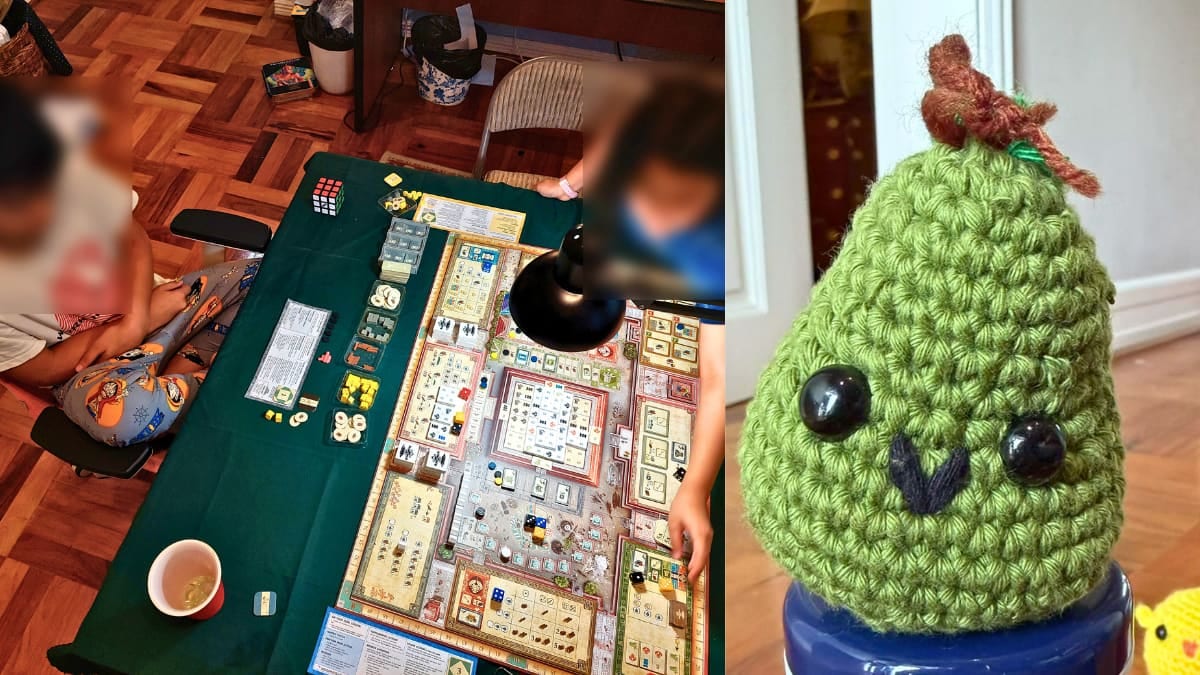
The younger child took a little longer to figure out what to do “with all this time”. She would read, then write. She worked on jigsaw puzzles, and learned origami. At ten, she picked up knitting. Last Christmas break she went on a knitting spree and gifted her classmates and friends knitted stuffed toys.
And, equally important, the two combined their gifts of boredom. They played board games, listened to music together, and would wander our neighborhood looking for sticks. Each stick would have a name and a purpose. This one summons the wind. This one is a magic wand. This one, Excalibur.

Along the way, between a Fakemon called Competivore and an amigurumi crocheted stuffed toy dolphin, the children willfully filled their time and created with passion. They simply did not feel like they were missing out on something because why would they? They had found within them a curious power to not only fight off boredom but immunize themselves from the threats that a phone-based childhood holds over non-participants: the specter of social isolation and the fear of missing out. Our children felt neither.
There is more science behind this, too. When the brain is flooded with dopamine—the quick hits that come from leveling up, from the next video, from the scroll that never ends—it adjusts, expecting more. The threshold for satisfaction rises, and the quieter pleasures grow harder to feel. A finished drawing, a walk to nowhere, an afternoon with a stick: these begin to register as not enough. The receptors, researchers say, downgrade. Joy requires recalibration.
Hence, to the phone-free child, finishing a drawing, a crochet project, or the discovery of a stick in the tall grass behind Mrs. Dizon’s house is deliciously satisfying, almost magical, as it must be.
Parents didn't lose this battle against screens through weakness or negligence. The platforms their children use employ thousands of engineers, behavioral psychologists, and data scientists whose sole purpose is to maximize engagement—a sanitized term for addiction. Infinite scroll, autoplay, notification timing algorithms: these aren't features, they're manipulative mechanisms for exploitation, refined through billions of user interactions.
When a twelve-year-old cannot put down her phone, she's not failing at self-control. She's losing a fight against a machine that knows her better than she knows herself. Parents, the game is rigged. Recognizing this isn't an excuse. It is, rather, a prerequisite for knowing what we're actually up against.
I believe, and all the research bears this out, that most parents do not want a phone-based childhood for their children. And for those parents like myself, the tide is turning in our favor—faster than many anticipated. There are several important examples, and among the most significant is Australia’s outright ban on social media for children under sixteen, and the prohibition of phones in state schools beginning in 2023.
We Dare Imagine: What If PH Banned Kids Below 16 From Social Media?
What would it take for the Pinoy child to have a social media-free childhood?
READ HEREWhat we are seeing now, especially in these scattered legislative efforts, is not experimentation but a recognition. The data comes back and it says what we already suspected. Where phones are absent, something positive has shifted for many, especially children, though we cannot yet say with solid scientific evidence what it means or whether it will hold.
Still, this is how change happens when it happens at all—not through consensus but through the slow accumulation of decisions made separately, in different rooms, by people who have simply had enough.
And the decision to let our children go without phones, to let them be bored, let them access their Default Mode Network, has come not through any single pronouncement but through the small accumulations of our own domestic legislation, our own household policy for which we have something like data:
250 hand-drawn or computer-drawn Fakemons
23 cubes and fifteen World Cubing personal records
Combined 21 novels and novellas read over two summers
16 board games
11 amigurumi knitted stuffed toys
Nine unfinished “short stories.”
Eight “sticks”
Countless hours of creative boredom. Almost zero screens. And if they’re still bored, there are always chores.
Father, husband and UI/UX designer, he plays board games and rides bikes. Currently writing his first novel.
Read more stories about