This is part one of a two-part long read. Find part two here.
***
The year is 2025, and the typical Filipino childhood has drastically changed since most millennials and Gen Zs were born. Gen Xers and millennials (even some Gen Zs) didn’t grow up with viral dance choreographies on TikTok, no “day-in-the-life” reels on Instagram, and no late-night doomscrolling on Facebook.
Although anyone born after 1980 is already considered a digital native by being raised in the digital age, most adults today—especially millennials and elder Gen Zs—still experienced relatively social media-free childhoods. Remember going to the mall to hang out with friends? Maybe picking up an after-school sport? Perhaps parking in front of the TV with your siblings before your favorite show comes on? How about using a landline to talk to your crush? As we usher in Gen Beta this year, these are just memories of a time that today’s kids will never understand how to live with.
Since Filipinos are considered some of the world’s most online-active, spending an average of 3 hours and 34 minutes on social media, platforms such as Facebook, Instagram, and TikTok have become the go-to for self-expression, social interaction, and learning. While connectivity has these benefits, there is mounting upset about (over)exposure to social media at a young age.
In late 2024, the Australian government passed a law banning children under 16 from accessing social media, citing concerns over mental health concerns, online safety, and screen addiction. Other countries like Norway and even Singapore are hoping to follow suit. In New York, Gov. Kathy Hochul has proposed a smartphone ban in schools. Now, imagine if the Philippines dared to do the same. (It is important to note here that social media is merely a facet of the internet and not the entirety of the internet.)
Given how deeply embedded social media has become in Filipino culture, Smart Parenting chats with parents from all walks of life to find out what they think.
What worries you most about your children using social media?
Tricia Gosingtian
Founder & Designer, Hinhin
Mother of 2, ages 4 & 9 months
"I worry about how social media might impact my kids’ self-esteem, mental health, and safety. The pressure to fit in, coupled with increasingly unforgiving beauty standards, can be overwhelming. I’ve seen it firsthand, having been part of the blogging era from the start. I want to teach my kids realistic expectations, healthy habits, and responsible gadget use as they grow. While I can’t stop them from doing what they want because they’ll always find a way, I can help them learn to discern what’s worth absorbing and what isn’t."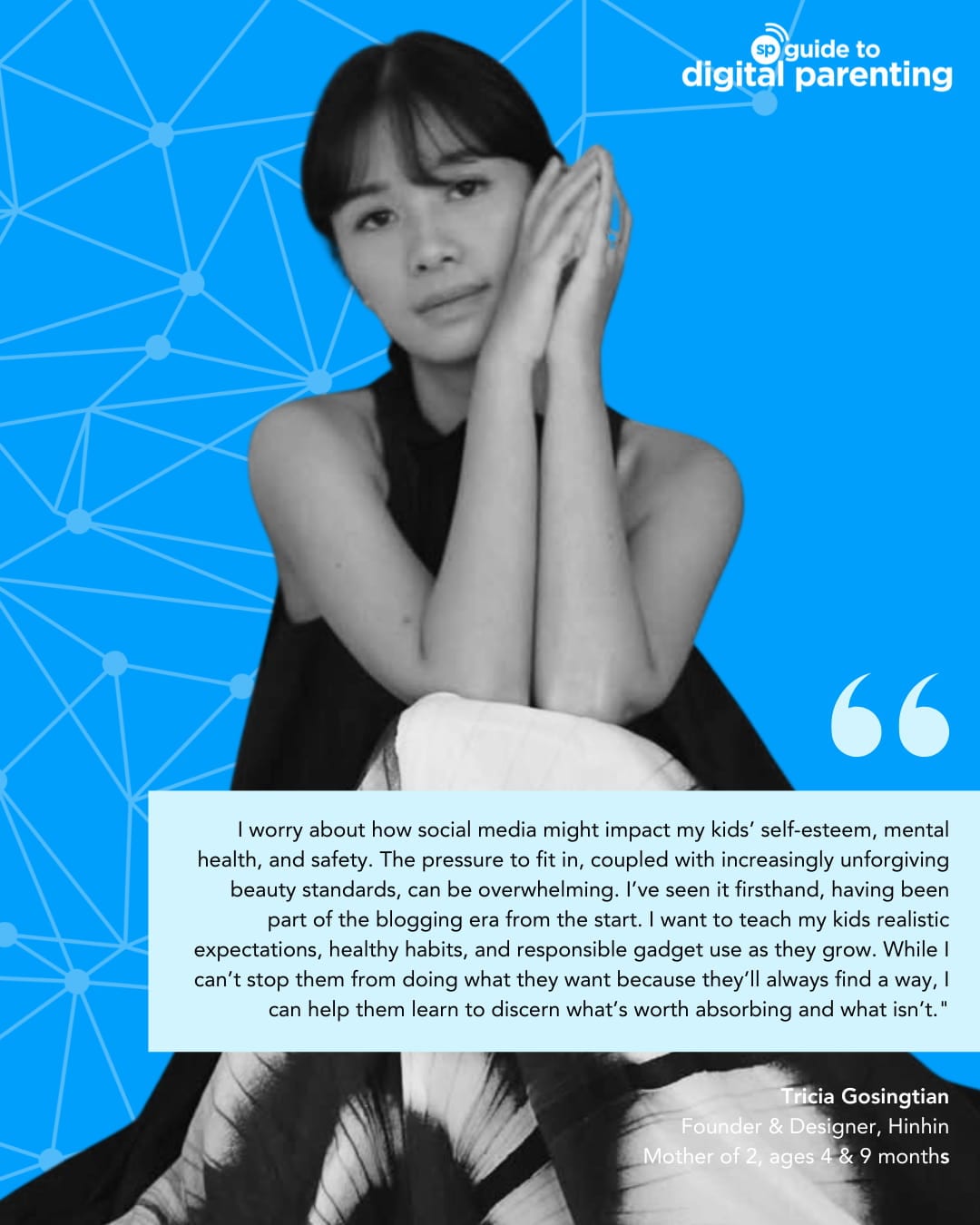
Howard Go
Chief Operating Officer, Summit Media
Dad of 2, ages 13 & 17
"That they will care more and more about what other people think, then behave and act for these people and never discover who they are."
Jon Angel
Lawyer & Country Head, Human Resources
Dad of 3, ages 10, 11 & 12
"Not having sufficient visibility over what information they frequently access and not getting a better pulse of the type of individuals or friends they often interact with on these platforms. Concurrently, the risk of danger arising from these unknown variables."
Do you think social media platforms are taking enough measures to ensure the safety of underage users?
Howard: "No, social media platforms are actually taking advantage of underage users by supporting predators. There are just so many stories that capture this sad practice of [predators targeting kids on social media]."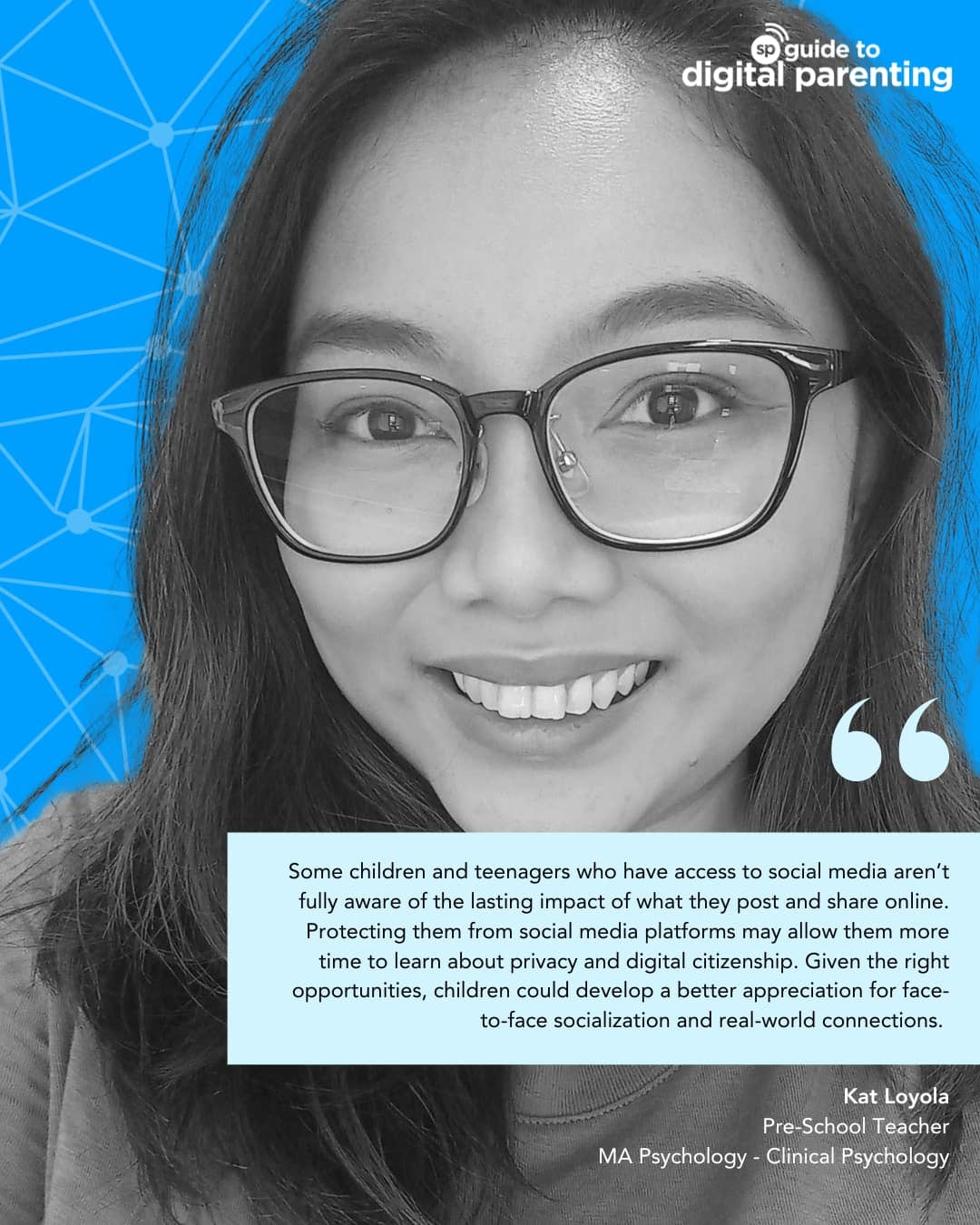
Jon: "As I’m not on any social media platform, I may be ill-equipped to validate this point. But based purely on observation of how my children, and presumably their friends, are probably on some form of social media, this leads me to think that the regulations and measures are quite lax at best."
Bianca Santiago-Reinoso
Fashion Stylist
Mother of 2, ages 11 & 9
"I don’t think the safety measures are enough to protect underage users. They’re still able to circumvent security measures to access unnecessary content."

What are the potential benefits of shielding kids from social media until they’re older?
Joselle Marquez
Grade School Teacher, MAEd Educational Psychology
"It could help them allocate more time to activities that contribute to their overall well-being, such as resting, engaging in physical activities, or exploring hobbies. It can also give them the space to develop their focus and creativity without the distractions of social media."
Luzviminda Tan
High School Teacher
"They will be protected from digital media content that is not appropriate for their age. It can also prevent them from risky interactions with potential cyber predators that might be behind accounts pretending to be children."
'Some children and teenagers who have access to social media aren’t fully aware of the lasting impact of what they post and share online.' —Kat Loyola, preschool teacher
Josh Madarang
High School Teacher
"They won’t see social media’s harmful, dark side, such as predators, graphic imagery, and other undesirable interactions. They’d be shielded from the likes of scammers, phishing links, and other people who take advantage of those who aren’t as familiar with social media usage."
Kat Loyola
Preschool Teacher, MA Psychology-Clinical Psychology
"Some children and teenagers who have access to social media aren’t fully aware of the lasting impact of what they post and share online. Protecting them from social media platforms may allow them more time to learn about privacy and digital citizenship. Given the right opportunities, children could develop a better appreciation for face-to-face socialization and real-world connections.
They may also have one less distraction if they’re not allowed to use social media. Delaying their access may give them a chance to better focus on their studies and hobbies. However, this isn’t to say I agree with completely shielding them from social media. Like many online educational tools or applications, which could double as social platforms, social media could be a great resource for children, teenagers, and their parents when used responsibly."
RELATED: Why Parents Should Delay Introducing Social Media To Children: Here's How To Do It In 4 Steps
Nowadays, social media is often cited as detrimental to one’s overall well-being. Do you think a ban on social media would result in better mental health for children?
Joselle: "Research suggests that it’s the excessive use of social media, rather than its presence, that negatively impacts mental health. For teens who overuse social media, a ban could potentially alleviate some of the pressures and negative effects, but for those who use it responsibly, the impact may not be as significant."
Josh: "Yes and no. Arguably, social media has contributed to the youth being more conscious and vulnerable in terms of mental health conditions. Some children have become reliant on social media to boost their ego and self-confidence, and these can take a hit if their primary source of personal satisfaction is removed. On the flip side, a child who doesn’t use social media as much may still be susceptible to the same mental health issues, but to a lesser degree."
'For some families, especially Filipinos with loved ones abroad or in distant provinces, social media is a tool that facilitates connection and bonding.' —Joselle Marquez on the pros and cons of a social media ban for kids
Kat: "A ban on social media could potentially result in better mental health for teens, but it’s never guaranteed. This question cannot be answered with a simple yes or no and would require a nuanced response. I can imagine that removing social media could reduce the pressure of constant comparison, cyberbullying, and the pursuit of online validation, which have been known to be a source of anxiety, depression, and low self-esteem for many people. Without the constant influx of curated images and posts, teens might feel less compelled to meet unrealistic life standards or compete for likes and followers."
"On the other hand, mental health isn't just shaped by social media or other forms of socialization. There are more variables to consider, but a relevant one would be: regardless of whether or not there’s social media, children and teens may still struggle with feelings of isolation, loneliness, or exclusion, especially if they feel disconnected from their family and friends."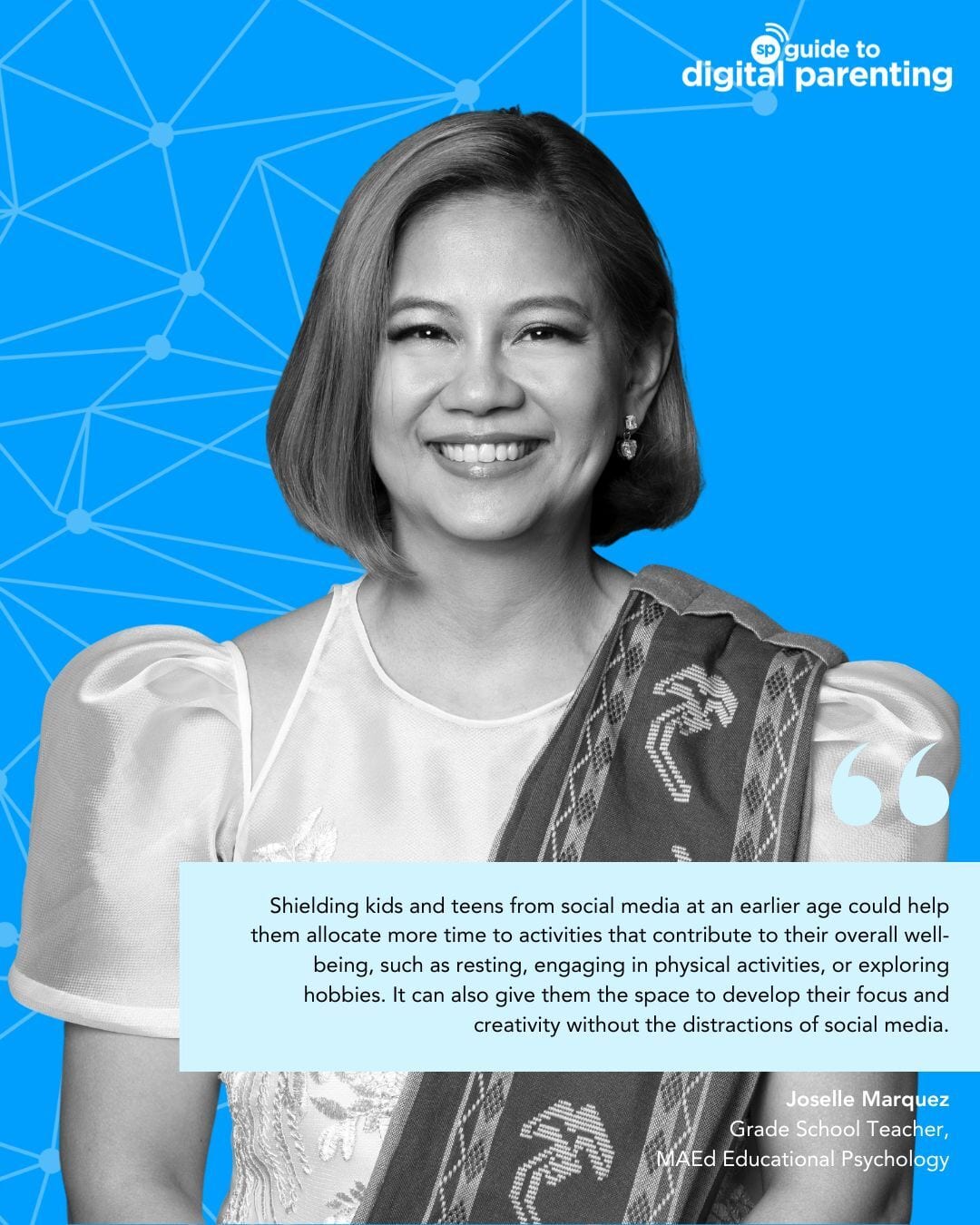
"So while a social media ban could alleviate certain stressors, it would need to be part of a broader effort to provide emotional support, teach coping strategies, and help teens build strong, offline connections for it to benefit their mental health significantly."
Social media is often pointed out as a culprit for affecting family dynamics. Do you think a social media ban would improve family communication and bonding?
Luzviminda: "In a way, yes, but this will also require the adults to lessen screen time to provide quality time and improved communication and bonding within the family."
Joselle: "This depends more on family culture and dynamics than on the presence of social media. For some families, especially Filipinos with loved ones abroad or in distant provinces, social media is a tool that facilitates connection and bonding. However, I recognize the concern that social media can sometimes hinder face-to-face interaction. The issue isn’t solely about children’s social media use—parents must also model positive behavior and prioritize time with their children. Even if teens are banned from social media, family communication won’t necessarily improve unless parents actively foster meaningful interactions and provide alternatives for connection."
'If parents are unable to get their hands off their phones, it will be harder for children and teenagers to develop a sense of self-control in a household that does not endorse it.' —Kat Loyola on the importance of digital habits
Josh: "Also yes and no. Social media can [improve communication and bonding within families], especially for those who are far apart from one another. But I also think less social media usage can bring forth more genuine and authentic interactions among family members because they now have to use their faces and bodies instead of being behind the curtain of a digital profile."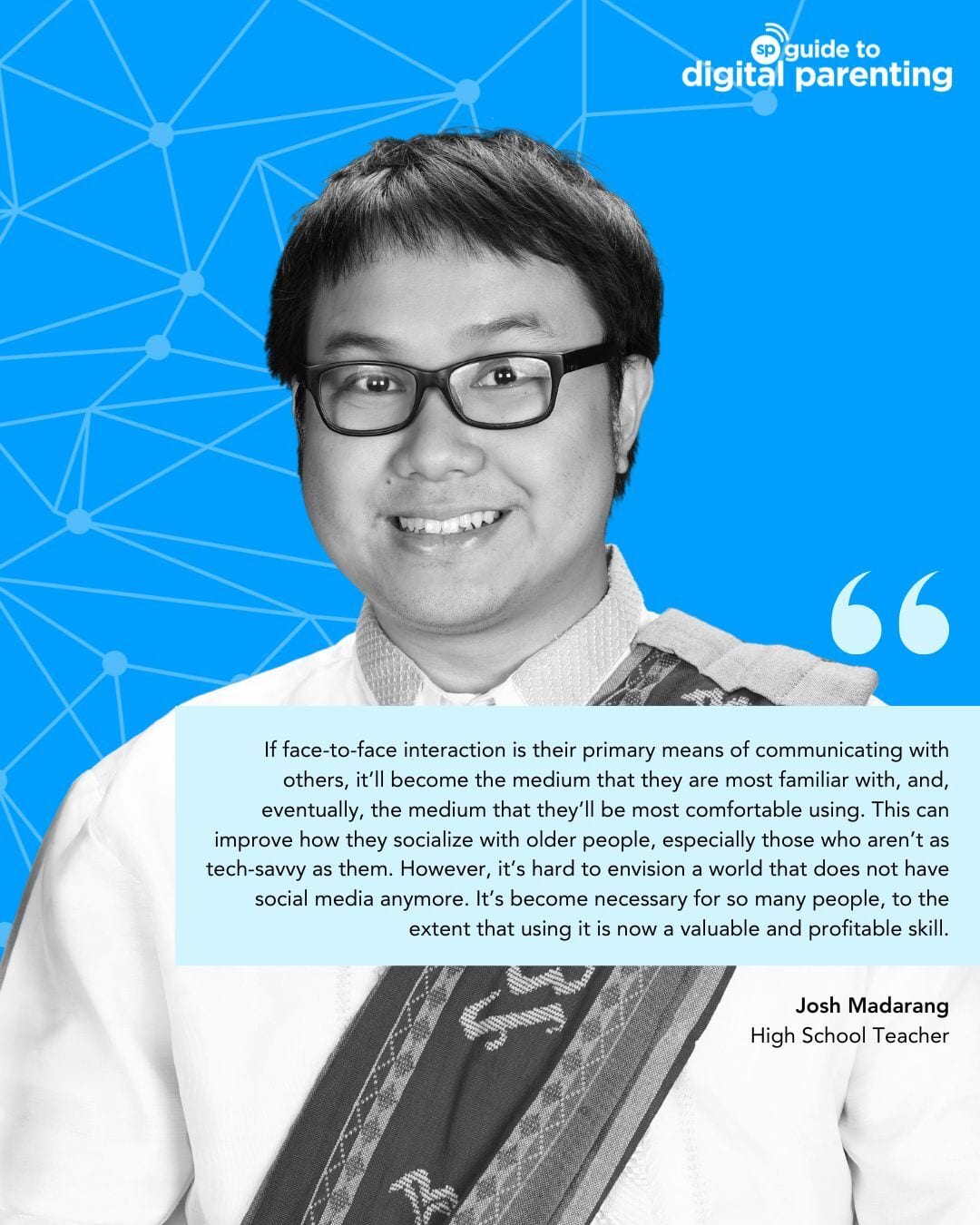
Kat: "Having the agency to make decisions for themselves is crucial for young children and teenagers as it fosters independence and self-confidence. Parents should be the first to consider these factors by setting clear boundaries and being mindful of their habits. Balancing personal and online life must start with them. Parents must consider modeling healthy digital habits and demonstrating how to manage both worlds responsibly. If parents are unable to get their hands off their phones, it will be harder for children and teenagers to develop a sense of self-control in a household that does not endorse it."
This is a two-part story. Read Part Two | Imagining Social Media-Free Childhood For Filipino Kids here.
Editor’s Note: Quotes have been edited for clarity and brevity.
***
This article's main image is AI-generated via Adobe Stock
Article image artwork by Stephanie Ocampo
More from sp