This is a two-part long read. Part one raises the pros and cons of social media access for children below 16 years old in the Philippines. Part two imagines what it would take for the nation to implement it, and if it is worth envisioning.
***
Overall, do you think removing social media would foster better interpersonal skills in kids and teens?
Joselle: "Rather than removing social media entirely, I believe the focus should be on implementing proper media literacy programs in homes and schools. These programs can teach children and teens to use new media technologies and applications responsibly, fostering their interpersonal skills while understanding the potential impact of these platforms. While social media can support interpersonal skills, such as collaboration and creativity—as I observed in my own study in 2022, where students shared how they drew inspiration for their art from online platforms—it also presents challenges.
For instance, frequent use of social media can affect their attention span and active listening as they become accustomed to quick scrolling. Additionally, the curated 'perfect' lives portrayed online can hinder their ability to embrace authenticity, affecting empathy, flexibility, and self-acceptance. So the goal should be to strike a balance by educating both teens and parents on mindful social media use."
Luzviminda: "Removing it might be close to impossible since the use of social media has become systemic, where schools and other communities often disseminate information through their social media platforms. Balancing between online and offline activities and responsible use of social media should be the focus since the use of social media is now ubiquitous in the lives of kids and teens."
'I think a dedicated platform for kids with stronger parental controls could work. This is assuming parents are on top of their kids’ screen time. And, perhaps, schools should also have a part in it.' —Tricia Gosingtian, mom of 2
Do you think social media platforms can adapt or create age-appropriate services for younger audiences?
Howard: "They really can’t. Children are tech-smart and follow smarter tech-smart children. They’ll find hacks to the system very quickly and easily. It’ll be a cat-and-mouse game that won’t end."
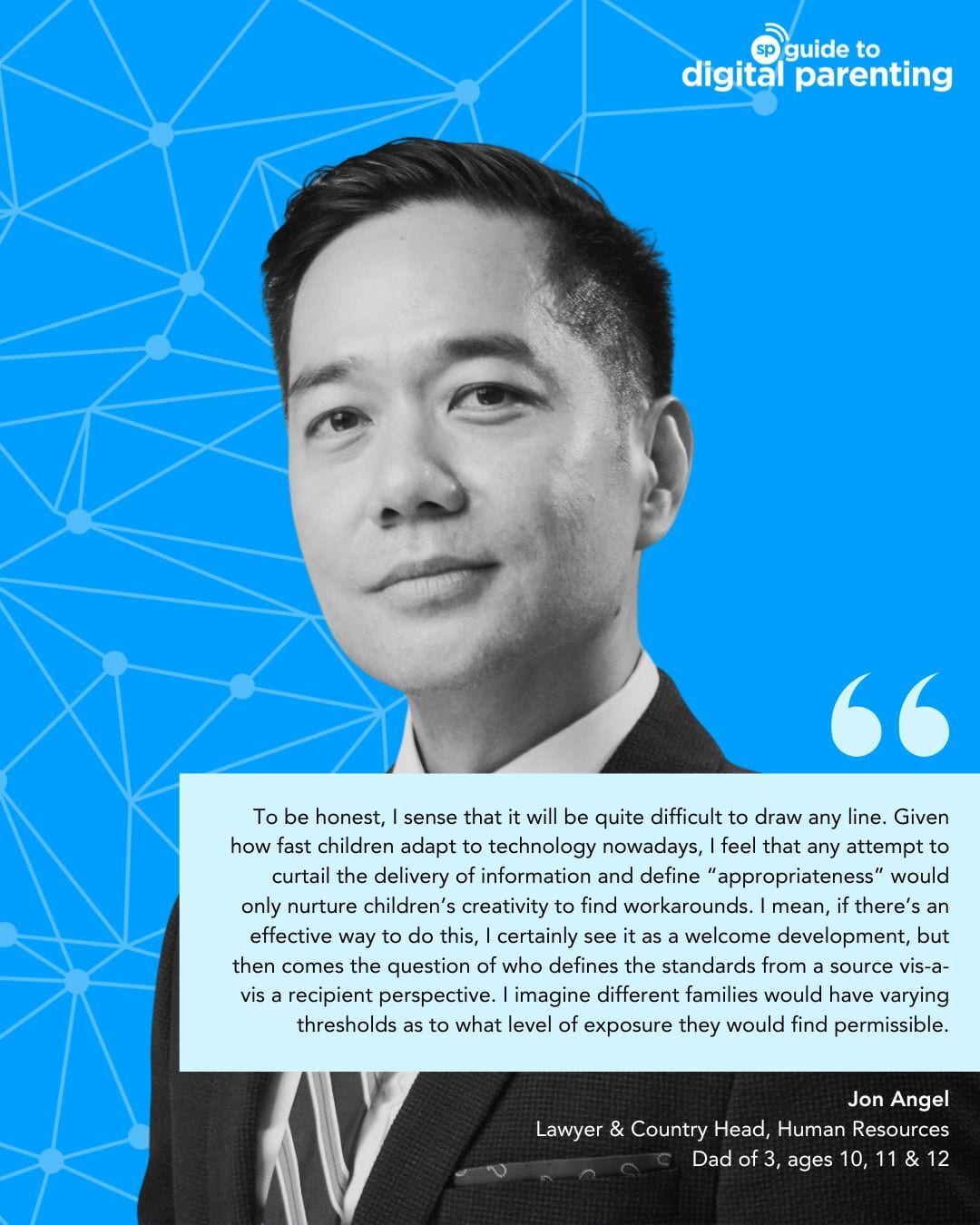
Jon: "To be honest, I sense that it will be quite difficult to draw any line. Given how fast children adapt to technology nowadays, I feel that any attempt to curtail the delivery of information and define 'appropriateness' would only nurture children’s creativity to find workarounds. I mean, if there’s an effective way to do this, I certainly see it as a welcome development, but then comes the question of who defines the standards from a source vis-a-vis a recipient perspective. I imagine different families would have varying thresholds as to what level of exposure they would find permissible."
Tricia: "I think a dedicated platform for kids with stronger parental controls could work. This is assuming parents are on top of their kids’ screen time. And, perhaps, schools should also have a part in it."

How do you think life would change for your child/children if they couldn’t access social media?
Howard: "It will depend on whether I and my wife can find the bandwidth to keep them engaged in other things. Everyone, even kids, needs activities to keep them growing and make them happy at best and avoid being bored and depressed at worst. If, as parents, we can help our children find better activities, then social media won’t be a major threat. It also matters whether, as a community, we can get groups and schools to do this at the same time.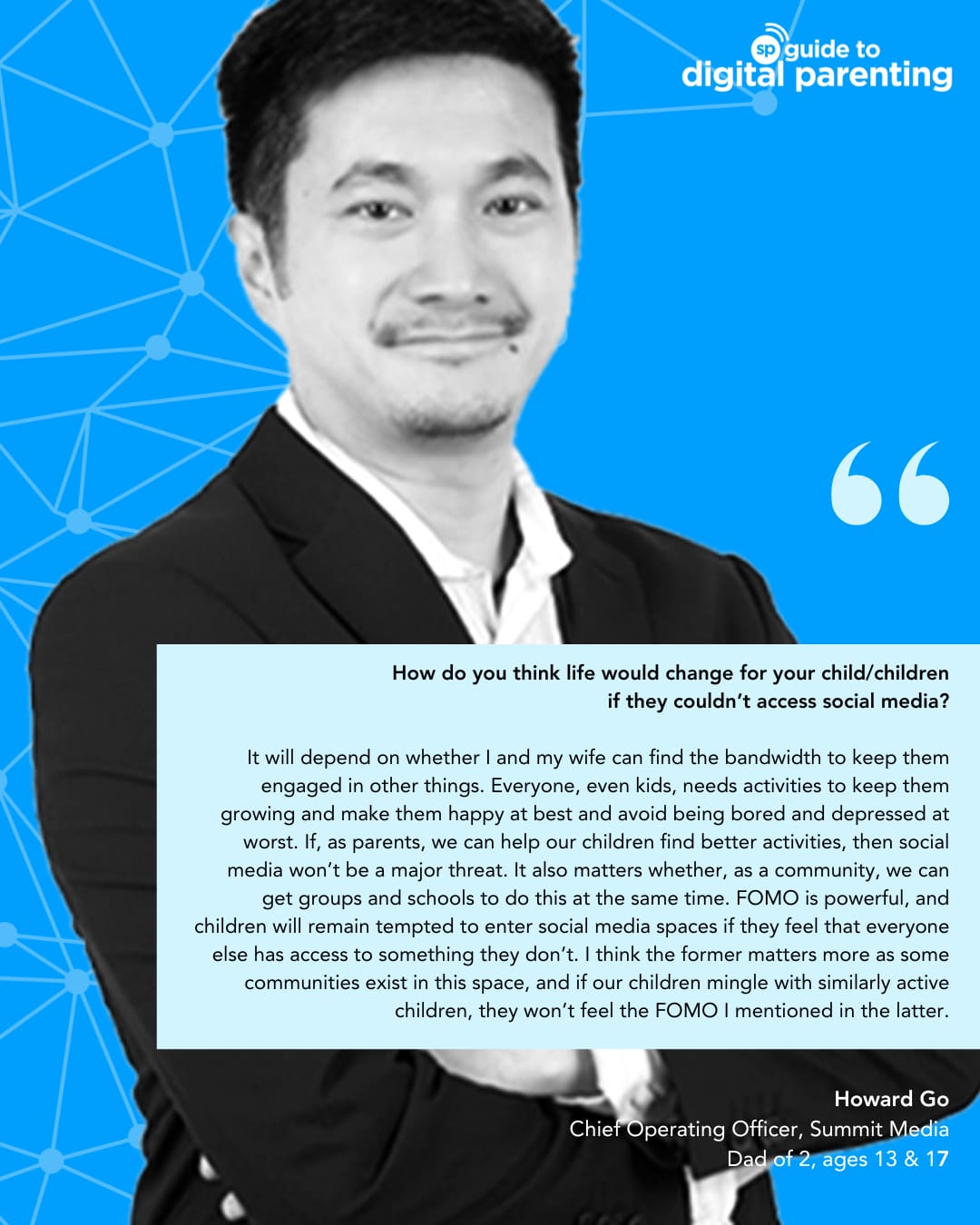
FOMO is powerful, and children will remain tempted to enter social media spaces if they feel that everyone else has access to something they don’t. I think the former matters more as some communities exist in this space, and if our children mingle with similarly active children, they won’t feel the FOMO I mentioned in the latter."
Jon: "[My children] use [social media] primarily to interact and catch up with their friends and classmates in the comfort of their bedrooms. I imagine not having this platform would result in more face-to-face meet-ups, hangouts, and actual social interaction. Trends and other information, they’d probably find other ways to get through their network."
They might feel sadness or frustration at first... but this could also open up opportunities for them to explore other interests, strengthen relationships, and develop new skills. —Joselle Marquez on the possibility of a social media ban for PH kids
Joselle: "While the initial adjustment may be challenging, I believe kids and teens would adapt over time. They might feel sadness or frustration at first—some of my students have even said they’d feel depressed without their iPads—but this could also open up opportunities for them to explore other interests, strengthen relationships, and develop new skills. It’s all about how the time and energy previously spent on social media are redirected."
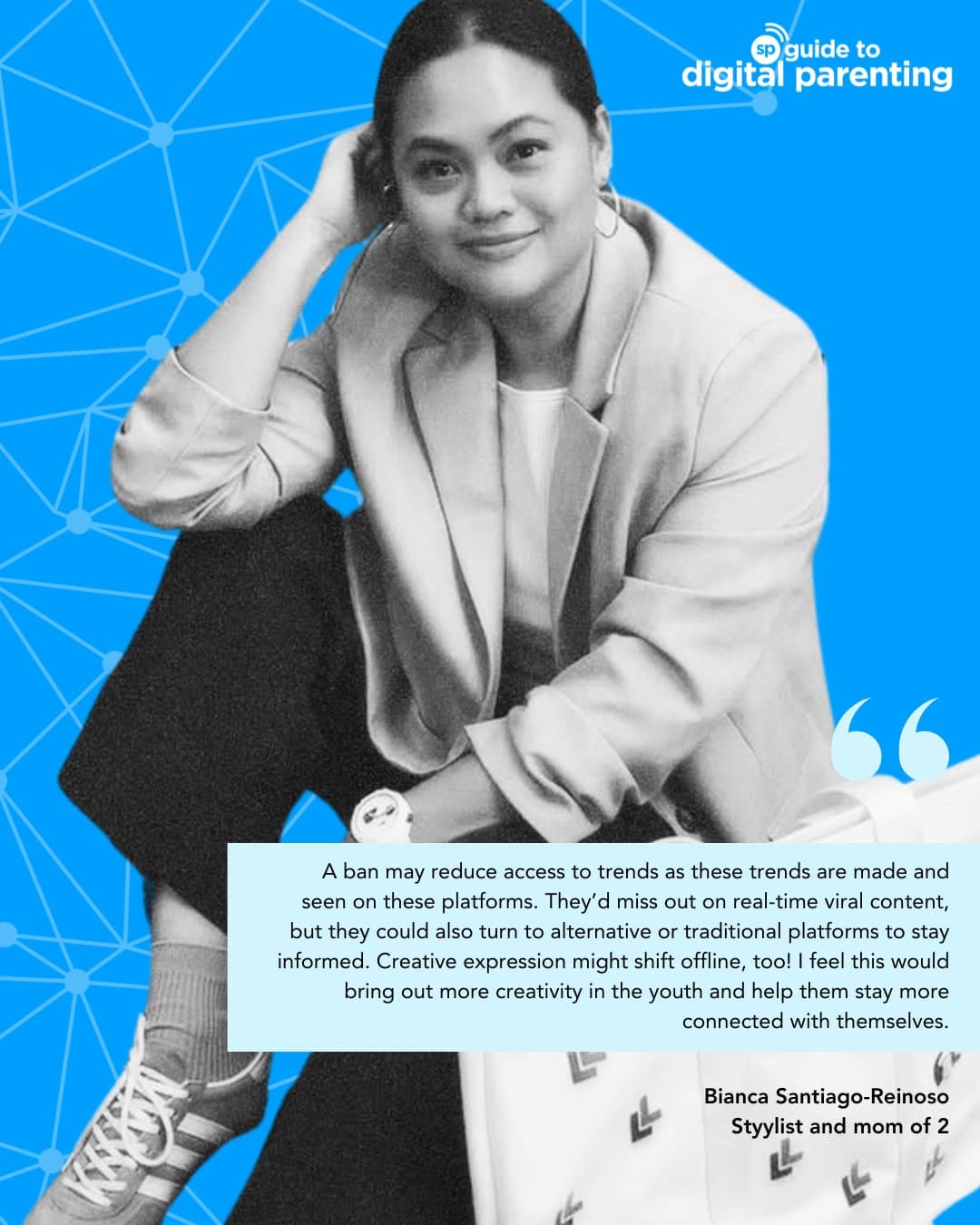
Bianca: "A ban may reduce access to trends as these trends are made and seen on these platforms. They’d miss out on real-time viral content, but they could also turn to alternative or traditional platforms to stay informed. Creative expression might shift offline, too! I feel this would bring out more creativity in the youth and help them stay more connected with themselves."
Luzviminda: "Their access to updated and real-time information can be hindered. It can also affect the development of their agency and decision-making skills when choosing activities that interest them."
What do you think the Philippines would require to attempt a social media ban for kids?
Jon: "Schools would be the easiest to target if some form of regulation were implemented, but this also means that the regulation would be limited as to time and place. The government would also need to be mindful that unless the prohibition extends to homes, otherwise the effectiveness will be hard to measure. Realistically, it’s hard to imagine the government having the infrastructure and capability to do any form of monitoring to enforce any sort of ban. It would admittedly be interesting to see how the government will put some teeth in such regulation, and I’m also very curious to know what their success metrics will be in order to gauge effectiveness and get the necessary buy-in."
Howard: "I think the Philippine government might actually attempt to ban social media if a sufficiently tragic and/or violent series of events were to occur that could be directly traced back to social media. Only then will there be a loud and sustained cry and demand for both the government and various private organizations to invest in spaces that allow for physical and social activities."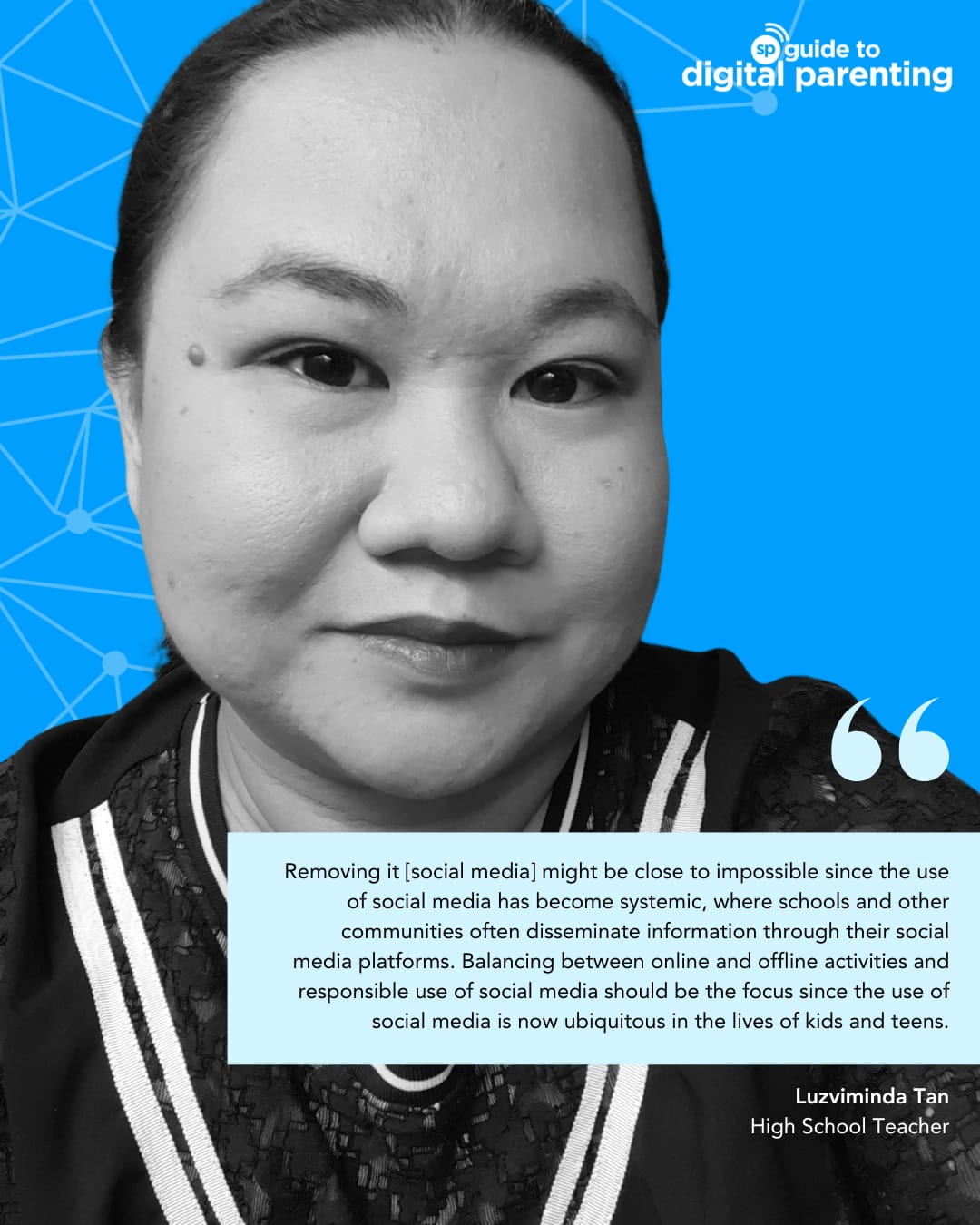
Tricia: "An intense collaboration among the government, school, and parents would be more effective than a ban. Parents should also be taught so they can model effectively to their kids."
Joselle: "Schools would need to create phone-free environments and programs that teach responsible media use. The government would also need to enforce age verification for social media platforms and introduce clear guidelines to ensure the ban is followed. Parents would play a key role by managing their children’s media use at home and supporting alternative activities. Schools and communities could offer other ways for kids to collaborate and express creativity, such as online educational tools and local programs. This effort would require teamwork from schools, families, and the government to make it effective and sustainable."
Luzviminda: "In schools, it might be possible to control the use of gadgets during school hours. Students can be asked not to bring gadgets that connect to the Internet, but that would require manpower to monitor. Plus, not all parents might agree since smartphones are a tool for communication between kids and their parents or guardians while they are in school. CCTVs can be installed to check if students use phones during break times, but this may be counterproductive. Outside school, it would be difficult to monitor the kids’ use of social media."
It’s a radical “what if” for the Philippines, but a conversation worth having.
Josh: "If the Philippines were to ban social media, it would be because of a complete shift in the content and usage scenarios that involve it. I think of the example of OnlyFans being a crowdfunding site before it became an avenue for sex workers. TikTok was seen as a potential propaganda tool, the same way that Huawei was blamed for potentially compromising US intelligence and military services. If the likes of Facebook, Instagram, and the like would dramatically change their content and user base, the country may consider a ban."
Kat: "As an educator, I think it’s more important to teach parents and their children how to safely navigate the online world. If they really must ban social media at schools, administrators could work with their tech experts to find a way to block social media sites in the school vicinity. That’ll be another challenge, though, since many teachers use them to communicate with each other.
Social media is very useful for information dissemination. While I agree that young children should not have smartphones, teenagers could need them for their studies, so maybe limiting their access to sites while at school would be a better way to go than completely taking their phones away. Parents and teachers must work together to discipline the students for responsible and respectful use of their devices."
A radical 'what if'
It’s a radical “what if” for the Philippines, but a conversation worth having. As the rest of the world hones in on setting age limits for social media use, it would be interesting to see a social media-obsessed country like ours stand. Would a ban protect young Filipinos from the dangers of social media, or would we just isolate them from a digital world that is here to stay?
If we dare to imagine a Philippines with social media-free children, the challenge becomes more than implementing rules and regulations. It’s balancing the need for online safety with the reality of our tech-savvy, social media-driven culture and ultimately redefining childhood in the digital age.
If you missed part one, We Dare Imagine: What If PH Banned Kids Below 16 From Social Media? read it here.
Editor’s Note: Quotes have been edited for clarity and brevity.
***
Article image art by Stephanie Ocampo