The Pokémon Card Boom Is More Than Just a Hobby
Chasing down a card and collecting it is a big part of the thrill, but there's a little more to it, especially for families.

Published on Oct 5, 2026
What started as a childhood hobby has grown into a thriving collector economy, with Pokémon cards being bought, sold, traded, played, and sometimes treated as collectibles with serious value.
As a parent, however, you may wonder what is so enthralling about collecting a “piece of cardboard”? Or maybe even: Is it really so different from fake cards? While your child is busy filling their albums with colorful cards, it may be easy to assume that there isn't much value beyond the fun of collecting.
But look closer at today's Pokémon Trading Card Game (TCG) community, and it becomes clear that there is much more to it than meets the eye.
The Pokemon Explosion
In the Philippines, interest in the Pokémon TCG has grown steadily. In April 2026, the official Pokémon Asia Championship Series' Philippines Master Ball League drew 3,475 attendees over two days at the SMX Convention Center in Manila.
More recently, hundreds of buyers reportedly lined up at Toys R Us and other toy stores for Pokémon's 30th anniversary merchandise and high-demand cards, highlighting just how strong the local enthusiasm for the franchise has become.
A Closer Look at the Pokemon 30th Anniversary Release in the Philippines
We spoke with Carmina Quizon, Group General Manager, and Christine Sanchez, Deputy General Manager, at Toys R Us, about the demand for the anniversary release.
Smart Parenting (SP): How early were collectors in line? Were there any purchasing rules?
Toys R Us (TRU): With excitement building ahead of the launch, some collectors and customers started queuing as early as the day before the release of the Pokémon 30th-anniversary items. This reflects the strong anticipation within the Pokémon community, particularly among collectors looking to secure the limited-release products. We implemented ‘first come, first served’ policies to give more customers a chance to buy.
SP: How soon did your stores run out of stock? Will there be a restock?
TRU: “Due to the significant buzz and strong demand for the Pokémon 30th anniversary items, our stock sold out within an hour after our stores opened. At this point, we don't have visibility into whether there will be a restock.
The response showed not only the dedication of Pokémon fans but also the excitement surrounding the community.
Christine added, “Some customers were already waiting before the stores opened, which created a lot of positive energy and anticipation around the launch, but what stood out to our team was how engaged the customers were. They were not just shopping, but many were excited to be part of the launch and the Pokémon collecting community.”
Rare Pokémon Cards Help Pay for Groom’s Wedding
A childhood Pokémon card collection discovered in storage is helping pay for a wedding after three vintage cards sold for an estimated P2.4 million
READ MOREWhat's the Hype With Pokémon Cards?
Pokémon TCG is exactly what its name suggests: a trading card game. Players build decks using Pokémon, Energy, Trainer, and other cards before battling other players in tournaments or casual games.’
But not everyone who buys Pokémon cards is playing the game. Eleanor Lee-Teo, a full-time corporate marketing director, part-time faculty lecturer at Ateneo de Manila University, mother of two, and avid Pokémon TCG player, explains the appeal:
“The love for Pokémon transcends generations and as with anything nostalgic or sentimental, people enjoy collecting memories from their childhood. It is also a common interest between parents and their children so people can enjoy the hobby together as a family. This is probably why a lot of people get into the collecting side of it because they know that they can pass it down as either an investment or just a sort of heirloom to their kids.”
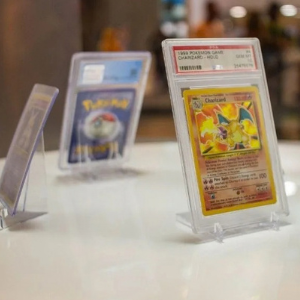
Some collectors are after a particular Pokémon, while others seek cards from specific sets. This creates a secondary market where cards can be bought, sold, or traded after their original retail purchase.
Christine explains that the hobby has consequently developed into a broader ecosystem: “Pokémon trading cards have grown into a wider ecosystem because collecting involves more than just buying products. As the collector community grows, demand also increases. This supports retailers, specialty card shops, resellers, event organizers, and other businesses serving the community.”
Why Are People Paying More for Some Cards?
For non-collectors, this may be the hardest part to understand. Why pay significantly more for a card that originally came from a pack?
Part of the answer is scarcity and demand. Francis Tan, who manages regional marketing campaigns for Johnnie Walker and is also a father of two Pokémon collectors, says, “With big market demand comes attention from all kinds of hobbyists and scalpers who can drive up the prices and dry up all the supply. So you need to be patient about collecting, as it takes time to build unless you don't have a budget cap.”
A particular card may be difficult to find while demand remains high. Older cards can also attract collectors because they are no longer produced in the same way as current releases.
But the thrill of collecting can also encourage people to spend more than they originally intended.
Francis explains, “There's the gambling aspect where you will be tempted to open so many boxes and booster packs to get your 1 chase card—the chances of getting the rarest cards is less than 1% so the usual collecting advice is to buy singles if you can get away from the thrill of opening packs.”
Christine says Pokémon collectibles have evolved beyond being popular gift items and have become personal hobbies for many people. “Pokémon is still popular as a gift, but many purchases are now driven by personal interest and collecting. At the same time, some customers are also drawn to the products because of their potential trading and resale value, particularly for limited-edition or highly sought-after releases.”
The Return of the Pokémon Kid
Another reason behind the Pokémon TCG's growth is that some of today's adult collectors were once Pokémon kids themselves. For millennials and older Gen Z fans, Pokémon can be tied to childhood memories of Game Boy games, the animated series, toys, and the original trading cards. Now, many of those former kids have something they didn't have back then: their own money.
Christine explains: “The emotional connection to Pokémon is also important. Many of the collectors are millennials who grew up watching the Pokémon series and playing the games. Nostalgia is a major part of the appeal. As adults, they now have more purchasing power to pursue collecting as a hobby.”
That nostalgia can make collecting more emotional than simply acquiring merchandise. A card can represent a favorite Pokémon, a childhood memory, a particular era, or even a milestone.
Francis describes this connection between millennial parents and their children:
“It's a shared experience where parents get to relive their childhood while also allowing their kids to discover the wonderful world of Pokémon—some even post videos of their toddlers crawling towards their starting Pokémon plushy of choice. This then turns into amassing a collection for displaying and trading with the broader Pokémon community in card shows or online.”
.png)
'Whatever You Save, We Will Double': Teaching Delayed Gratification
Here's how a mom and financial wellness coach advises to teach kids about waiting.
READ MOREA Hobby That Can Teach Kids About Money
For parents, Pokémon collecting can also become an opportunity to introduce basic financial concepts. A child who wants a particular card has to make decisions: Should I spend my allowance on this pack? Should I save for the card I really want? Is this trade fair? How much am I willing to pay? These conversations can introduce budgeting, saving, opportunity cost, supply and demand, and delayed gratification.
Valine Magtoto, mom of two and Smart Parenting Village mom, says, “My kids understand the value of a working budget when buying cards. They treat picking out cards like a mini deliberation meeting, which keeps them mindful instead of impulsive. Because rare Pokémon cards can cost thousands, they also see supply and demand in action: the rarer the card, the higher the price.”
Eleanor also points to the educational benefits of the game itself: “Pokémon TCG also enhances a child's math skills, and I've seen kids as young as 6 to 7 years old compute faster and more accurately just from learning to play this game. I think the best part of playing TCG would have to be the strengthened relationship bond we've developed as a mother and son since the game requires two people to play, and it's a highly social activity.”
RELATED READ: Want to Raise a Saver? Start With These 5 Money Lessons
All for the Love of Pokémon
There are risks to the collecting hobby, particularly when the excitement of finding a rare card leads to overspending. But for many families, Pokémon also offers a way to connect across generations.
As Francis puts it: “This is a hobby, so it should be fun. But it stops being fun when it becomes a financial burden, so always know your collecting strategy and set a budget for it. Otherwise, you'll just be buying and buying so many cards without a clear collecting approach and end up with just a pile of cardboard. So it's good to be self-aware about why you are getting into the hobby and not jump blindly into the rabbit hole.”
Christine adds that parents should also be mindful of keeping the hobby fun for children: “Often it becomes too serious, and a simple card game becomes an addiction or obsession that offers a dopamine hit for adults, more so kids who are still unable to regulate their emotions. Parents can teach market value, but they should also be allowed to just enjoy the game for fun without thinking about how they plan to get an ROI from their purchases.”
More Than What's Inside the Pack
Ultimately, the growing Pokémon collector economy isn't just about the cards. It's about nostalgia for adults, play and discovery for kids, community for collectors, competition for players, and an increasingly sophisticated marketplace around it all. That's perhaps what makes Pokémon different from an ordinary toy. You can play with it. You can collect it. You can trade it. You can learn from it. And sometimes, you can even find a little piece of your childhood in it.
Looking for new ways to bond with your family? Here are some places in Metro Manila where you can enjoy car-free Sundays.
Avram is a fur dad of two and contributing writer for Smart Parenting whose love for films, books and traveling have translated into a knack for storytelling.