 As more parents look for alternative choices for labor and delivery, water birth - the process of giving birth in a pool or tub filled with warm water - is gaining popularity worldwide, with over 90 countries offering the service in hospitals or birthing clinics. The Philippines is no exception, with a facility in St. Luke’s Medical Center in Global City (GC) already up and functional.
Dr. Rebecca Singson, head of the Obstetrics/Gynecology Department at St. Luke’s GC and one of the first doctors to perform water birth in the Philippines, has herself witnessed an increased awareness- albeit only a slight increase- of water birth as an option. “There has definitely been an increase in interest in women wanting to do waterbirthing. I get referrals from my colleagues from their patients who want to do waterbirthing, as well as my own patients who express desire to do so.”
The water birth delivery of celebrity mom Maricel Laxa-Pangilinan’s youngest child last year has helped to bring awareness to the public, but apparently most people still opt to do conventional methods of birthing. Dr. Menefrida Reyes, an attending physician who was present for Maricel’s water birth, states,” People like to read or hear about someone, especially a celebrity, doing water birth (and other unconventional/novel ideas); but going through it themselves, especially if it concerns the birth of one’s child, is a different subject altogether.” She does observe, however, that the women who have expressed interest in other birthing options tend to be “educated, widely-read professionals or career women who start establishing their own family at about [the age of] 30 years.”
The Premise of Water Birth
Some women choose to have only their labor in water, while others opt to do both labor and delivery in water. A midwife, doula, or other birthing expert stays by the mom’s side, ensuring comfort and safety of her and baby. The water temperature is also closely monitored to make sure it stays within 95 – 100 degrees Farenheit (35- 37 degrees Celsius), about the same temperature as the amniotic fluid that the baby has been living in for the past 9 months. Proponents of water birth contend that the process of birthing from one aquatic environment to another creates a more relaxing experience for the baby. Mothers and midwives alike report that water babies tend to cry less and are calmer after delivery compared to babies born on land.
Initial research thus far has shown no differences in perinatal mortality between water birth and conventional birthing methods. The authors of a 1999 study published in the British Medical Journal stated a 95% confidence in the safety of water births, with water aspiration being a “possible risk” for water births. However, babies have built-in mechanisms that prevent them from aspirating air or water too early, keeping them from inhaling water during a water birth. Keep in mind, however, that every situation is different, and if factors such as poor nutrition or previous illness compromise the baby, such automatic physiological responses may not work properly.
[previous|page|next]
Water birth is not ideal for women with certain conditions. Dr. Singson states that diabetes, hypertension, and prematurity are contraindicated (meaning, the condition does not allow for a specific procedure) for water birth. Other contraindications include, but are not limited to:
- Herpes
- Breeched baby
- History of excessive bleeding or maternal infection
- Having more than one baby (twins, triplets, etc.)
- Toxemia
- Pre-eclampsia
- Severe meconium
Here are advantages and disadvantages of water birth:
Pros
1. Stress reduction and pain relief
Warm water is especially soothing and calming to pregnant women, providing much-needed relaxation to help facilitate and ease the pains of labor and delivery. High blood pressure caused by anxiety is decreased. Release of stress-related hormones is also decreased, allowing Mom to produce endorphins, which inhibit pain. The warmth of the water provides relaxation to muscles the same way that a hot shower helps to ease back pain. Both physical and mental relaxation enables you to focus solely on the birthing process.
2. Increased mobility
The buoyancy of the water lets Mom move more freely as needed to facilitate labor. She can move with the baby and change positions more readily than lying on a regular bed. Buoyancy also makes uterine contractions more efficient, improves blood circulation and oxygenation of muscles, making labor and delivery easier. Many women report having less painful uterine contractions due to immersion in water.
3. Decreased need for drugs or invasive interventions
Water causes the perineum to relax and become more elastic, which will reduce the incidence of tearing and the need for episiotomies. Water birth is highly rated by both mothers and healthcare practitioners as a very natural, safe way to give birth. For those seeking refuge from drugs, needles or injections, epidurals, or other invasive procedures, water birth is a highly-recommended alternative. Also, women who have had previous C-sections can safely give birth naturally through water birth.
4. Provides empowerment for women
As the buoyancy of the water increases mobility and decreases perception of pain, Mom is able to feel more in control and mentally focused on giving birth. Most women report great satisfaction in knowing “what they were really made of”, finding strength in accomplishing a feat deemed by others as impossible without the help of medical interventions.
[previous|page|next]
Keep in mind that empowerment is about knowing your options. Oftentimes, taking a childbirth class is the only way for average, working women to learn about alternative birthing options. Childbirth preparation classes, according to Dr. Reyes, basically prepare parents for "natural childbirth" or unmedicated birth, so that they can participate in the birthing process and in the so-called essential newborn care. However, she states that only about 10% of the obstetric census (number of delivery room admissions) are patients who have taken a childbirth preparation class and/or proceed with an unmedicated birth. “I’d like to see that number rise to 30-60%,” she says.
Cons
1. Inconvenient, if complications arise
In the event that an unexpected complication arises, the woman may need to get out of the water bath and be transferred to another location to give birth. A woman in labor, especially one in distress after learning about a possible complication, may find it difficult and stressful to have to get up and move about. Careful discussion with your doctor and/or midwife during early pregnancy can help reduce the chances of developing complications later on.
2. Embarrassment from “dirtying” the water
Whether giving birth in water or on land, women can have a bowel movement during the pushing process. This is particularly embarrassing for some women during a water birth, because the midwife has to remove the waste and debris out of the water. Experienced midwives insist that removing waste and debris is perfectly normal for them, but for some women, the idea of seeing their waste in the water, let alone seeing someone clean up after them, is too much to handle.
3. Risk to umbilical cord
When birthing in water, there tends to be a swiftness with which the baby comes to the surface. On the rare occasion that a midwife does not properly facilitate the baby’s delivery, or if the umbilical cord is naturally short, there may be the possibility of the cord snapping. A highly trained midwife or physician can handle this situation, however, so that it will not cause complications.
In conclusion, Dr. Reyes says, "I admire any mother-to-be who chooses whatever birthing option - medicated or unmedicated - that she feels is best for her and her baby."
Special thanks to:
Dr. Menefrida Reyes, MD
St. Luke’s Medical Center, Quezon City, Philippines
(02)723-0301 local 6224
Dr. Rebecca Singson, MD
St. Luke’s Medical Center, Global City, Philippines
(02)789-7700 local 7305
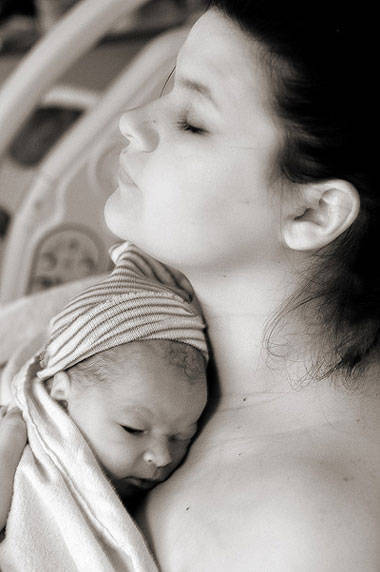
Photo by a4gpa from flickr creative commons

Lorem ipsum dolor sit amet, consectetur adipisicing elit, sed do eiusmod
Lorem ipsum dolor sit amet, consectetur adipisicing elit, sed do eiusmod