Your Health

This Nonprofit Makes Cervical Cancer Screening Easy and Accessible

Jhpiego’s CLAMS program empowers women with HPV DNA self-sampling.
Hanna Panoringan

by Hanna Panoringan

Published on Aug 24, 2025

Photo by Jhpiego Philippines
Cervical cancer remains the second most common cancer among women in the Philippines—yet it is one of the most preventable. Despite advancements in medical knowledge and technology, the disease continues to claim the lives of 12 Filipino women every day.

ADVERTISEMENT
In 2023 alone, an estimated 8,549 new cases were diagnosed and 4,380 deaths recorded, equating to 15.5 cases and 8 deaths per 100,000 women. Without urgent intervention, projections show that over 162,000 women could die from cervical cancer between 2020 and 2070.

Barriers to Cervical Cancer Elimination in the Philippines

Almost all cervical cancer cases are linked to persistent infection with high-risk types of human papillomavirus (HPV), a common sexually transmitted virus. While many HPV infections resolve without causing harm, some lead to precancerous changes in the cervix that can develop into cancer when left undetected or untreated.

Despite its preventability, cervical cancer remains one of the deadliest diseases for Filipino women due to systemic and structural barriers. According to Jhpiego, a global health nonprofit affiliated with Johns Hopkins University, fewer than 1% of eligible women receive recommended screenings such as the Pap smear, visual inspection with acetic acid (VIA), or HPV DNA testing. As a result, diagnoses often occur in late stages, significantly lowering chances of survival.

Jhpiego identified the key barriers to eliminating cervical cancer, which include:


  • Limited access to screening and treatment services, especially in rural and low-income urban areas.
  • Inadequate awareness and health literacy about cervical cancer and its prevention.
  • Geographic and socioeconomic challenges that discourage preventive care.
  • A shortage of trained health workers and a lack of essential equipment and supplies.
  • Weak patient tracking systems, leading to poor continuity of care.
  • The CLAMS Model: Self-Sampling and Smarter Cervical Screening
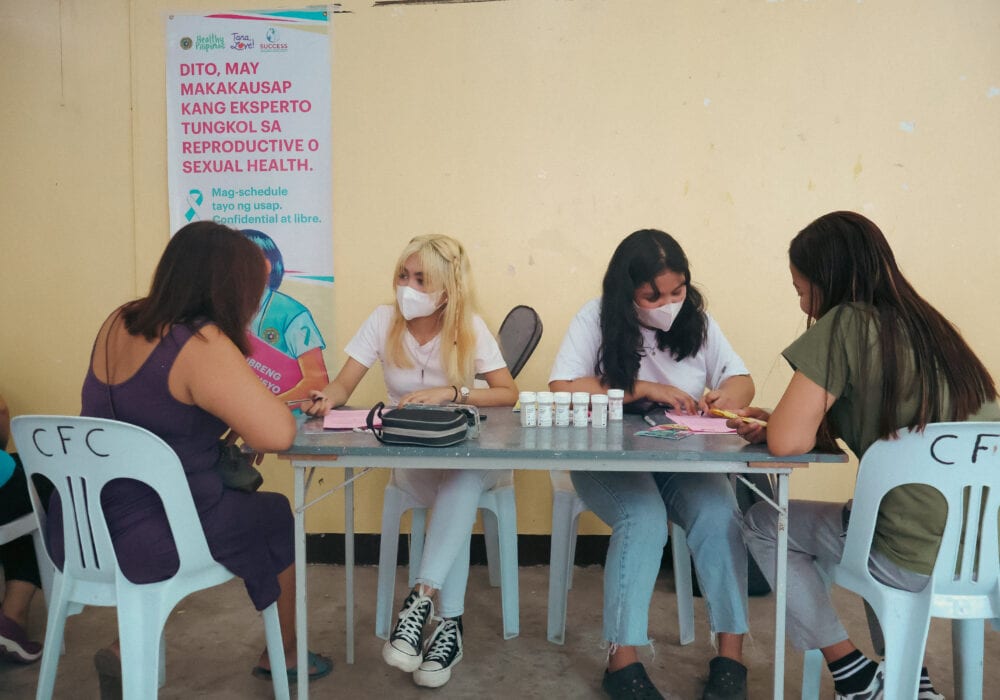
    In response to these challenges, the Centralized Laboratory Model for HPV DNA Screening (CLAMS) was developed as a pioneering approach to accelerate cervical cancer elimination efforts in the Philippines.
    Jhpiego cervical cancer screening program.
    Click to Enlarge
    Photo by Jhpiego.
    Spearheaded by Jhpiego, the CLAMS model aligns with the World Health Organization’s (WHO) recommendation to use HPV DNA testing as the gold standard for screening.

    “This innovation allows women to collect their samples in community settings, removing barriers of discomfort and stigma,” said Dr. Ingrid Magnata, Country Program Manager of Jhpiego Philippines, during the Scaling for Innovation Impact event on August 19 at Makati Shangri-La. “It is validated by the WHO, scalable in low-resource settings, and far more sensitive than older methods.”

    Launched in partnership with national and local stakeholders, the CLAMS Pilot Program aimed to improve access to high-quality HPV DNA screening and integrate self-sampling to increase participation. The program also sought to ensure same-day treatment with thermal ablation for women with pre-cancerous lesions, while creating a centralized laboratory and a hub-and-spoke model to streamline diagnostics and care.
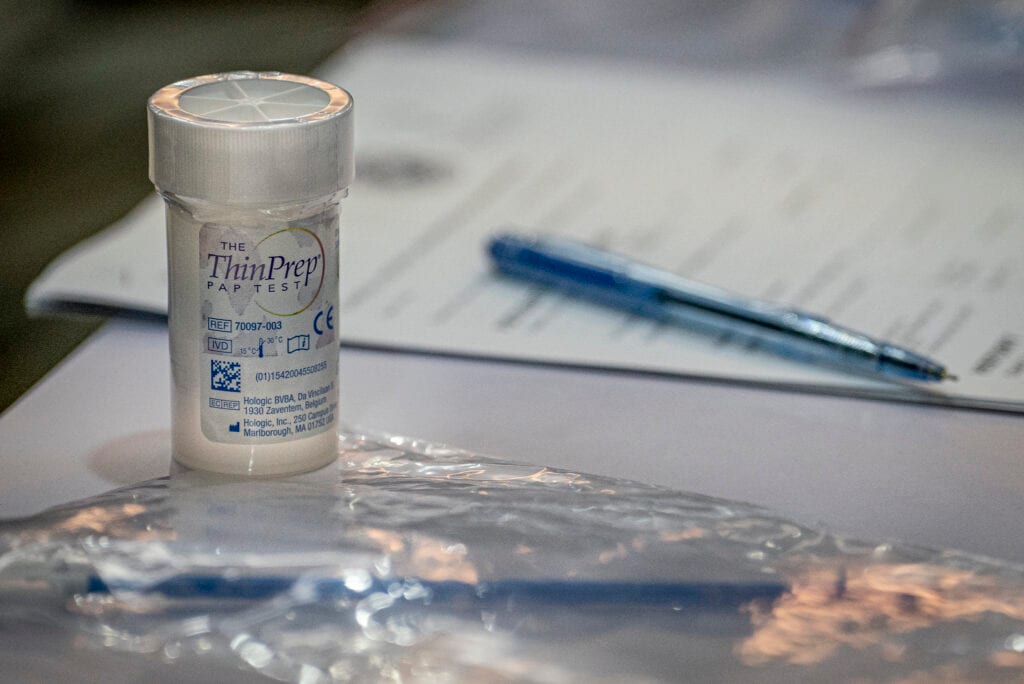
    “Once you are seen as an HPV-infected positive, immediately with the thermal ablation, you can be treated and then you will not progress into cervical cancer,” said Dr. Magnata. Thermal ablation is a procedure that uses heat to treat precancerous cervical lesions.
    A self-sampling test kit.
    Click to Enlarge
    A self-sampling test kit. Photo by Jhpiego.

    CLAMS in Action: Results and Learnings

    The pilot program, launched in five urban sites across Metro Manila, screened 4,969 women using HPV DNA testing. The positivity rate was 7%, consistent with global standards, and 190 women received preventive treatment or were referred for further care.

    Notably, the project demonstrated the effectiveness of self-collection in increasing screening uptake and proved the feasibility of a centralized laboratory for accurate, cost-efficient HPV testing. It also streamlined patient flow through community-based hubs and coordinated care teams, while using digital tracking to minimize dropouts and strengthen follow-up care.

    A Wart in Your Genital or Penile Area Could Indicate an HPV Infection, Say Experts

    Don’t just dismiss it—have it checked immediately!

    READ HERE
    By integrating services into primary care systems and focusing on community engagement, the CLAMS model helped overcome the access and trust barriers that often prevent women from seeking preventive health services. Its success was driven by multi-sector collaboration among government agencies, local health units, academic institutions, private sector partners, and community organizations.

    Scaling up the CLAMS model nationwide could bring the Philippines significantly closer to the WHO’s 90-70-90 targets by 2030: 90% of girls fully vaccinated with the HPV vaccine by age 15; 70% of women screened with a high-performance test by age 35 and again by age 45; and 90% of women with pre-cancer treated and 90% of women with invasive cancer managed.

    “Ideally, it would be easier to get treatment for cervical cancer than to buy a stick of cigarette every day. That’s the dream,” said Donna Miranda, Jhpiego project officer.

    Click here to learn more about the HPV vaccine and its benefits.

    Hanna Panoringan

    Hanna is a News Desk Writer at Smart Parenting, covering parenting, health, culture, and more. Off the clock, she’s likely people-watching at a café or park, matcha latte in hand.

    You Might Also Like
    © 2026 Smartparenting.com.ph. All Rights Reserved.