
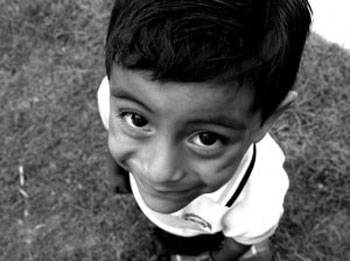
 “No, I don’t want to!”
“You can’t make me!”
“Why should I listen to you?”
These are just some of the phrases a child could utter that could set any parent’s temper ablaze, or, for the more sensitive among us (this writer included), even “shoot arrows” through a parent’s heart. All of them show one thing though: disrespect.
I, for one, have personally heard quite a few kids answer rudely when talking to their parents, and have even been a “victim” of disrespect a few rare times. Yes, respect is one of those seemingly elusive things in our “modern” world today. But many parents would most probably agree with me when I say that despite it being considered an “old-fashioned,” perhaps even “archaic” trait, teaching kids respect does matter.
Steve Hein, an independent writer who maintains the website www.eqi.org, one of the leading sites on emotional intelligence and emotional abuse (as ranked by Google.com), has gathered many useful articles on respect.
On Hein’s website, respect is defined as follows (emphasis mine):
“On a practical level respect includes taking someone's feelings, needs, thoughts, ideas, wishes and preferences into consideration. It means taking all of these seriously and giving them worth and value. In fact, giving someone respect seems similar to valuing them and their thoughts, feelings, etc. It also includes acknowledging them, listening to them, being truthful with them, and accepting their individuality and idiosyncrasies.
Respect can be shown through behavior and it can also be felt. We can act in ways which are considered respectful, yet we can also feel respect for someone and feel respected by someone. Because it is possible to act in ways that do not reflect how we really feel, the feeling of respect is more important than the behavior without the feeling. When the feeling is there, the behavior will naturally follow.”
[previous|page|next]
When it comes to parents and children, this means that we must also show our children respect and make them feel respected. We do this by giving our full attention to them when they seek it, listening to their opinions and thoughts (no matter how young they may be), and generally showing them that their presence, no matter how young they are, matters to us. This is one of the best ways we can model respect, so that they have an example to follow. Remember that children, more often than not, imitate what we DO, and not what we say.
This means then that we should remember why teaching our kids respect matters. According to the eqi.org website:
“When people respect one another there are fewer conflicts. In summary, it is for both evolutionary and practical reasons that respect is important, and also why we simply feel better when we are respected.”
Surely most, if not all parents would agree with these reasons. Family members who respect one another, even the youngest members of the family, will surely experience less conflict.
How then are we to bring respect into our homes? We can begin with a few basic steps:
1. Start with “the man in the mirror.”
This may sound cliché, but it is very true. Parents must show their children that they respect each other and the kids. If there are to be any arguments between Dad and Mom, it is best to do them where kids won’t witness them, not even within their hearing range. Building a respectful home environment means we start with the “pillars” of the home, i.e. the parents.
2. Next would be the entire family, of course.
In order to “grow” respect in our families, we must spend a significant amount of time together as a family. We must make time to eat, work, play and pray together. When we live a “corporate life” together like this, family members learn that they can depend on one another. They learn that people are much more important than material goods, the latest trends or gadgets, and what is “cool” by society’s standards. Children especially learn to see themselves as valuable members of the family, which helps pave the way for their self-concept as valuable members of society.
[previous|page|next]
3. Taking time to pray and worship together is key in promoting respect.
Respectful behavior is a prerequisite for a true life of faith. When we are part of a greater faith community (such as the entire Church for us Catholics), and also participate actively in the worship life of our local parish, we learn that we are a part of a bigger picture. We discover ways to help our fellowmen, and are compelled to consider how we can help and serve others on a daily basis.
4. Build friendships with families who also value what you value.
This includes respect for others. These families could be from the same parish or church group, or maybe even your child’s school. They could also be just within your condo complex, barangay or subdivision. When your children see and interact regularly with other families of similar values, the values you are teaching at home will be reinforced. When they see other kids being respectful to their parents, they are most likely to follow suit.
5. Guard your hearts and homes.
Families today are bombarded by so many negative values from different sources, one of the major influencers being the media. Be mindful of what you allow into your home. As much as possible, screen the TV shows, videos, games, magazines, books, music and websites your child is exposed to. Of course, parents must not live by “double standards” in this aspect too – you must also not watch, read, listen to, or log on to anything that would damage your heart, and your home life. Otherwise, you would have no moral credibility when it comes to correcting your kids’ choices and behavior.
6. Be involved in your children’s interests, hobbies and friendships.
Many times, kids can also get “infected” with the “disrespect bug” when they see their friends and/or classmates exhibiting disrespectful behavior towards teachers, parents and other persons in authority. Try to be as involved as you can in your child’s activities outside the home, and be quick to point out behavior that is unacceptable in your own home. (Don’t sound judging though, or lead your child to “look down” on those who are behaving badly.)
[previous|page|next]
These steps, though seemingly simple to do, are actually quite challenging for most parents. However, those of us who know that respect truly matters in this world would really take whatever means are needed to teach every family member to respect themselves and others. Let’s work together to build a better world, starting with our own families.
To respect a person is not possible without knowing him; care and responsibility would be blind if they were not guided by knowledge. - Erich Fromm
Sources:
http://eqi.org/index.htm
http://ezinearticles.com/?expert=Colleen_Langenfeld
Photo from sxc.hu

Lorem ipsum dolor sit amet, consectetur adipisicing elit, sed do eiusmod
Lorem ipsum dolor sit amet, consectetur adipisicing elit, sed do eiusmod
