
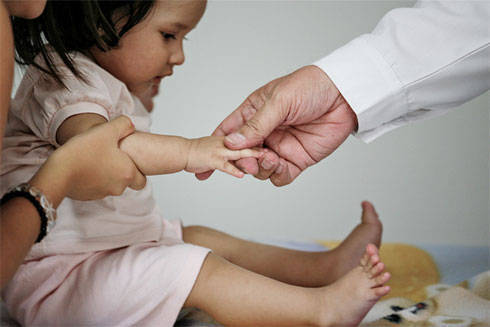
The outbreak of Enterovirus-71 (EV-71) virus in Cambodia, which, according to the World Health Organization (WHO), caused more than 50 children to suffer and die from, has alarmed neighboring Asian countries in recent months. In the Philippines, the Department of Health (DOH) has confirmed in July that there are two mild cases of EV-71 infection in the country, both of them the hand, foot, and mouth disease (HFMD) type. This month, a newspaper reports that three cases are being monitored in Zamboanga, involving, among them, a one-year old child.
Smart Parenting consulted Dr. Charisma Evangelista, a Philippine General Hospital-trained neurologist, to get the low-down on EV-71. Read on for a quick primer on the virus.
1. What is the EV-71 virus?
According to Dr. Evangelista, the Enterovirus-71 virus is a “causative agent of hand, foot, and mouth disease” aside from the Coxsackie virus A. While it has recently made news in Cambodia, she notes that the EV-71 is not a new virus and that it was first isolated in 1965. DOH records reveal that the Philippines has had several EV-71 cases in the past, although only rarely.
2. How does one get infected?
"It may be contracted via direct contact with the feces, saliva, and mucus of another individual who has the EV-71 infection," says Dr. Evangelista. This means a mom changing the diaper of an infected infant may actually spread the virus if she doesn’t wash her hands properly afterward.
3. Who can get infected?
"Anyone is susceptible to the infection, but it is much more common in infants and children," says Dr. Evangelista. In the Philippines, the two recently recorded cases involve children: a one-year-old in Davao and a five-year-old in Benguet. Thankfully, both cases appear to have only a mild strain of the virus unlike the severe form, which led to deaths in Cambodia, DOH and WHO report.
4. How do you know you've contracted the virus? What are the symptoms?
Dr. Evangelista notes that a person infected with the virus may or may not experience symptoms. If they do record symptoms, they may be likened to those you can get from the common flu:
- fever
- headache
- mild muscle aches or myalgia
- possible vomiting
If the EV-71 infection manifests in HFMD, Dr. Evangelista says painful sores around the mouth and throat may appear one to two days after the fever. “A non-itchy rash may then appear on the palms of the hands, feet, and the area surrounding the mouth,” she adds.
[previous|page|next]
5. Aside from HFMD, what other diseases can the EV-71 develop into?
Dr. Evangelista says those infected with the virus may also suffer a form of gastroenteritis with diarrhea. In severe but rare cases, an EV-71 infection can have neurological manifestations such as:
- encephalitis manifesting in fever, seizures, and behavorial changes
- aseptic meningitis manifesting in headaches and stiff neck
- acute flaccid paralysis
In the case of the Cambodia outbreak, for example, the severe strain of EV-71 caused patients to develop encephalitis, an acute inflammation of the brain, which eventually led to their deaths.
6. How is the EV-71 treated?
There is no specific treatment for the EV-71 infection. According to Dr. Evangelista, there are currently no antiviral medications that work for EV-71, which means that the treatment for the virus is mostly supportive or are meant to only manage symptoms. For example, if the patient develops a fever, antipyretics may be given.
“To prevent dehydration from vomiting and diarrhea, the patient is advised to drink lots of fluids,” says Dr. Evangelista. “Eating fruits and vegetables may help boost the immune system to help the body fight the viral infection.”
Should you suspect you or your children to be infected with EV-71, Dr. Evangelista advises, “Consult a doctor. It is prudent to seek consult immediately for early detection.”
7. What precautions can one take to avoid the virus?
While the DOH has only reported mild cases of EV-71 in the Philippines so far, it is important to remain vigilant. There is no sure-fire way to protect yourself from the virus, but it doesn’t hurt to take steps to strengthen your immune system. Here are some precautions you can take, according to Dr. Evangelista:
- Eat plenty of fruits and vegetables.
- Avoid close contact with people who have flu-like symptoms.
- Practice good hand hygiene – frequent hand washing will help.
- Follow proper sanitation practices (proper waste disposal, use of disinfectants, etc)
Photo by Alex E. Proimos from flickr creative commons

Lorem ipsum dolor sit amet, consectetur adipisicing elit, sed do eiusmod
Lorem ipsum dolor sit amet, consectetur adipisicing elit, sed do eiusmod
