
My husband and I met in our freshman year in college. We had been together since 2004 on our sophomore year, managed to finish our degrees and went on to pursue our own careers. Talks of getting married came up every now and then, but we were planning to save up first. In January 2009, however, we found out I was pregnant.
Our respective families were a little disappointed at first. Eventually, the disappointment turned to excitement, as our baby is the first grandchild on both sides of our family. To say that she is wanted and loved by everyone is an understatement. My husband and I would spend hours poring over articles about pregnancy, and even spent time dreaming of what he or she would become one day. My husband would even recite to her all the countries and their capital cities, while classical music played in the background.
I had a relatively uneventful pregnancy, but nearing my 37th week, my blood pressure remained high. For fear of preeclampsia, my ob-gyne decided that I my baby should be delivered at the soonest possible time.
Sophia Adele was born on the 12th of September, 2009. She was relatively small, but her APGAR scores were perfect. She gave me a scare though, when during her first night of being roomed-in with me, she turned blue. I screamed for my mother to wake up and call for help. The nurse on duty then assured me that Sophie's small body just couldn't handle the cold air-conditioning. A warming lamp was placed over her, and soon her cheeks returned to a healthy color.
Needless to say, I did not sleep well that night, or the nights following that incident. I was so afraid to lose Sophie when it had only been days that I held her in my arms.
[previous|page|next]
Sophie gained weight in the first few months of her life. But soon, she had difficulty gaining weight. She also started missing developmental milestones. Deep in my heart, I knew something was amiss, but I believed what everyone around me (including her pediatrician) was telling me then: everything's okay; every child develops at his/her own pace. I shrugged off my worries and decided to focus on the many things we love about her. But that thing called "mother's instinct" proved to be true.
A week before Sophie's first birthday, I finally convinced my husband that we should see a developmental pediatrician. In truth, it wouldn’t have taken a specialist to figure out that something was not right. At almost a year old, Sophie still could not sit, crawl nor walk. Neither could she talk or even babble. She was initially diagnosed with Global Developmental Delay (GDD), meaning she has delays in all aspects, including gross and fine motor skills, language, cognitive skills and social interaction. Therapy was needed to bridge the gap between her chronological age and her developmental age.
On our way home from the hospital, my husband and I were silent, lost in our thoughts. I didn’t know how to process what had just happened. It's as if my world had been turned upside down, all plans thrown out the window. I was hoping then that after Sophie's first year, I could go back to work, but it seemed God had other plans.
It has been two years since that initial diagnosis. Two years of therapy, of having to look Sophie in the eye and tell her that she has to go through it, and not be affected by her cries — for help, from pain or from merely not wanting to undergo therapy. Two years of speaking to doctors and other specialists. Two years of having Sophie undergo this and that test, in the hope of finding answers. And finally, just a week ago (as of this writing), we got our answer: Cockayne Syndrome.

The progression of the disease on a baby with Cockayne Syndrome. Image from http://bluepurpleandscarlett.com/about-cs
Cockayne Syndrome (CS) is a rare genetic condition, so rare that it occurs in only 2 in 1,000,000 births. Here in the Philippines, Sophie is the very first patient encountered by our geneticist to have that condition.
In a nutshell, those afflicted with Cockayne Syndrome experience premature aging because the genes responsible for DNA repair are affected. They are notably sensitive to UV rays; thus, a small amount of exposure to sunlight causes sunburn. The first time we visited our geneticist a year ago and she mentioned Cockayne Syndrome to us, I knew that we had found Sophie’s diagnosis. Seeing the pictures of kids who have Cockayne, hearing about the characteristics that a typical child with Cockayne Syndrome has, I just knew that this was it. We just had to be sure so a confirmatory testing procedure was in order.
[previous|page|next]
I remember going home after that initial meeting with the geneticist and researching everything about Cockayne Syndrome online. It was like fitting the pieces of a puzzle together — the puzzle that is Sophie.
What we couldn't accept is the relatively short lifespan of people with CS. Since Sophie’s condition started showing up when she was around one year old, we thought that she might have Type I Cockayne Syndrome or the classic form of Cockayne Syndrome. It says on a US-based support group’s website that Type I CS kids have a typical lifespan of ten to twenty years.
My husband could not begin to wrap his mind around the thought that his firstborn, his baby girl, could very well outlive him. The confirmatory testing needed to be done so we would know for sure what it is that we’re dealing with. It was also for my own peace of mind.
You see, I was nine months pregnant when Sophie’s developmental pediatrician suggested that I visit a geneticist. With our current predicament, the geneticist mentioned that Sophie may have inherited the genes from us, and that there’s a 25% chance that our future babies will have CS, too. Still, my husband was optimistic that the chances of us having healthy babies was big.
Still, no amount of reassurance quieted me, so one sleepless night, I searched for names of doctors who are involved in Cockayne Syndrome research abroad and sent out emails to them, asking them where we could send samples for CS confirmatory testing. It was a rather desperate move on my part because I didn’t know anyone who has any information about testing for CS.
Lo and behold, after just three days, I received an email from Ms. Jayne Hughes herself, the mother of Amy, after whom the UK-based Cockayne Syndrome support group “Amy and Friends” is named.
Jayne told me about the difficult journey she had in finding out what it is that Amy has. We even exchanged photos of our own daughters and shared stories about caring for them. She generously offered to answer, to the best of her knowledge, any question I had that is related to Cockayne Syndrome.
I never felt so relieved. Finally! I have someone to talk to who knows what I am going through because she had been there personally. At the end, she informed me that “Amy and Friends” would sponsor Sophie’s testing; we need only to pay for the extraction of her blood samples and for the shipping expenses.
[previous|page|next]
A year after and the results are here. Indeed, Sophie has Cockayne Syndrome. My husband and I feel that we have somehow accepted this; that there’s nothing we can do about it anyway because it is Sophie’s genetic makeup. At least our quest for finding out her real medical condition is over.
Now, anticipating the possible complications Sophie might have is the only thing we can do. We have to watch out for her kidney and her blood pressure, because according to my research, CS kids tend to have problems in those areas.
We also had her eyes and ears checked recently — Sophie has moderate hearing loss on both ears and needs to be fitted with a hearing aid, and while her eyes do not have cataracts, she is far-sighted and needs to wear eyeglasses. Her therapy continues; her therapist believes she can walk; she just has to overcome her fear of falling and learn how to balance.
I have since given birth to a healthy baby girl whom we named Eliana Vita, which means, “The Lord’s response is life.” We did so because during this troubled time in our lives, God gave us something to hope for, to look forward to. Despite all the challenges and fears, He has given us a reason to not lose sight of what it means to be alive, to be able to love, to still have faith in Him and to never lose hope in spite of everything we face.
As of this writing, Sophie's condition remains the same, but her parents continue to move forward in hope, savoring each day they have with her, and treasuring all that she brings to their lives.
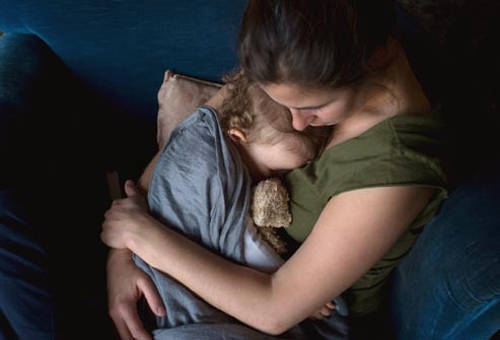
Main image from webmd.com

Lorem ipsum dolor sit amet, consectetur adipisicing elit, sed do eiusmod
Lorem ipsum dolor sit amet, consectetur adipisicing elit, sed do eiusmod
