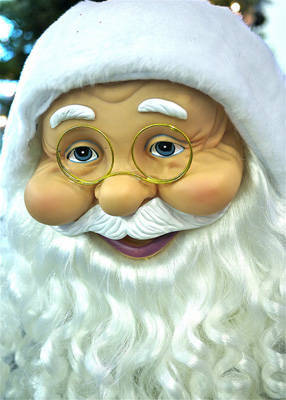
 As a child growing up, I used to love singing the song “I Saw Mommy Kissing Santa Claus.” I don’t remember anymore though whether I believed that it was Santa who brought us gifts on Christmas Day – probably because I was too psyched about spending time together as a complete family! (We used to be based overseas, with my older siblings based in the Philippines).
Now that I am a parent myself, I had to consider whether I’d be introducing the concept of Santa to my own kids. Since we started homeschooling our kids, we’ve been very particular about what we teach them – and that includes introducing characters like Santa Claus and the Easter Bunny to them (the latter, we definitely did not!).
Carole S. Slotterback, a professor of psychology at the University of Scranton, Scranton, Pennsylvania, and the author of The Psychology of Santa, wrote an article about Santa Claus, titled “What Children Want To Hear,” for the New York Times.
She writes: “Myths and stories about Santa Claus permeate our society. Even if your family doesn’t celebrate Christmas, your children may still believe in the big man. For example, psychological research in the 1980s found that even Jewish children believed in Santa. But at some point these beliefs change.”
Slotterback goes on to say that children’s conceptualization of Santa changes largely due to their cognitive development, meaning that their belief in Santa decreases as their level of reasoning increases.
However, this is not a perfect relationship, as some children still believe in Santa even if they have “advanced” reasoning abilities. Slotterback says this could be due to “incentives from parents and others.” Thus, Slotterback’s advice to parents with children who are curious about Santa (honestly, who wouldn’t be if they were “bombarded” with images of Santa all throughout the holidays?) is thus:
“Answer the questions your child has as they come up. Keep in mind that although you may go through a long explanation, your child will hear only what he/she wants to hear and is ready to hear — probably only a small sound byte of your explanation. They, like everyone else, filter everything through the information they have acquired and the experiences they have had.”
[previous|page|next]
Bruce Henderson, another professor of psychology, this time from the Western Carolina University, also has these words of wisdom to share:
“Parents with traditional Christian beliefs should be careful about attributing God-like qualities to Santa. They may want to emphasize the historical Saint Nicholas or talk about the role of gift-giving in their religious tradition instead.”
Personally, this is how my husband and I introduced the concept of Santa to our two young children: we did so based on his origins in the Catholic saint Nicholas. The St. Nicholas Center website is loaded with useful information for families who wish to “delve deeper” into the relationship between Santa Claus and St. Nicholas. For starters it says:
The true story of Santa Claus begins with Nicholas, who was born during the third century in the village of Patara. At the time the area was Greek and is now on the southern coast of Turkey. His wealthy parents, who raised him to be a devout Christian, died in an epidemic while Nicholas was still young. Obeying Jesus' words to "sell what you own and give the money to the poor," Nicholas used his whole inheritance to assist the needy, the sick, and the suffering. He dedicated his life to serving God and was made Bishop of Myra while still a young man. Bishop Nicholas became known throughout the land for his generosity to those in need, his love for children, and his concern for sailors and ships.
Now, whenever we see a Santa Claus image when we’re out of the house, the children call him “Saint Nicholas” instead of Santa.
Similarly, for other parents, introducing Santa Claus (or not) to their children is something based on their own personal beliefs.
Jen Mayuga-Cruz, homeschool mom and managing partner of SESOU Nature Source, says she introduced the idea of Santa Claus to her five year old son Mateo in the same way that the idea was planted in her as a child: “basic knowledge and not too much hype (the video message from North Pole is most hype I've done).”
Mommy Jen emphasizes though that “the significant difference is that almost every day of the rest of the year I always, always remind / impart / reiterate to him that there is only one reason for this season of love and giving: the birthday of Jesus. "
[previous|page|next]
On the other hand, freelance writer and work from home mom Martine de Luna says she finds “nothing wrong with believing in Santa Claus. He's part of Church history, and one of our most beloved saints.” More than that, Martine believes introducing Santa to her two-year-old son Vito is “OK” because of these three reasons:
“First of all, I believe fantasy is a big part of childhood. I believe the majority of people believe there's nothing wrong with believing a fantasy, especially one of the oldest and most universal childhood fantasies of all, that is, Santa Claus.
When parents feel that kids are past the age of believing in Santa Claus, they can use it as an opportunity to teach kids to be like Santa's helpers and do good deeds for others. Of course, children should always be taught that the true meaning of Christmas is the birth of Christ. This is why Santa and others give gifts to others and to those less fortunate than they are, because it's an imitation of God's most precious gift to us. Parents can tell the story of the real Santa Claus or Saint Nicholas, who is one of the many people who answered the call of Jesus to `love thy neighbor.’ His stories of generosity are legendary.
Third, kids are smart. They will figure out reality from fantasy eventually. Case in point: When my brothers and I were in primary school (elementary school here in the Philippines), we began to notice that Santa's’ handwriting looked a lot like Mom's! We were old enough to listen to stories about the real Santa in a way that we could understand. We never felt robbed or lied to, but up to this day, we remember that believing in Santa was fun, but discovering the reality about him was even better.”
Mommy Martine believes that parents who choose to introduce Santa to their kids won't be depriving them of “a beloved, universal fantasy; instead you get to teach them about a beautiful Christmas legend that has many virtues and values at the heart of it.”
On the contrary, Blessie Adlaon, owner and chief editor of Escrive Writing and Editing, and homeschool mom to Josh, 7; Bea, 5; and EJ, 2, says that she did not introduce her kids to Santa Claus, stating the following reasons:
1. “It was not necessary. Heaven knows, with just a brief exposure to the world, they are exposed to him well enough.”
2. “It's their exposure to Baby Jesus that I was worried about (they can't get that naturally from their surroundings half as easily) so that's what we're focusing on. Time is a limited resource in this household, like in many other households.”
3. “Santa Claus is a fictitious character that we often tell our kids is real. I find this practice dishonest.”
Nonetheless, Mommy Blessie says that there are pros, as well as cons, of introducing Santa Claus to kids:
1. “Pro: They don't get left out of the rest of the world. Con: I feel the concept of Santa promotes materialism, and that's one thing the world so embraces that I feel my kids would be better off if they were left out of it.”
2. “Pro: Santa helps us motivate our kids to be good for Christmas. Con: It somehow seems to me that we are teaching kids to be good only for Christmas -- or, more accurately -- for Christmas gifts. It tends to overshadow the concept of doing good for goodness' sake.”
[previous|page|next]
Teacher Donna Donor-Javier also has her own opinions when it comes to telling her son, 5-year old Jadan Kib, about Santa:
“My son knows about Santa Claus, but I didn't tell him that he gives gifts to children on Christmas Day. Children see Santa Claus figures in shopping malls so you can't really hide the fact that Santa Claus is truly a Christmas symbol. However, `magnifying’ Santa Claus' character by saying that he lives in the North Pole, and that he gives gifts to "nice" children, and if you're not “good,” you get no gift from Santa - I think those are just too much.”
Mommy Donna also says that focusing too much on Santa can “cloud” the “real meaning of the celebration of Christmas.” As a teacher, she says, “In school, during our discussion about Christmas, I felt sad that children know Santa Claus better than Jesus Christ. I just told the children that Santa Claus is not real but their titos, titas, mommies, daddies, lolos, lolas, ninongs and ninangs can be their `Santa Claus,’ because they give them gifts on Christmas Day.”
At the end of the day, this writer believes it’s really the parents’ decision whether or not to “include” Santa in their family’s Christmas traditions. Whatever that decision may be though, it would be wise to make the most well-informed, thoroughly-researched, and yes - the most prayed-for choice. After all, traditions or concepts like these are something that our kids will most likely pass on to their own children.
Photo from flickr.com

Lorem ipsum dolor sit amet, consectetur adipisicing elit, sed do eiusmod
Lorem ipsum dolor sit amet, consectetur adipisicing elit, sed do eiusmod