
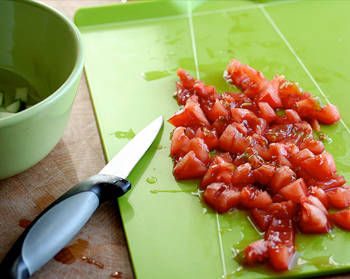
 To any mom, it is only but natural to want the cleanest, safest and healthiest food for your family. However, you could already - unwittingly - be exposing your family to harmful bacteria.
You may or may not know it yet, but some of the dirtiest things in your kitchen are actually those that come in contact with your food or those you use in preparing food for your family and kids.
The good news is that with proper maintenance and a good cleaning routine, you can keep germs and food-borne diseases at bay. We rounded up some of the dirtiest things in your kitchen.
1. Chopping boards
Because bacteria like salmonella and E.coli can contaminate uncooked meat, fish and poultry, it’s important to keep clean the accessories we use with them all the time.
According to a study conducted by microbiologist Dean Cliver from the University of California, who studied the behavior of bacteria on different chopping board surfaces, your best bet for the least bacteria contamination is a wooden chopping board.
Says Cliver, "It's a very porous material and the fluid is drawn into the wood by capillary action. If there are bacteria in the fluid, they go in and they never come back alive. [The bacteria] die off slowly. It may take a few hours, but all the same, they aren't in a position to cause any trouble."
Plastic chopping boards, as well as marble ones fared weak in the experiment because bacteria can breed in the cuts left by knives.
Regardless what type you use, you can keep plastic chopping boards clean by spraying it with a mist of vinegar, followed by diluted bleach or hydrogen peroxide. For wooden chopping boards, you can just give it a good scrub. Use anti-bacterial soap and wipe it down with a clean dish rag.
[previous|page|next]
2. Kitchen sink
Get this: your kitchen sink is actually on average 500,000 times dirtier than most bathrooms. And we’re just talking about the drain here. Because all the washing that happens here and because moisture attracts bacteria, make sure to keep it clean before and after cooking preparation.
To clean your kitchen sink, use an antibacterial product after preparing and cleaning food. Raw fruits, vegetables, and meat can carry a lot of salmonella, campylobacter and E.Coli.
3. Kitchen sponge
Based on a study by the NSF International ((National Sanitation Foundation), the typical kitchen sponge is 150 times dirtier than a toothbrush. Says NSF director for microbiology Rob Donofrio, M.S., Ph.D., "You pick up bacteria when cleaning, but because you rarely disinfect that sponge between uses, germs multiply.”
How to clean up this guy? Pop a wet sponge in the microwave for two minutes and replace it every two weeks. It’ll keep the smell off too.
4. Refrigerator
When your fridge isn’t set at the temperature of at least 40 degrees F, you increase the risk for food-borne bacteria to grow. Check for fridge thermometers in hardware stores so you can be sure.
Since the handle gets in contact with possibly dirty hands, make sure this is equally clean. Use disinfectant spray several times in a day.
5. Dish rag
When you clean all of the above, this guy takes most of the beating because it does the last part of the cleaning process – wiping things dry. To clean your dish rag, replace these once a week and let them dry in between uses. Throw them in the washing machine and dry them on high heat, recommends Neil Schacter, M.D., medical director of a respiratory care unit at Mount Sinai in New York City.
You may also want to read:
• The 10 Dirtiest Things in Your Home
Sources:
• November 7, 2006. “Which chopping board is worse for spreading germs?” health.ninemsn.com.au
• November 12, 2008. “Soap up! The 12 germiest places in your life” today.msnbc.com
• September 8, 2011. Matthew Cenzon. “Hidden Germs In The Kitchen: What You Should Do” symptomfind.com
• February 27, 2012. “Food Safety: 5 Things in Your Kitchen That Could Make You Sick” hufftingtonpost.com
• “The Dirtiest Things You Touch Every Day” ranker.com
Photo by Caro’s Lines via flickr creative commons

Lorem ipsum dolor sit amet, consectetur adipisicing elit, sed do eiusmod
Lorem ipsum dolor sit amet, consectetur adipisicing elit, sed do eiusmod
