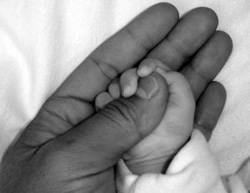
 Marriage is a two-person contract. The same goes for parenthood. While it has traditionally been the mother who stays with the children and tends to the household, today’s lifestyle encourages a more equal distribution of roles.
What it means to be a father has changed in the 21st century. For many of us, a father is traditionally the provider, albeit an aloof one. He is in charge of bringing home the money, but not taking care of the children. Household chores? Forget it. Find out how the role of fathers has drastically changed today.
More Two-Parent Families are Dividing Domestic Workload
Today, more and more women are present in the workforce. In the United States, over half of two-parent families have both parents working. “As more women joined their male partners in the workforce, it became increasingly important that the domestic workload, including the raising of the children, was more evenly distributed,” said Dr. Wade Horn, president of the National Fatherhood Initiative (NFI).
As a result, fatherhood means more than just bringing home the bacon, it means cooking it too. Fathers are now encouraged to be more involved in their children’s lives and to become more accessible than they were even just a generation ago.
Click here to read more about the changing roles of fatherhood.
[previous|page|next]
Read more about the changing roles of fatherhood.
Society Shapes the Role of Father
Dr. Bruce Linton, author of the book Finding Time for Fatherhood, argues that “fatherhood is socially constructed. Depending upon the culture, the historical time, and the needs of the society, fathers may play a variety of roles.”
The prospect may seem daunting to new dads whose idea of fatherhood is still stuck in old models, but the gradual loosening of gender roles has helped them express their own feelings of love toward their children.
More Involved Fathers = Happier, More Successful Kids
Research suggests doing so makes for happier, more socially adept children. According to the Canadian Father Involvement Initiative, children with more involved fathers are “are more likely to enjoy school, have better attitudes toward school, participate in extracurricular activities, and graduate.”
The role of the father is as important as the mother’s. Each contributes to their children’s growth in unique and complementary ways. The changing times only challenge new fathers out there to create their own job description in their effort to be “World’s #1 Dad.”
Sources:
Photo from sxc.hu
[gallery]175[gallery]

Lorem ipsum dolor sit amet, consectetur adipisicing elit, sed do eiusmod
Lorem ipsum dolor sit amet, consectetur adipisicing elit, sed do eiusmod