
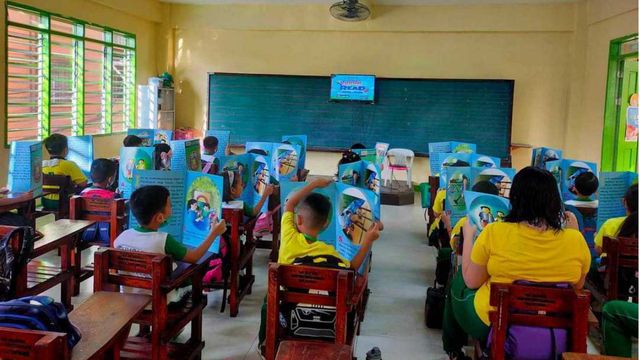
A total of 18.96 million Filipino students who graduated from junior and senior high school in 2024 are unable to read and comprehend a simple story, according to data from the Philippine Statistics Authority (PSA).
This statistic was revealed during a Senate education hearing last Wednesday, April 30, where Committee Chair Senator Sherwin Gatchalian voiced serious concern over the country's deepening literacy crisis.
ALSO READ: Parents Play A Role In Improving A Child's Reading Comprehension
The Growing Literacy Crisis
The PSA defines a functionally literate person as someone who can read, write, perform basic math, and understand what they read, including comprehending simple stories. This skill is essential for daily tasks, such as following instructions and making informed decisions.
Senator Gatchalian expressed his concern, stating, "If you look at the 2024 figure, there are 18 million students who the PSA detected as senior high school graduates and junior high school graduates, but are not functionally literate. This means they graduated from our basic education system but cannot read or comprehend a simple story."
He emphasized that this situation contradicts the purpose of basic education. "It is non-negotiable that a student graduating from our education system should be functionally literate—but unfortunately, that is not the case," Gatchalian added.
Further data presented during the hearing revealed that approximately 24.8 million Filipinos across different age groups face challenges understanding even simple narratives. "This is the gravity of our situation right now," Gatchalian said.
Assistant National Statistician Adrian Cerezo also confirmed that only 79% of senior high school graduates in 2024 are considered functionally literate.
"That's not in your presentation, you have detected that 21 percent of our senior high school graduates are not functionally literate. That's quite concerning—that means one out of five of our graduates cannot comprehend a single story. That's something that we need to address," the senator stated.
Provinces Struggling the Most with Literacy Rates
The provinces with the highest illiteracy rates among high school graduates include:
-
Tawi-Tawi – 67%
-
Davao Occidental – 53%
-
Zamboanga del Sur – 49%
-
Northern Samar – 48%
-
Basilan – 48%
-
Sarangani – 48%
-
Western Samar – 46%
-
Agusan del Norte – 44%
-
Sultan Kudarat – 44%
-
Lanao del Norte – 44%
These findings have sparked calls for urgent educational reforms. Lawmakers and educators are emphasizing the need for systemic changes to ensure that all students graduate with basic literacy skills. Without these improvements, the education system will continue to fall short of preparing students for future challenges.
How Parents Can Help Improve Their Child's Reading Comprehension
According to Thumby Server-Veloso, an early childhood education expert and member of the Smart Parenting Board of Experts, reading comprehension is vital for a child's academic success and overall development. Parents play a critical role in helping their children engage with texts and improve their reading skills.
Teacher Thumby explains, "Reading is not just about saying the words; it's about understanding the story and making connections." Parents can help children build strong reading comprehension skills by focusing on both the mechanics of reading and the meaning behind the words.
Signs Your Child's Reading Comprehension Needs Attention
Parents should look out for signs that their child may be struggling with reading comprehension. Teacher Thumby highlights that children who struggle with summarizing stories, recalling important details, or making predictions may need additional support.
Some strategies to Boost Reading Comprehension:
To help improve their child's reading comprehension, parents can try the following strategies:
-
Read together daily: Reading with your child and discussing the story helps reinforce understanding. Encourage your child to visualize the story, connect it to their own experiences, and use context clues to figure out unfamiliar words.
-
Ask questions and make predictions: Engage your child by asking questions about the story, such as "What do you think will happen next?" This helps deepen comprehension and encourages critical thinking.
-
Summarize the story: Give your child time to summarize what they've read. This reinforces key details and helps them understand the main points.
By incorporating these strategies into daily routines, parents can help address reading gaps early, laying a strong foundation for their child's literacy and academic success. Catching and addressing these gaps early is crucial to ensure that children do not fall behind.
Click here for tips on how to get your child into reading.
More from sp

Lorem ipsum dolor sit amet, consectetur adipisicing elit, sed do eiusmod
Lorem ipsum dolor sit amet, consectetur adipisicing elit, sed do eiusmod
