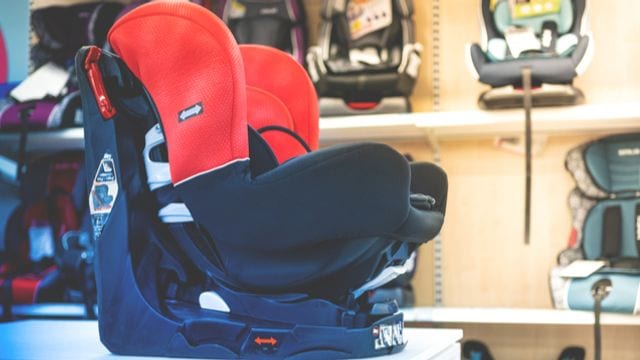
Child car seats are selling fast that they will rival demand for that other baby staple — the stroller — as parents rushed to comply with a vehicle safety law implemented during the pandemic, according to a leading distributor of children's toys and baby gear in the country.
Not even 15 days into February 2021 , sales of child car seats tripled, and it's expected to grow even further in the coming months, said Liza Yao, managing director of Richprime Global, which distributes brands like Chicco and Joie.
"I think, after this year, it's gonna be like a stroller. The way you see how pretty much everyone buys a stroller," Yao told reportr. "It may even surpass the sales of strollers."
"We see it at least surpassing the 2019 sales — the year when it was first announced," she said.
Inquiries and orders for child car seats have surged since President Rodrigo Duterte signed the Child Safety in Motor Vehicles Act in 2019 as parents rushed to comply with the regulation.
While doing its car seat buying guide, SmartParenting.com.ph discovered many car seats sold online were out of stock already. That just a few days after February 2 was announced as the day of now-deferred enforcement.
Treat car seat as an investment
On average, a typical child car seat sells for P5,000 to P8,000 in the Philippines, with more expensive ones going as high as P21,000.
Car seats are pricey, but parents need to think of it as an investment, Yao said, noting that there are child car seats available in the market that could last children for years and as they grow.
"If you look at the price of a car seat relative to the safety benefit, it's actually a very small investment relative to what we spend for our children and vehicles," she said. "It's really one way of protecting the safety of your child."
For those concerned about the price tag, baby stores often offer installment payments for child car seats, Yao said, noting that the product's primary purpose is to ensure children's safety.
Car seats keep kids safe
While the law was supposed to take effect on February 2, the Department of Transportation (DOTr) deferred its mandatory enforcement to give way to an information campaign following criticism on the additional expenses incurred in the middle of the COVID-19 pandemic.
DOTr Asec. Goddess Hope Libiran had said that the government would focus first on an information campaign to help Filipinos understand the benefits of child car seats.
"Ngayon, ang focus is more on education and information camapaign hindi po muna hulihan," Libiran had said.
The World Health Organization has long endorsed the mandatory use of child car seats and has urged countries to adopt laws for its use, citing studies showing that its use increases children's survival chance during accidents.
"While seat-belts and child restraints do not prevent crashes from taking place, they play a major role in reducing the severity of injury to vehicle occupants involved in a collision," the WHO said in its seat belt manual.
"An occupant's chance of survival increases dramatically when appropriately restrained."
In the Philippines, the WHO said more than 600 children die from road crashes each year, and "evidence has shown child restraints reduce the likelihood of a fatal crash by approximately 70% among infants and between 54-80% among young children."
With the law yet to be fully enforced, parents still have the time to save up and study the benefits of child car seats.
"There's a lot of innovation and we also on our part try to make prices affordable for consumers because it should be part of what parents need for their kids," Yao said.
"We think the demand for it would continue to increase because it's becoming a basic need for parents," she added.
This story originally appeared on Reportr.World.
*Minor edits have been made by the SmartParenting.com.ph editors.
What other parents are reading

Lorem ipsum dolor sit amet, consectetur adipisicing elit, sed do eiusmod
Lorem ipsum dolor sit amet, consectetur adipisicing elit, sed do eiusmod