
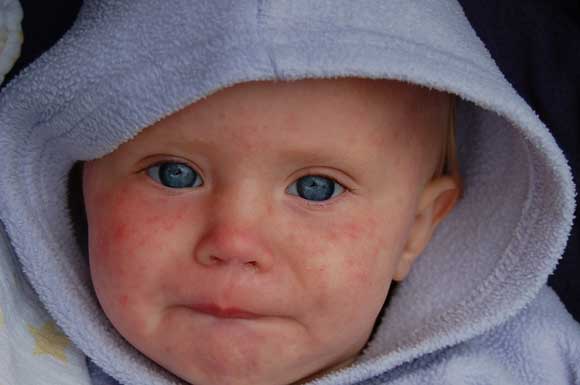
Photo by Dave Haygarth via flickr creative commons
From January 1 to December 14, 2013, there were as many as 1,724 recorded cases of measles in the country, and out of that figure, a total of 21 deaths, according to the Department of Health’s National Epidemiology Center (NEC). Just as the new year began, with the number of measles cases rising, the Department of Health (DOH) declared a measles outbreak in five Metro Manila cities as of January 6: Caloocan, Muntinlupa, Las Pinas, Manila and Paranaque.
The World Health Organization (WHO) defines an outbreak as “…the occurrence of cases of disease in excess of what would normally be expected in a defined community, geographical area or season. It may last for a few days or weeks, or for several years.”
Due to the growing concern over the possible spread of the disease, Health Secretary Enrique Ona, met with civil society groups and local government health officials to discuss plans for an intensified vaccination response in the metro. “Measles elimination can be achieved if measles vaccine coverage is 95 percent in every district,” said Tayag.
Because little kids are very susceptible to it, parents must be vigilant in order to avoid catching the disease. To know more about it, we consulted with medical practitioners for their expert opinion. Here is a quick read on what you need to know about measles:
How is the virus transmitted?
“The measles virus is airborne, and one person can affect as many as 18 others, compared to the flu which can affect only three,” explains DOH assistant secretary Eric Tayag.
“The virus could spread when the patient sneezes, wipes his nose or rubs his eyes with his bare hands and holds on to things where he can leave discharges,” says Dr. Candy Aguilar-Ocampo, pediatrician at the Health Avenue Medical Services. “The virus may be suspended on air for as long as one hour after the patient leaves the room.” (Nelson’s Textbook of Pediatrics, 19th ed.)
Who are most vulnerable to the disease?
The most susceptible to the virus are school-aged children (six to 12 years old), pregnant women and immuno-compromised individuals (those who have poor health or a weak immune system), especially if they have not been vaccinated with or have not completed the required dosage of the measles vaccine. While it is most common among children, even adults can get infected because of the highly contagious nature of the disease.
[previous|page|next]
What are the symptoms of measles? How does it progress in a patient?
“Incubation period is about eight to 12 days, meaning, you don't get sick right away,” says pediatrician Florence Irena A. Atutubo, MD, DPPS, who holds clinics in Cubao, Marikina and San Mateo. “The virus multiplies inside your body first before manifestations of illness occur. On day 1, the patient will have a low to moderate grade fever, approx 37.5 to 38.5 degrees Celsius, and he may already have red or watery eyes, and the beginning of a cold, which may just seem like a regular cold.
“On day 2, fever will rise, and cough may start. The fever is usually at its peak on days 3 and 4. Rashes will appear first on the face, then will later spread to the arms, chest and back, abdomen, and lastly on the lower extremities.”
Aguilar-Ocampo provides a summary of the symptoms:
• “High fever (>38.5°C)
• Red lesions with bluish white spots in the center or the inner part of the cheeks
• Cough
• Inflammation of the mucous membrane of the nose with nasal discharge
• Conjunctivitis or reddening of the outer layer of the eye and inner area of the eyelid• Prominent rashes which appear first on the forehead (around the hairline), behind the ears, and on the upper neck. It spreads towards the trunk, arms and legs, even on the palms and soles.”
Paola Salcedo*, an HR executive, exhibited symptoms of measles on December 20, 2013. “After about five or six hours [since the appearance of the rash on my forehead and back, as well as redness of my cheeks], I couldn’t walk. My soles hurt. My body was sore.” She was advised to stay in solitary confinement at home for two weeks.
“The rashes are red spots,” Salcedo explains. “They’re not like tiny wounds (pustules). The rashes weren’t bumpy (the skin remains smooth); they were under the skin. Your skin is super itchy. The doctors gave me antihistamines for the itch and they gave me another capsule that would help me sleep, if the itch becomes unbearable.
I had insomnia the whole time that I had measles. My eyes hurt; they felt sore. The eye sockets sting. You want to close your eyes, but you’re not asleep. You’re really awake. You can’t read a book because it would strain your eyes.”
[previous|page|next]
What is the treatment for measles?
“In the management of measles, you can only treat the symptoms,” says Aguilar-Ocampo. “There is no need for antibiotics unless there are other complications like pneumonia, for example. Antiviral therapy is also not known to be effective. Hydration is most important. Antipyretics (e.i. Paracetamol) are given for comfort and to treat the fever. Vitamin A deficiency is known to increase the risk of death from measles, therefore the American Academy of Pediatrics suggests vitamin A therapy for some patients with measles.”
“Antibiotics are not given routinely because this is a viral infection,” explains Atutubo. “Antibiotics only work against bacteria. Only in the presence of complications are antibiotics given. For the relief of symptoms, have adequate fluids and maintain a good diet. [You can also] take a bath or shower.”
While most children can recover from measles without complications, it can, in some cases, be deadly because of complications such as pneumonia, acute encephalitis or acute diarrhea with severe dehydration, Tayag noted.
How can people protect themselves from this outbreak?
“If you have it, do what you can to protect your loved ones,” says Salcedo. “Isolate yourself, drink lots and lots of water and pee as much as you can. Treat the symptoms. Just rest. The key really is rest. You wait it out.”
We used a disinfectant spray in my house [to kill the airborne virus]. We washed the sheets I used right away. Even when I was not in the room, the day we found out it was measles, everything that was in the living room was washed. Make sure you have clean surroundings.”
“Getting the measles vaccine or the MMR vaccine is still the best way to protect yourself,” stresses Aguilar-Ocampo. “[The] pediatric age group (0-18 years old) should receive two (2) doses of the vaccine. Adults should receive at least one dose of the measles vaccine unless they have already had measles and are immune to it.
“The earliest we can give the (solo) measles vaccine is at six months old, but [it is] usually given at nine months,” says Atutubo. “The combination vaccine (MMR or MMRV) is given at one year old for the first dose and as early as one year and one month for the second dose, but parents usually delay this to about three to five years old.”
In a WHO-sponsored study, the effectiveness of the measles vaccine was found to be at only 80 percent. Nonetheless, it may still prevent the measles disease if given to persons within 72 hours of exposure.”
“Update your vaccinations,” urges Atutubo. “Stay away from those you know are currently sick. If your child has measles, be considerate to other kids or families and isolate your child. Do not contribute in spreading the virus. Don’t send them to school or go to work – stay home.”
In the case of infants who are below six months old and cannot be vaccinated yet, Aguilar-Ocampo says they have extra protection which they got from their mothers at birth, especially if they are being breastfed exclusively. “But they can still be infected," Aguilar-Ocampo notes. "The best [mothers] can do is to avoid bringing their babies to crowded places if not necessary [to minimize risk] and to avoid contact with infected individuals as much as possible.”
Tayag has since also appealed to parents via his Twitter account to bring their children to health centers, which offer free measles vaccination.
*not her real name
Sources:
• January 4, 2014. “DOH declares measles outbreaks in 5 Metro Manila cities” gmanetwork.com
• January 5, 2014. Samuel Medenilla. “DOH sets emergency meeting on measles outbreak” mb.com.ph
• January 6, 2014. Mayen Jaymalin. “DOH: Measles outbreak in MM” philstar.com
• January 6, 2014. Josephine Cuneta. “Philippines Launches Vaccination Drive to Halt Measles Outbreak” blogs.wsj.com
• "Disease Outbreaks" www.who.int
• Nelson’s Textbook of Pediatrics, 19th ed.
• Akramuzzaman, S. M., Cutts, F. T., Hossain, M. J., Wahedi, O. K., Nahar, N., Islam, D., ... & Mahalanabis, D. (2002). Measles vaccine effectiveness and risk factors for measles in Dhaka, Bangladesh. Bulletin of the World Health Organization, 80(10), 776-782.
• "Lesson 1: Introduction to Epidemiology" cdc.gov
• January 7, 2014. "Mass measles vaccination" doh.gov.ph

Lorem ipsum dolor sit amet, consectetur adipisicing elit, sed do eiusmod
Lorem ipsum dolor sit amet, consectetur adipisicing elit, sed do eiusmod
