
.jpg)
The Philippine Statistics Authority (PSA) has announced that parents and guardians can now register children aged four years old and below through the Philippine Identification System (PhilSys).
PSA Chief Administrative Officer (PSA 7) Edwina Carriaga issued the statement to SunStar Cebu, saying that the inclusion of children under five years old is a step towards ensuring that every Filipino, regardless of age, is recognized and included in the national database. This initiative is not just about receiving an ID, it’s about acknowledging the identity of every Filipino from birth.
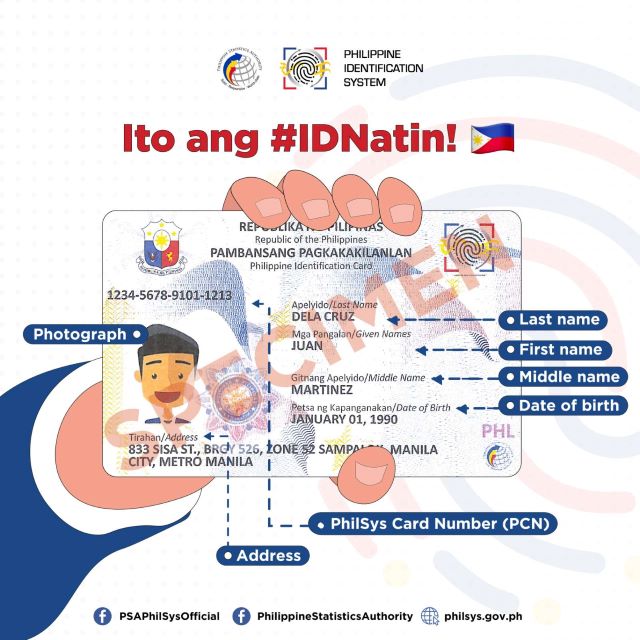
Children registered in the system can receive either a physical ID card (PhilID) or an electronic copy (ePhilID), ensuring that the benefits of the PhilSys are accessible to all from a very young age.
“Indeed, the intention is that despite how young they are, they will have proof of identity. So, we will release the ID to them,” Carriaga said.
The initiative is aimed at simplifying access to various government services and enhancing the efficiency of public administration. By including children in the PhilSys, the government is laying the groundwork for more streamlined and effective service delivery that will benefit citizens throughout their lives.
Previously, only kids aged 5 and up were eligible to apply for a national ID.
Registration process and requirements
For children aged below five, the registration process requires minimal documentation, including a birth certificate from either the PSA or the local civil registrar and the presence of a parent or guardian who is already registered in the PhilSys with their PhilId or ePhilID card. If the parent is unavailable, guardians must present additional documents, such as an authorization letter.
Parents and guardians are required to provide demographic information and a front-facing photo of the child during registration. However, once the child reaches the age of five, they must return to the registration center to provide biometric data, such as iris and fingerprint scans to complete their profile in the PhilSys.
Parents can register their children in existing PhilSys registration centers in malls and government centers.
For children aged 5 to 14 years old, parents need to bring the original copy of either their school ID or their PSA-issued Certificate of Live Birth.
One of the benefits of getting children to register is the eventual smoother enrollment in their school. This is according to Emily Pagador, officer-in-charge and assistant national statistician of the PSA’s Use Case Development and Management Service (UCDMS), in an interview with the Philippine News Agency (PNA).
It should be noted, though, that by the time children turn 14 years old, they have to update their biometric information.
What is a National ID System or PhilSys?
It was signed into law August 2018, under Republic Act 11055 or the Philippine Identification System (PhilSys) Act. The move aims to establish a single national ID for all Filipinos and resident aliens.
Benefits of having a national ID
1. It serves as a valid proof of identity
You can use it to transact with the government and other private sectors.
2. It can help boost efficiency of services
As a social and economic platform, the ID aims to boost efficiency, especially in dealing with government and private sector services where people will only need to present the ID during transactions.
3. It can eliminate the need for other IDs
No need to present other forms of identification. This means easier government and private sector transactions, subject too authentication measures.
What you need to know
To date, the PSA has been able to roll out the following:
Step 1: The house-to-house collection of demographic information started in October 2020.
Step 2: The process of validating supporting documents and capturing of biometric information at registration centers nationwide began on January 4, 2021.
Step 3: The issuance of PhilSys Number (PSN) and PhilID is ongoing.
It will not replace other functional IDs
The PSA makes it clear on its website that the National ID will not replace the existing functional IDs (see list below) that serve other purposes.
Rather it functions as a foundational ID which "serves as a valid proof of identity which would help ease transactions with both government and private sector through easier validation and authentication of identity."
Under the PhilSys, the following government IDs will be linked with a person's/customer's reference numbers (CRN):
- SSS
- Pag-IBIG
- PhilHealth
- Passport number
- Voter's registration
- Tax Identification Number (TIN)
- Driver's license number
Moreover, the ID has a smart chip that will contain unique information associated with a person such as biometrics, iris scan, facial image reception code, full set of fingerprint, among other distinguishing features.
The ID will also be valid for State Universities and Colleges, as well as in government offices.
Requirements to get your National ID
Applicants are advised to present an original copy of one (1) of the following to be able to register:
1. PSA-issued Certificate of Live Birth together with one (1) government-issued identification document bearing full name, front-facing photograph, and signature or thumb mark
2. Philippine Passport issued by the DFA
3. Unified Multi-Purpose Identification* (UMID) Card issued by the Government Service Insurance System (GSIS) and Social Security System (SSS)
4. Valid LTO-issued Student's License Permit or Non-Professional/Professional Driver's LicenseApplicant may find a full list of accepted documentary requirements at the back of the PhilSys Registration Form.
Who are eligible to apply for a National ID?
All Filipinos are eligible to apply for PhilSys and this includes Overseas Filipino Workers as well as dual citizens living in another country.
There is no expiration for the ID once issued and will only be replaced if there is a need to update information or if the card is damaged or has a defect.
Foreigners or resident aliens are also eligible to apply for the national ID but it will only be valid for one year.
Where can you register?
The PSA has established fixed and mobile registration centers in strategic locations, including malls, to register the population to PhilSys. Contact the agency's Facebook page, or through hotline 1388 for any questions about the National ID.
In the case of Filipinos residing abroad, they may inquire or register with the Philippine Embassy or other centers identified by the Department of Foreign Affairs.
Data privacy and security
According to the PSA website, sufficient safeguards will be in place to ensure information security, cybersecurity, data protection, and privacy in compliance with the Data Privacy Act.
The PSA is working closely with the National Privacy Commission (NPC), the DICT, and the National Security Council regarding the processes of the PhilSys, including to identify and mitigate privacy and cybersecurity risks.
"The PhilSys design adopts Privacy by Design principles wherein privacy is incorporated into its technologies by default and from the start," as stated in the website.
Citing an example, the PhilSys say it only collects and stores minimal data and the PhilSys Number (PSN) is fully randomized, not revealing any information about the person such as their date of birth.
On March 4, 2023, the PSA announced on its Facebook page that 5o million units of national ID, both PhilID and e-PhilID, have been issued.
Done registering? Read here on how to track the delivery of your national ID.
What other parents are reading

Lorem ipsum dolor sit amet, consectetur adipisicing elit, sed do eiusmod
Lorem ipsum dolor sit amet, consectetur adipisicing elit, sed do eiusmod
