
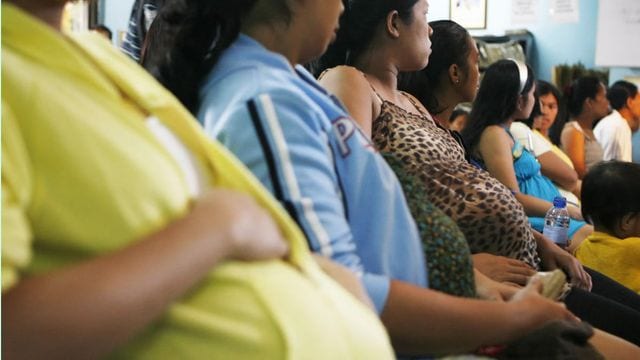
Senator Risa Hontiveros has filed a substitute bill amending certain provisions of SB 1979, also known as the Prevention of Adolescent Pregnancy Act of 2025.
This move follows a viral campaign from religious groups and criticism from various personalities and politicians who raised concerns over the bill.
Amendments to SB 1979
Some notable amendments to the bill include:
Removal of International Standards Provision: The provision stating that Comprehensive Sexuality Education (CSE) would be guided by international standards has been removed. Instead, the amendment now cites Republic Act No. 10354, also known as the Responsible Parenthood and Reproductive Health Act of 2012, and Republic Act No. 9710, or the Magna Carta of Women. The amendment specifies that the CSE will include objectives, initiatives, and programs related to providing a comprehensive, age- and developmentally-appropriate information affecting adolescents’ sexuality and reproductive health.
Parental Authority Guarantee: A new provision explicitly guarantees parental authority, stating: “Nothing in this Act shall be construed to diminish parental authority or academic and religious freedom."
Revised Age for Parental Consent: Adolescents below the age of 16 will now require parental or guardian consent to access sexual and reproductive health information and services, changing the previous threshold of 15 years old set in the original bill. Additionally, the revised bill no longer exempts minors aged 15 and below who have engaged or are engaging in sexual activity, or who are survivors of sexual abuse, from securing parental or guardian consent.
Criticism of SB 1979
Senator Hontiveros’ revisions come in response to criticism the bill has received in recent days. The bill’s co-authors–Senators Nancy Binay, JV Ejercito, Cynthia Villar, Bong Go, Jiggoy Estrada, Loren Legarda, and Bong Revilla–have requested the removal of their signatures from the committee report on the bill. Their letter was submitted to Senate President Francis Escudero last January 21.
Senator Hontiveros acknowledged their concerns in a statement on January 22, saying, “Naiintindihan ko ang kanilang mga konsiderasyon sa pagbawi ng suporta sa panukalang tutugon sa pagtaas ng teenage pregnancy sa bansa. May ihahain akong substitute bill bilang tugon sa tunay at sinserong concerns ng iba’t ibang sektor at grupo. Umaasa ako na pag-aaralan nila.”
Aside from senators’ withdrawal of support, President Ferdinand Marcos Jr. also voiced his concerns about the bill, describing certain provisions as “ridiculous” and “abhorrent.” He highlighted concerns over content that he believed was inappropriate for young children and indicated his intent to veto the bill if it remained unchanged.
Next Steps for the Revised Bill
The revised bill will be deliberated upon, with senators having the opportunity to raise objections and propose amendments at the plenary level.
In a statement sent to Rappler after the revised bill’s filing, former Supreme Court chief justice and National Coalition for the Family and the Constitution (NCFC) convenor Maria Lourdes Sereno expressed the group’s position. She stated that Project Dalisay, an organization that has been vocal in its opposition to the bill, wants Senate leadership to refer the bill back to the committee level. This, she argued, would allow “important stakeholders to freely state their positions.”
Project Dalisay was one of the first organizations to criticize the original bill, releasing a viral video calling on parents to sign a petition to “protect their children.” In their petition, they argued that the bill undermines parental authority, normalizes or desensitizes children to sexual themes, promotes risky behaviors, contradicts constitutional values, promotes homosexuality and bisexuality, fails to emphasize abstinence, and introduces age-inappropriate content such as masturbation to toddlers.
“There is nothing to stop the Senate from doing that when it appears that the most important stakeholders–parents who will not allow the state o take over their natural and primary right to form their children’s moral foundations–can only for the first time speak on the right relationship between their primary right to teach their children on sexuality and what the contribution of the school system can be,” said Sereno.
“The only way for parents to ease their fears at what is happening in the legislative process is to let them be heard in either committee hearings for bills that have just been referred to a committee, or in an investigatory hearing in aid of legislation. We plead with the Senate not to put this new bill on the floor for plenary interpellation yet. Let the parents be first heard,” she added.
Meanwhile, Child Rights Network (CRN), the largest alliance of organizations and agencies pushing for children’s rights in the country, said: “It is unfair to the bill’s authors as well as children’s and women’s rights advocates who have held consultations, helped refine, and participated in the legislative process fair and square since the bill was first filed in the 17h Congress. This bill has been almost a decade in the making!”
Read here for an explainer on SB 1979.
What other parents are reading

Lorem ipsum dolor sit amet, consectetur adipisicing elit, sed do eiusmod
Lorem ipsum dolor sit amet, consectetur adipisicing elit, sed do eiusmod
