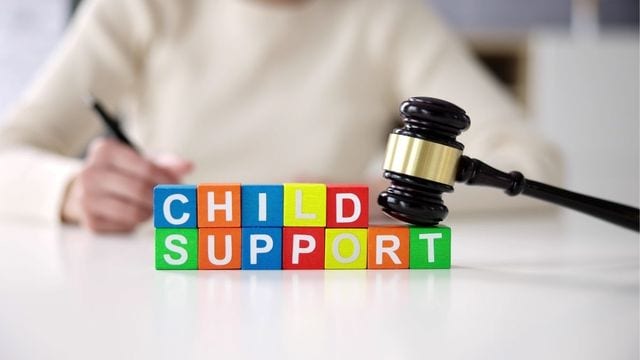
Stricter penalties are being proposed for "deadbeat" dads who fail to provide child support as lawmakers in the Philippines push for tougher laws.
There are an estimated 14 to 15 million solo parents in the Philippines, with 95% of them being women, according to a survey by World Health Organization. Many fathers refuse or neglect to provide financial support, leaving their ex-partners to manage alone.
ALSO READ: Your Ultimate Guide To Sustento In The Philippines—Child Support FAQs Answered By A Lawyer
A new bill, House Bill 8987, aims to change this by introducing harsher penalties for fathers who fail to meet their child support obligations.
Rep. Erwin Tulfo, one of the bill's authors, emphasized the need for such legislation. In a recent statement, he said, "Kailangang kailangan na natin itong batas na ito. Kailangang maparusahan ang mga tatay na ayaw bigyan ng suporta ang kanilang mga anak lalo na kapag iniwan na niya ang kanyang pamilya."
A 2021 report by the Commission on Population and Development (POPCOM) found that over 3 million children in the country are raised by single mothers, many of whom struggle to make ends meet. If HB 8987 passes, it would strengthen the legal basis for these mothers to demand child support, easing some of their financial and emotional burdens.
House Bill 8987: A Stronger Legal Foundation
The bill, known as the Act Ensuring Child Support and Penalizing Parental Refusal or Neglect, aims to ensure that both parents contribute to their children’s well-being. It also targets parental neglect, holding deadbeat fathers accountable for failing to provide financial support.
Under the proposed bill, those who don't pay child support could face up to six years in prison. The bill also includes provisions to determine the right amount of support based on the child's needs, with the Department of Social Welfare and Development (DSWD) and the National Economic and Development Authority (NEDA) overseeing this. This would ensure that support amounts are fair and based on the child's actual needs, filling gaps left by informal agreements between separated parents.
HB 8987 would also make it easier for single mothers to demand support, without having to chase down absent fathers. Once the law is in place, mothers will have the legal right to seek child support, with government assistance to enforce these rights.
Existing Laws and Gaps in Child Support
The Family Code of the Philippines provides a basic legal framework for child support. According to Article 194, both parents must support their children based on the child’s needs and the parent's ability to pay.
The Family Code allows courts to issue support orders when one parent refuses to comply, but enforcement has been weak. Many mothers struggle to get financial support from fathers who either refuse to pay or ignore court orders.
The Anti-Violence Against Women and Children Act (Republic Act 9262) offers protection for women and children from various forms of abuse, including economic abuse. However, it focuses more on physical and emotional abuse than on directly addressing fathers' financial obligations.
HB 8987 differs in that it specifically targets financial neglect by fathers. The bill strengthens the legal framework for child support and provides a clearer process for mothers to demand financial support.
Who's Required to Provide Child Support?
The Family Code's Article 195 lists the people legally required to provide financial support:
- Spouses
- Legitimate ascendants and descendants
- Parents and their legitimate children, including both legitimate and illegitimate children of the latter
- Parents and their illegitimate children, including both legitimate and illegitimate children of the latter
- Legitimate brothers and sisters, whether full or half-blood
Support amounts are meant to be based on the giver's resources and the recipient's needs. The amount of support can be adjusted if either the giver's resources or the recipient's needs change.
Moving Toward Stronger Enforcement
Although HB 8987 is still under review, there is hope that it will pass. In 2022, the Philippine National Police (PNP) reported over 1,200 cases of child abandonment, many related to fathers refusing to provide child support. The bill aims to address these cases by establishing a clearer legal framework for enforcement and ensuring that fathers who neglect their responsibilities face serious consequences.
More from sp

Lorem ipsum dolor sit amet, consectetur adipisicing elit, sed do eiusmod
Lorem ipsum dolor sit amet, consectetur adipisicing elit, sed do eiusmod