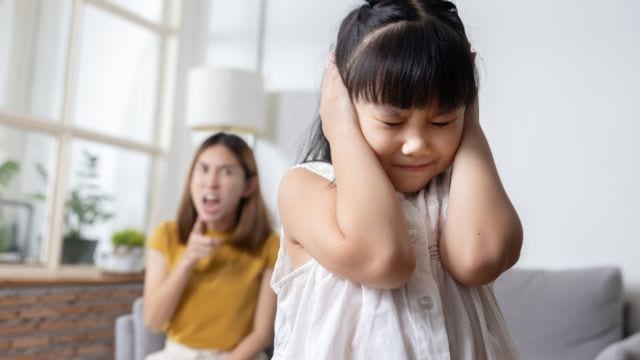
In a decision made public last August 3, the Supreme Court of the Philippines warned parents and guardians that they can be held accountable and liable for using degrading punishments.
Under the Civil Code, these punishments include, but are not limited to, degrading, threatening, humiliating, condemning, and scaring a child.
The Supreme Court's Second Division issued a statement through Senior Associate Justice Marvic Leonen, “The best interest of a child cannot justify forms of cruel or degrading punishment which conflict with a child’s human dignity, including punishment which belittles, humiliates, denigrates, scapegoats, threatens, scares or ridicules a child,”
The SC also said that while it is true that parents and legal guardians have the responsibility and right to guide a child, still parents “must be accorded equal and inalienable rights.”
The case: a minor who was defamed
The specific case mentioned by the Supreme Court was about a complaint for damages filed by the parent of a 14-year-old girl against the parent of a schoolmate with whom she allegedly had a special friendship with in 2004.
When the boy’s parents learned about their relationship, they expressed their dislike and took every chance to drop derogatory remarks at her. These negative remarks were made public in the presence of classmates, schoolmates and other parents.
The boy’s parents also spread false rumors about the girl, and said that she has been preying on boys since grade school, as reported by Inquirer.net.
After all that happened, she fell into depression, lost focus and interest in her studies, resulting in losing her academic distinction as an honor student and leader.
To make matters worse, the girl attempted to commit suicide. She also dropped out and then transferred to a different school. This was her parents’ signal to file the case.
The ruling: adults held liable for harassing a minor
The case reached the Court of Appeals (CA), after a motion for reconsideration was denied by the lower court. CA ruled that the boy’s parents are jointly liable for damages for harassing, intimidating, and spreading false and malicious rumors about the 14-year-old girl.
Another appeal was junked by the CA, and the case reached SC. SC agreed with the decisions of the lower court and CA, with modifications in the amount of damages.
RELATED: The Legal Action To Take If You Or Your Child Needs Protection Against Verbal Abuse
The SC also reminded the public about Republic Act 7610, or the Anti-Child Abuse Act, that child abuse is not only limited to physical abuse, but also includes psychological cruelty, or any “act by deeds or words which debases, degrades or demeans the intrinsic worth and dignity of a child as a human being.”
SC also added, “Here, publicly calling an impressionable 14-year-old with defamatory words such as “Makati ang laman,” “Malandi,” and “Hindi matino” in front of her peers, teachers, and parents is undoubtedly a harsh, degrading, and humiliating experience to which no child should ever be subjected.”
The decision was made by Associate Justices Antonio Kho Jr., Samuel Gaerlan, Jhosep Lopez and Mario Lopez.
What other parents are reading

Lorem ipsum dolor sit amet, consectetur adipisicing elit, sed do eiusmod
Lorem ipsum dolor sit amet, consectetur adipisicing elit, sed do eiusmod