
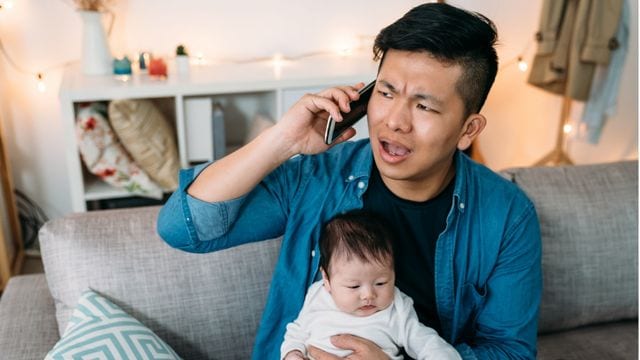
Research has found a fascinating aspect of infant psychology: babies are acutely attuned to the emotions of adults around them, particularly anger.
Two studies conducted in 2016 show that babies recognize anger and also alter their behaviors in response. These findings carry profound implications in parenting, particularly for parents and caregivers—urging them to be more mindful of their emotional expressions in front of their little ones.
The lead author of the study, Betty Repacholi, from the University of Washington’s Institute for Learning & Brain Sciences, emphasizes the significance of these discoveries. She said, “Our research suggests that babies will do whatever they can to avoid being the target of anger. At this young of an age, they have already worked out a way to stay safe. It’s a smart, adaptive response.”
This means that babies demonstrate a remarkable ability to discern anger-prone behavior in adults and take proactive measures to avoid becoming targets of that anger. This adaptive response underscores the sophisticated emotional awareness even very young children possess.
Anger and babies
The first study, published in Developmental Psychology, involved observing 15-month-olds’ reactions to an unfamiliar adult displaying either neutral or angry behavior towards toys. Remarkably, babies demonstrated aversion to toys associated with anger and were less inclined to imitate actions modeled by the angry adult. Even when the angry adult subsequently displayed neutral behavior, babies remained cautious, indicating a lingering apprehension towards previously anger-associated stimuli.
Repacholi explained this, saying, “It’s as if the baby doesn’t trust that the Emoter is now calm. Once the babies have detected that someone’s prone to anger, it’s hard to dismiss. They’re taking a better-than-safe approach, where they’re not going to take a risk even though the situation has apparently changed.”
Building upon this, the second study published in Infancy revealed that babies were more likely to share toys with adults who had previously exhibited angry behavior compared to those who had displayed neutral behavior. This suggests that babies actively seek to appease angry adults, displaying a nuanced understanding of social dynamics and self-preservation instincts.
“I was so surprised to see the infants give the toys away–it was like they were appeasing or compromising with the adult,” Repacholi said. “They didn’t want to risk making the previously angry adult mad again. They didn’t act this way with the other adult who had not shown anger.”
What this means for parents
For parents, these findings underscore the importance of emotional regulation and mindfulness in caregiving. While it’s natural for adults to experience a range of emotions, including anger, in front of their children, it’s crucial to recognize the impact of these emotions on impressionable young minds. Repacholi stresses the need for parents to be aware of the power of their emotions in shaping their babies’ behavior and emotional development.
However, perfection is not the goal. Parents are of course, human and prone to moments of frustration and anger. The key lies in modeling healthy emotional expression and coping mechanisms. Apologizing and acknowledging mistakes can serve as powerful teaching moments for children, demonstrating accountability and the importance of emotional regulation.
Moreover, offering reassurance and affection following moments of tension reinforces the message that love and safety endure despite temporary emotional upheavals. By nurturing an environment of emotional openness and resilience, parents can empower their children to navigate complex emotional landscapes with confidence and compassion.
What other parents are reading

Lorem ipsum dolor sit amet, consectetur adipisicing elit, sed do eiusmod
Lorem ipsum dolor sit amet, consectetur adipisicing elit, sed do eiusmod
