
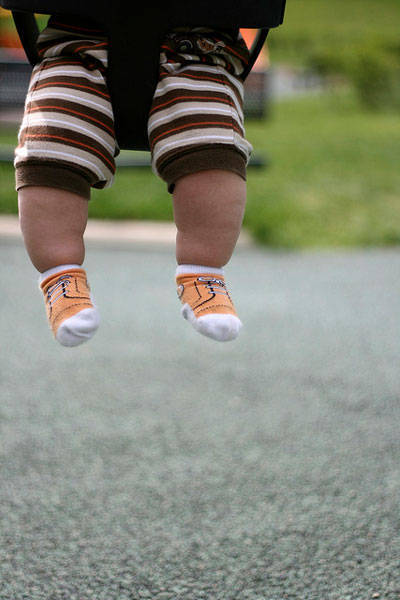
 The World Health Organization (WHO) estimates that of the 43 million children worldwide that are overweight or obese, 81% of them live in developing countries. The number is expected to reach upwards of 60 million over the next ten years.
Here are some facts on the global epidemic of childhood obesity, and a few helpful tips on kicking the fat habit.
A is for A.S.A.P.
Teaching healthy nutrition early is essential. The health of an adult is largely dictated by his eating habits as a baby, or, as most doctors will argue, their diets in-utero. The New England Journal of Medicine states that 25 to 30 % of adult obesity cases in the U.S. began in childhood. While they recognize that this number seems small, they emphasize its importance, stating, “Early childhood [heaviness] that persists into adulthood is associated with more severe obesity among adults.” Furthermore, a November 2010 issue of the American Journal of Clinical Nutrition cited evidence that childhood obesity can start as early as six months of age. But how can obesity begin so quickly?
"What we have seen in developing countries is that the offer of food is moving towards highly refined, industrial foods which often have very high content of sugar and fat," says Francesco Branca, WHO director of nutrition for health and development. The proportion of young children who are overweight or obese has increased about 60% in the past 20 years, according to the WHO. They estimate that of the 43 million children worldwide who are overweight or obese, 81% of them live in developing countries. Furthermore, this number is expected to reach 60 million within the next decade.
Contrary to the popular saying, “You’re still young, you can eat whatever you want”, the eating habits of a child tend to spill over into adult life, which means that what you feed your child today carries heavy implications on their future health. If you think it’s hard to change your kids’ eating habits now, imagine how much harder it will be for them as a diabetic or hypertensive twenty-five year old, frequently being surrounded by their peers eating lots of cake and greasy French fries. Early vigilance in healthy eating can lead to better food choices in your child’s future. Most importantly, lead by example. Nothing is worse than “Do as I say, not as I do” when it comes to teaching proper nutrition.
Recommendation:
If you’re thinking about having kids, make sure your health is in tip-top-shape well before trying to get pregnant. Poor pre-natal health has been repeatedly shown to cause long-term negative health effects, from autism to heart disease to digestive disorders. Branca also points out that poor nutrition among mothers often resulted in newborns with low birth weight ( <2.5 kg or 5.51 pounds), who were vulnerable to becoming overweight later in life. He explains that children with very low birth weight are less able to handle high energy density food.
[previous|page|next]
B is for Balance
WHO states that poor diet, a sedentary lifestyle, and low rates of breastfeeding are largely to blame for the significant increase in childhood obesity and overweight rates in developing nations.
Obesity and being overweight is no longer a problem of the well-to-do. In low and middle-income populations, the most cost-effective foods are highly-processed, highly-refined foods loaded with sugar, trans-fat, and genetically-modified ingredients- all of which add up to empty calories that aren’t being burned due to increasingly sedentary lifestyles.
Most important, however, is the fact that these low-cost foods are almost completely devoid of any nutrients critical for healthy growth and development. Even with vitamin-fortified foods, children are getting nowhere near the 90+ essential nutrients needed daily to thrive- a balance of 60 minerals, 16 vitamins, 12 amino acids, and 2-3 essential fatty acids. In addition, children in low- and middle-income countries typically have inadequate nutrition pre-natal, during infancy and as a young child. When you stop to think of the combination of nutrient-poor, high-calorie foods, very low rates of physical activity, and inadequate access to quality healthcare, it’s easy to see how this imbalance leads to such alarming rates of obesity in developing nations.
Recommendation:
Nutritionally, find healthier substitutes to things your child likes. Variety is key. Almost every flavor and texture a child enjoys - sweet, crispy, salty, crunchy, soft- will have a vegetable, nut, or fruit equivalent. The best part? No creativity is required. Thousands of recipes already exist online for delicious, easy-to-make, healthy snacks and meals. To wean them off their soda and sugary juice drinks, invest in a blender (or better yet, a juicer!) and whip up banana, pineapple, and mango smoothies instead, minus the sugar! Be sure to add some vegetables as well - you’ll be surprised how many vegetables you can hide with the right combination of fruits.
[previous|page|next]
C is for Consequence
Type 2 diabetes, also called adult-onset diabetes, was unheard of in children just a few decades ago, but recently, children as young as 2 are being diagnosed with this unfortunate, albeit preventable, disease. Additionally, according to a 2010 study authored by the Heart and Stroke Foundation of Canada, obese children are now showing signs of heart disease once only seen in middle-aged adults. Sadly, these are only two of many examples illustrating just how bad childhood obesity has become.
Not only are overweight children more likely to be overweight adults, they’re also more likely to be sick adults. A March 2011 report by the WHO states that childhood obesity is associated with a higher chance of premature death and disability in adulthood. They are more likely to have metabolic disorders such as diabetes and dyslipidemia (abnormal cholesterol), cardiovascular problems such as high blood pressure and clogged arteries, and even certain cancers. Lack of physical activity leads to decreased function of their musculoskeletal system (critical at their growing stages), cardiovascular system, and neurological system, as their brain is still developing and being “fine-tuned” during these formative years. It’s important, therefore, to recognize that obesity isn’t just a “fat” problem, but one that affects all systems of your child’s body: breathing difficulties are common, which may further discourage them to exercise. They also have increased risk of fractures, due to poor nutrition (primarily Vitamin D deficiency) causing improper development of strong bones.
Last but not least, we can’t overlook the psychological impact of being overweight. Frequent teasing by other children about being fat isn’t always easy to handle, so if you feel this may be an issue, especially among girls, it’s important to speak to them right away, before they learn the words “anorexia” and “bulimia”.
Recommendation:
Don’t go cold-turkey on eating healthy. Instead of eliminating bad foods right away, add good foods first - fruits are a great start, especially if your child has a sweet tooth. As your child learns how to eat healthier, his body will actually crave the more nutritious food, making it easier to remove the bad stuff over time. Next, limit their TV/computer time. Try a game in which the person who can find the most number of hidden coins gets to keep the money to fund their next toy purchase. Disguising playtime is the best way to squeeze in physical activity. Praise them for even the smallest achievements, especially in their beginning stages of change.
Photo by MissMessie from flickr creative commons

Lorem ipsum dolor sit amet, consectetur adipisicing elit, sed do eiusmod
Lorem ipsum dolor sit amet, consectetur adipisicing elit, sed do eiusmod
