
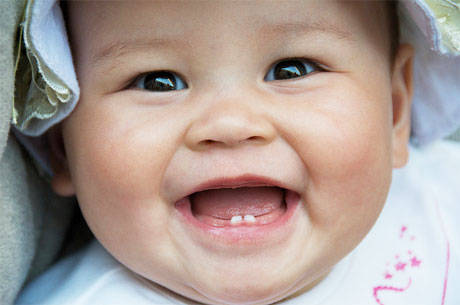
One of the many developmental milestones I really looked forward to with my two kids was the coming in of their first teeth. The eruption of their first teeth was a happy reminder of how far they had grown from being newborn infants; and that soon they would begin the wonderful journey of discovering solid food. For my son, teething was easy - no drooling, no crankiness, no nothing! The only thing that happened was one day when he was three months old, I felt some discomfort as he was breastfeeding and lo and behold, there it was - the tip of his first tooth!
My experience with my daughter four years later was so different from what happened with my son. Though the drooling was not excessive, we had to go through many cranky days before her first little tooth made its way out at 4 months old. We also went through a day of low grade fever before each arrival of the first four teeth and a whole lot of chewing and gnawing at anything she could get her hands on. It was a completely different experience from her brother, but well, I guess that’s the reality of it - teething for each child is different.
I had a chat with our dentist, Dr. Junice Salazar, to learn a little bit more about teething and what parents can do or give their children through this difficult time.
According to Dr. Salazar, most children will start teething by the second half of their first year, though some, like my own kids, start a little bit earlier. She also shares that the order by which the teeth come out, more often than not, follow a predictable pattern starting with the two lower front teeth. By the age of 3, though, Dr. Salazar says that most children will have a complete set of 20 milk teeth.
[previous|page|next]
With regard to teething symptoms, she shares that they may be experienced weeks before the actual tooth breaks the surface of the gums. Excessive saliva production, irritability, and disrupted sleep can all be experienced. Babies may also experience having loose stools due to the amount of saliva they produce and ingest and sometimes, even low-grade fever can also occur for a day or two. She warns parents though that even if fever and loose stools may be symptoms of teething, these symptoms should not be taken lightly, and parents should inform their pediatricians of these symptoms especially if the fever is high, if it persists, or if diarrhea occurs.
To help babies with teething pain, Dr. Salazar suggests using products such as Solcoseryl dental adhesive paste, Xylogel or SansFluo Teething Gel, with, of course,prior approval from your pediatrician.
As parents, we naturally want to give the best for our children and help them when they feel any discomfort. Here are a couple tips parents can do.
1. Put on the pressure. Provide chew toys and teethers that can relieve the pain and discomfort of teething. Make sure though to keep these toys and teethers clean.
2. Soothe the discomfort with cold. Parents can give their children a chilled washcloth or teethers that have been cooled in the fridge or freezer. The cold temperature soothes the gums, and the pressure from chewing on these soothes teething discomforts. Mashed frozen fruit are also good alternatives.
3. Give lots of touch and hugs. Never underestimate the power of touch. Gently rub and massage babies’ gums or jaw line and give lots of hugs and affection.
Teething is a part of growing up and all babies have to go through it. With a time, a few tips and tricks and lots of TLC, the growing pains of teething can be managed and soon be overcome.
* Dr. Junice Salazar is a member of the Philippine Dental Association and the International Association of Orthodontics.
Photo by trixOr from flickr creative commons

Lorem ipsum dolor sit amet, consectetur adipisicing elit, sed do eiusmod
Lorem ipsum dolor sit amet, consectetur adipisicing elit, sed do eiusmod
