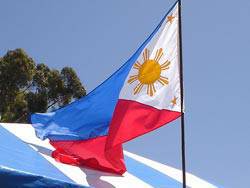
 The Philippines just experienced another milestone in history with the proclamation of a new President and Vice President at the cusp of its Independence Day. June 12 is a historic date worth bringing up with your kids. And more than that, teaching your big kid about history and his national independence day (and not just leaving it up to the school do so) will greatly benefit his love for learning. Below are some fun facts about Independence Day as well as some tips to make history interesting for your child.
First, the Facts: What do you really know about June 12?
Did you know that the Philippines’ original independence day was July 4 (the same Independence Day date as the United States of America)? Read about this in the recorded firsthand account of former President Diosdado Macapagal. In this document, Macapagal gives his reasons for proposing that June 12 (instead of July 4) be declared the Philippines’ Independence Day. June 12, 1898 was the date that General Emilio Aguinaldo proclaimed the independence of the Filipino people in Kawit, Cavite. For Macapagal, “The celebration of independence day on June 12, on the other hand, would be a greater inspiration to the youth who would consequently recall the heroes of the revolution against Spain and their acts of sublime heroism and martyrdom. These acts compare favorably with those of the heroes of other nations.”
Some Tips on How to Teach History to Your Big Kid
Learning is never just confined to school. As many parents know, a lot of learning already starts n the home, way before kids actually start their first day of school. Given this, parents are encouraged to be more hands-on in partnering with their child’s teacher and making the process of learning more exciting. Below are some tips to make history a more exciting learning subject for your big kid.
1. Put history in context of a story. Robert Harris, bestselling author of historical thrillers, says “We should restore the importance of the narrative when we approach the subject (history). The human brain latches on to stories, not disjointed facts.” Stories are enthralling to children. From the “once upon a time” to the “happily ever after,” kids are hooked with narratives, especially ones with a lot of action and character development. History is really no different from a story. It depends on who’s telling it and it depends on what can be remembered about the events. It can be told from different points of view too. If you introduce history as a story to your kids, it can take on the tone of an exciting adventure. When you tell the story about, let’s say the declaration of Independence in Kawit, Cavite, these are some questins you can ask your child to make it more like a story:
a. Who is the star in the story? Is it General Emilio Aguinaldo? Is it all the Filipino people? Why?
b. If you were there in 1898 on the date of the proclamation, how would you have felt?
c. Describe what that day might have looked like (you can help your child imagine 1898 by visiting a museum, a history website or looking at a coffee table book of that era).
Click here to read more tips on how to teach history to your child.
[previous|page|next]
Here are more tips on how to teach history to your child.
 2. Watch some historical films together. According to Sam Wineburg, Professor of Educational Psychology and Adjunct Professor of History, University of Washington, Seattle, and the author of Historical Thinking and Other Unnatural Acts: Charting the Future of Teaching the Past (Temple, 2001), kids nowadays learn more from multimedia like the movie Forrest Gump than from actual textbooks. Of course, the key is to make sure you choose material that is, more or less, historically accurate. Some examples are Jose Rizal, Rizal sa Dapitan and Baler. Visit this link for top ten Filipino historical films
3. Make a game out of a historical account. Try getting firsthand documents that describe a historical period of the Philippines and make it into a game (for example, make a list of top 10 things that they observed about Magellan landing in the Philippines). According to Robert Cook , an American historian, both kids and adults are fascinated by lists of the ten best or the ten worst things.
Don’t let the opportunity of teaching your kids about Philippine history pass you by. Now is the time to introduce the concept of history and the importance of learning from the past to your big kid.
Photos: flag, Dekada '70

Lorem ipsum dolor sit amet, consectetur adipisicing elit, sed do eiusmod
Lorem ipsum dolor sit amet, consectetur adipisicing elit, sed do eiusmod