
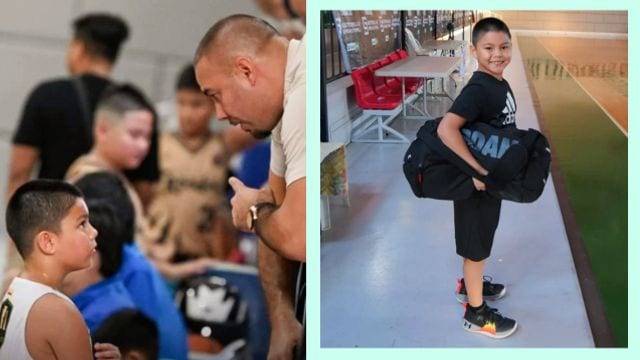
Doug Kramer shared on March 25, that Gavin, his only son, played his first ever organized 5 on 5 basketball game.
“Gavin played his very first organized 5 on 5 game today. You could see he was excited, nervous and even confused, trying to find his rhythm and proper spots in the game,” Doug wrote in his post, shared in his IG account and on Team Kramer’s Facebook page.
As background, Doug played basketball professionally in PBA. He was the 5th overall pick in PBA’s 2007 draft, and continued playing until he voluntarily retired from the game in 2019.
Dad Doug, even though he was excited that Gavin is following his footsteps in basketball, reminded his son about what’s more important in the game.
RELATED: Judy Ann Santos Is A Proud Mom To Daughter Yohan Who Juggles School Work And Sports
“He didn't score any points, and I told him he shouldn't worry about that. There's much more to basketball than just scoring,” he continued to share.
For Doug, what’s more important than winning or scoring, is the lessons Gavin will learn, especially as he's only starting to play.
“It's all about being a sponge and learning at this point, while trying to have fun. It's a challenge playing against bigger, taller kids. But I told him, that's how it was when I was playing. It's an advantage to be big, fast, and talented, but that won't assure success. It's about the effort, hard work, consistency and obsession to learn that will propel him above the competition,” he said.
He continued to pen his valuable advice to his son’s budding basketball journey, “I told him, this is your journey. So enjoy every moment of the highs and lows of the game. Work your way up slowly but surely.”
And most importantly, Doug shared why he advocates for sports for their kids. The former basketball player said, “This is why I'm big on sports for our kids. No one's gonna hand it to you on a silver plate. You have to go get it. You have to commit, prepare and equip yourself, because your competition is doing the same exact thing. You have to compete and want it more than everyone.”
To end his post, Doug cheered on Gavin, “I'm excited for you Gavin! And I'm right behind you to cheer and guide you. This is just the beginning. I love you Gav!”
Benefits of Sports for Kids
According to Health Direct, an Australian-based health website, sports have a wide range of positive effects for kids. As Doug said, it’s more than just winning and scoring, but also letting the kids learn by experience.
Here are some of the benefits of sports for our kids:
1. Losing teaches kids to overcome disappointment and negative feelings.
In sports, there is a clear cut between who wins and who loses. “Being a good loser takes maturity and practice. Losing teaches children to overcome disappointment, cope with unpleasant experiences and is an important part of becoming resilient,” the article stated.
It also helps children to manage and control their emotions and negative feelings in a healthy way. It teaches them patience, especially if they want to achieve something and they can’t have it right away.
2. Team sports help develop kids' social skills.
Because sports are mainly played with a team, or against an opponent, its benefits on the kids’ social skills are also great. The article said, “It teaches them to cooperate, be less selfish, and to listen to other children. It also gives children a sense of belonging. It helps them make new friends and builds their social circle outside school.”
Another important aspect of sports is learning discipline. Sports have rules, have officials that need to be followed, coaches and referees. Playing while observing these things can teach our kids discipline.
RELATED: Hockey, Motorcross, Ballet, And More: See How Scarlet Snow, Kendra, Sotto Kids, Etc Get Active
The article shared how parents can encourage kids to love sports, “To keep your child interested and enjoying sport, make it a positive experience for them. Focus on having fun, having a go and being active, rather than winning or losing.
It adds, "You can help your child develop a positive sporting attitude by praising the team’s or other children’s efforts, even if they don’t win. Point out to your child how important it is to try and do their best. Make sure your comments from the sidelines are positive, and don’t criticize children who make mistakes.”
What other parents are reading

Lorem ipsum dolor sit amet, consectetur adipisicing elit, sed do eiusmod
Lorem ipsum dolor sit amet, consectetur adipisicing elit, sed do eiusmod
