
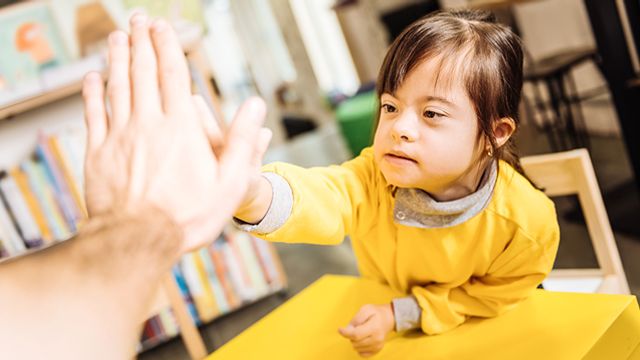
According to Presidential Decree No. 603, known as The Child and Youth Welfare Code, "Every child has the right to full opportunities for safe and wholesome recreation and activities, individual as well as social, for the wholesome use of his leisure hours." So is the same for your child with special needs.
Now we've compiled some activities your kids can try to add more fun to their regular free time (and perhaps your chance to finally put the tablet away).
While most children enjoy doing Arts and Crafts as well as Pretend Play, we've categorized our suggested activities according to your child's needs to ensure everybody is covered.
Activities for Children with Special Needs (by category)
According to WeCapable, Children with Special Needs are categorized as Physical, Sensory, Developmental and Behavioral/Emotional.
Physical
Children in this category are usually having issues with movement and balance (muscular dystrophy, cerebral palsy, multiple sclerosis, etc.)
1. Get into adaptive sports
Kids in this category, particularly teens, can get involved with wheelchair basketball, paraswimming, and chair volleyball. If the goal is just to pass the time and get moving, you can visit a sports gym or a basketball court near you.
For the smaller ones, you can buy a mini backboard set at your favorite toy store, and install them where your kid can move freely using their wheelchair. For those who are not on wheelchair, you can do chair volleyball or tossing a ball back and forth while seated. Toddlers can use balloons instead as they're lightweight and colorful.

2. Board games
Nothing beats the good ol' board games like Roll a Dice, Monopoly, Chess, etc. It is a good way to bond with the family and socialize with friends. It increases cognitive function, reduces stress, and improves confidence.
Sensory
Children in this category have sensorial impairment or disability (children who are visually impaired, low vision, blind, deaf, hard-of-hearing)
1. Play "Little Chefs or Little Gardener"
You can invest in activities that will stimulate other senses for those kids with sensorial impairment. Let them play as little chefs and allow them to knead the dough or roll the batter into balls of cookies. Make them feel the leaves, soil, water, pebbles or let them smell the flowers as they become little gardeners.
2. Play with clay
Another sensorial play is the use of modeling clay. For kids who are visually impaired, let them roll and mold the clay into different shapes and sizes. For the hard-of-hearing, allow them to express their creativity and create clay pieces according to their interest.
3. Make sensory bags, blocks, and boards
This is a hit to babies and toddlers even if they don't have special needs. You can create sensory bags made with ziplock filled with clear hair gel or body wash along with items of different textures such as buttons, leaves, sand, googly eyes, and the like. Make sure they are leak-proof!
You can also make blocks or boards instead if you have spare materials at home and use glue to stick felt paper, trimmed carpet, fake fur or any other items with texture to each side of the block or board.
.jpg)
4. Listen and tell stories
This is a good way to be creative if you can play round-robin in terms of what happens next to the story you are trying to weave together. For children with hearing aid, this is a good opportunity to help them modulate their voices and enunciate well.
5. Learn to play a musical instrument
If you know a thing or two about music, you can help them learn play a musical instrument so they can also express themselves through a song or a melody.
6. Play "search and find"
You can place a chair for example and challenge them to reach the chair by giving instructions like step to the left, step to the right, two more steps to the right, etc. This helps them improve their spatial awareness. This is also an opportunity to teach them the nearest exit points in the house in cases of emergency.
READ ALSO : 'Always Be Kind If You See A Family Struggling': How A Mom Of 3 Kids With Autism Takes Them Travelling
Developmental
These are the children who may have neurological and developmental disorder affecting communication and behavior or a genetic condition affecting a child's physical or mental condition (Down Syndrome, Autism Spectrum Disorder)
1. Play a memory game
While not all kids with autism struggle with memory, there is large group that does. So playing a matching game, also called as Memory Game, can help them strengthen the ability to remember things. Memory Games are typically available at your local toy store.
.jpg)
2. Make a masterpiece
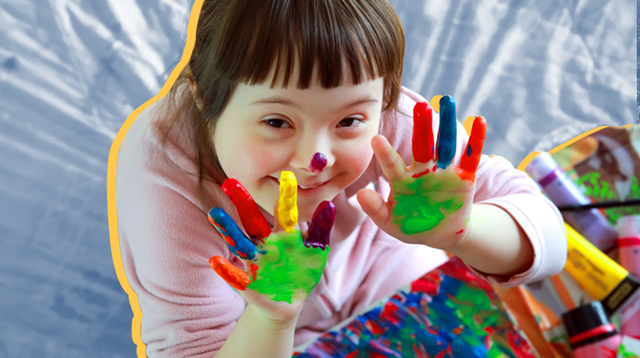
Art is always a spot on for every kid (and kids at heart!) so make them paint, color, or draw and help them express their mood and creativity.
3. Build a tower
Children with autism are usually comfortable with structured play so building a tower of blocks or legos would be less stressful for them. As time goes on, you can alter the pace by giving them a challenge like what the block should look like step by step until you reach the final output. This will reinforce social adaptation and confidence.
.jpg)
From solitary play, you can involve other siblings or family members later on as long as they slowly ease their way in and not make your kid uncomfortable during play.
4. Initiate a Treasure Hunt
Who doesn't want a little bit of adventure and mystery? You can play a simple Treasure Hunt at home using their favorite toy and giving them cues through cards or verbal instruction. You can also reverse roles and let them create you a Treasure Map and find that precious treasure!
5. Bubble play
Playing with bubbles is always a good idea with kids. You can incorporate this during bath time for a more enjoyable experience.
.jpg)
6. Snack Sorting or Creating edible jewelry
Most kids with autism love to organize their toys so sorting snacks or candies will be an enjoyable activity for them. You can line up some cups for them to fill and organize according to shape, size or color. You can also create edible jewelry using hoop cereals or ring-like chips and make bracelets and necklaces for each other.
.jpg)
7. Puppet show
One way to express themselves is through pretend play and you can use sock puppets or ordinary stuffed toy to let them tell a story. If you're feeling fancy, you can create a makeshift stage for the puppets or even do shadow puppetry using cardboards, flashlight, and onion paper for your "little theater". This is a good platform for them to express feelings and connect socially.
If they're not yet ready to tell a story, you can be a story teller using the puppets and this will reinforce attention skills. If your child establishes eye contact with the puppet, take it as an opportunity to work on their eye contact by slowly moving the puppet from one side to another and see how they react / follow.
.jpg)
READ ALSO: Autism In The Workplace: "They Were Hired Because Of Their Abilities, Not Out Of Charity"
8. Sensory play
Sensory play helps children in the Autism Spectrum to stay calm and self-regulate. You can fill a tub with sand or rocks or even macaroni and let them scoop, pour, and touch!
.jpg)
Behavioral/Emotional
These are the children who have behavioral or emotional disabilities or disorder who may find it difficult to build or maintain interpersonal relationships (ADD, ADHD).
1. Facilitate Movement
To help them focus and channel their burst of energy, you can involve them in Gymnastics, Track and Field, biking, hiking, doing swim laps or whatever agile sport or activity they might be interested in individually.
2. Follow the Leader
To help them focus and pay attention, you can show and ask them to complete a task. Making the bed for example: you can teach them first how to fold the sheets, how to pile the pillows, or how to remove linen creases. Set a timer and you can actually challenge them to fix the bed in as little time as possible. You can do this with other tasks at home and if you're up for a little adventure, you can create your own obstacle course especially for young kids.
Safety comes first!
Every child is unique so always listen to your gut when it comes to your kid's level of comfort and enjoyment. Safety comes first so always be mindful of potential danger like falling or tripping over. Wash hands as needed. Some kids with autism have sensorial sensitivity so supervise accordingly.
At the end of the day, be sure to have tons of laughter and wonderful memories because as they say, days are long but the years are short.
Other Sources: Parent Circle, Merakilane
What other parents are reading

Lorem ipsum dolor sit amet, consectetur adipisicing elit, sed do eiusmod
Lorem ipsum dolor sit amet, consectetur adipisicing elit, sed do eiusmod
