
 Whether your children are in regular school or are being homeschooled, here are a few suggestions on how you can incorporate learning into their everyday routine:
1. Read, read, read.
a. Set aside a specific time every day to read aloud to your child. The single most important thing that you could ever do to instil a love of learning in your kids is to read to them.
Even as early as the infancy stage, children can learn to appreciate the beauty of the written word, and pick up the skills they need for language and speech development. Your baby or toddler will be soothed by the sound of your voice, and books with interesting pictures will keep her entertained for good chunks of time.
b. For little ones in the preschool stage, spend time every day reading aloud and teaching your child the basics of phonics by introducing beginning letter sounds at every opportunity you can get. For example: When reading together, say “We’re going to read a book now. Book. Book begins with the letter sound “buh”. “Buh, buh, Book.” You can also do this during other parts of your child’s daily routine – eating, bathing, playing, bedtime routine, etc.
c. If your child already knows how to read, encourage him to spend time every day reading books that he chooses himself. If possible, set up a mini-library or a book corner in your child’s bedroom, if he has a separate room. If not, you can do so in your bedroom, living room or anywhere else your child spends time in. The key is to make the books accessible to little fingers, and to avoid accidents by making the bookcase or container child-safe.
Personally, I love reading aloud to our 4-year old and 1 year-old. It is always a special, sacred time for us (though sometimes I am a bit too impatient when our preschooler insists on reading “just 2 more books, please?!” during our bedtime routine, when all I want is to doze off, or get started on my writing!).
Click here to read more ways of teaching your preschooler at home.
[previous|page|next]
Read on for more ways of teaching your preschooler at home.
d. Needless to say, reading books is a good habit to form in kids and adults alike. It helps kids to use their imaginations, especially when coupled with fun storytelling techniques by Mom and/or Dad. If Lolo and Lola are staying with you, encourage them to read together with your kids too. It can prove to be a magical time for them as well! You may even opt to teach Yaya (if you have one J) some storytelling techniques as well!
2. Sing, sing a song.
You don’t have to be able to carry a tune to express your love for your kid through singing. Even the most tone-deaf among us can help a child pick up language and cognitive skills through music and song (This is true! Take it from the author, who is married to a wonderful but vocally-challenged-in-the-musical-department man. Try to incorporate nursery rhymes, silly songs, even Bible tunes and other tunes into your child’s daily routine.
One of our kids’ favourites is this song from The Baby Bible Sing and Pray book – we usually sing this together in the morning before our prayers. Sung to the tune of “Here We Go Round The Mulberry Bush”
Check it out online here:
Singing songs when I wake up
Singing songs in the sun
Singing songs when the day is done
Singing songs to Jesus
Click here to read up on more ways to teaching your preschooler at home.
[previous|page|next]
Read on for more ways on teaching your preschooler at home.
Incorporating music and song into your child’s daily routine, even as early as her in-utero stage, helps facilitate learning, promotes cognitive and social awareness, and is a tried-and-tested way of encouraging family bonding. The magic of music can do wonders!
Using songs with actions or finger play is also a great way to promote body part awareness and improve your little one’s motor skills. Even people in the medical world, such as physical therapists, occupational therapists, and speech pathologists, use music and song to enhance the learning process, especially of those who are developmentally-challenged.
Encourage everyone who is involved in your children’s daily routine, including Yaya and other siblings, to use singing as a teaching tool as well. This will provide even more opportunities for your kids to learn through music and song.
3. Laugh and learn.
Laughter is not only the best medicine, but is a good way to teach your children to have a positive, joyful attitude. Encourage your child to see the funny side of things, including things that may cause you or your child to be upset (this tip applies to grown-ups too!). Groups like Pinoy Laughter Yoga even encourage people to “laugh without a reason” stating the following benefits:
“Laughter lowers the level of stress hormones (epinephrine, cortisol, etc) in the blood. It fosters a positive and hopeful attitude. It is less likely for a person to succumb to stress and feelings of depression and helplessness, if one is able to laugh away the troubles.” (taken from http://laughteryoga.org)
Setting aside time every day to laugh with our children can bring about an attitude of joyfulness in all members of the family. A joyful home environment makes it easier for children to learn. Teaching your children to be joyful at all times, even in the midst of trials and disasters, will prove beneficial for them in the long run, especially when they become adults.
Click here to read more ways of teaching your preschooler at home.
[previous|page|next]
Read on for more ways of teaching your preschooler at home.
Several ways for you to encourage laughter and learning at home are:
- Sing silly songs together – change the lyrics of one of your favourite songs, or make up your own songs. Fun for both kids and adults.
- Play games together – take the opportunity to laugh and play as a family – essential for learning!
- Watch funny videos together – you can search online for free family-friendly, funny videos on YouTube or buy cheap VCDs at your favourite video store. Take note that these need not be videos made especially for kids. However, before viewing with your children, make sure the videos you choose are age-appropriate and don’t have scenes that are unsuitable for kids.
4. Use the World Wide Web.
There are really some great educational sites out there that can be of great use to parents who want to enhance their children’s learning. There are a lot of resources on the Web that teach your kid about Language, Math, Science and other subjects. In this age of modern technology, it is no longer a surprise to see websites designed to teach children even as young as the toddler years!
The key here is to limit the amount of time your child spends on the Internet and whenever possible, sit with him while he is learning online. To avoid possible tantrums when his online time is up, set a timer to sound off to signal that “It’s time for playing outside!” or something to that effect. 1 hour is usually a reasonable time frame for your child’s online learning period. Afterwards, encourage your child to spend time reading, playing outside, or drawing. If you have the time, you can also do follow-up activities based on what she learned online.
The abovementioned are just a few of the many ways we can help enhance and promote our children’s learning at home. Actually, you can apply most of these tips anywhere – while travelling, at other people’s homes, at the mall, etc. Just be creative and look for opportunities where learning can take place. Most important of all, make sure that your child is involved in all learning activities. Just as this famous Chinese proverb about the process of teaching reminds us: “Tell me and I forget. Show me and I remember. Involve me and I understand.”
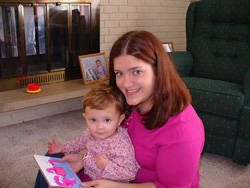
Photo from flickr.com

Lorem ipsum dolor sit amet, consectetur adipisicing elit, sed do eiusmod
Lorem ipsum dolor sit amet, consectetur adipisicing elit, sed do eiusmod
