
When *Sandra (not her real name), almost 2 years old, came to Brick’s Place, her parents’ concern was for her not to be treated differently because, being an intelligent girl, she was used to receiving a lot of praises from people around her. They first enrolled her in the toddler level where she confidently breezed through tasks, and later on, she was moved to the preschool class where she mingled with kids of different ages including older ones. Although she was superior academically, there were other things she could not do which she saw older children accomplishing. She then set goals to develop her other skills, and found out that there were many new things to learn from her classmates as well.
Where preschool children engage in a stimulating and meaningful social interaction, learning becomes reciprocal between big and small kids who belong to the same class. Younger kids set higher goals emulating the older ones who, in turn, gain a lot of confidence from being looked up to, and learn to be responsible for the little ones.
Laying the foundation
In 2005, three educators got together to conceptualize the curriculum for a new learning approach in preschool education that has yet to be duplicated here in the Philippines. Richelle See, Directress, Cherry M. Chiok, School Administrator, and Och Umlas, Preschool Teacher, previously worked together in a preschool before setting up their own system.
“We believe that the formative years are very important to the development of a child, and we want to build a solid foundation where each skill learned builds on previous skills without skipping anything along the way. Just like brick-laying, if one part is missing the whole thing will collapse,” says Teacher Richelle. Thus, Brick’s Place came to be.
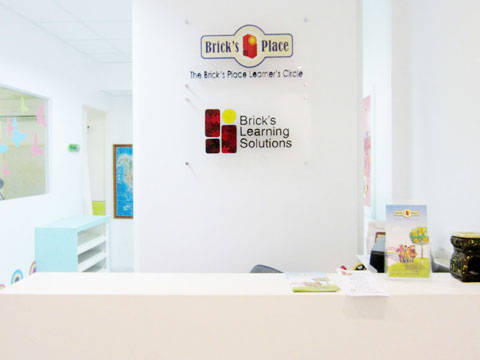
Brick’s Place has been operating in the country for seven years now, offering a Toddler Play Group for children 1.6 – 2.11 years old, a Vygotskian Preschool for children 3-5 years old, and the Brick’s Learning Solutions for educational therapy, reading intervention and enhancement, academic tutorial and Filipino and Chinese language learning programs.
[previous|page|next]
What is the Vygotskian Approach?
The book, Tools of the Mind: The Vygotskian Approach to Early Childhood Education by Elena Bodrova and Deborah J. Leong, was instrumental in guiding the core group of educators towards developing the curriculum for Brick’s Place. According to Bodrova and Leong, giving a child “tools of the mind” using the approach developed by Russian psychologist Lev Vygotsky “helps a child plan, predict, control impulses, persist through trouble, and orchestrate thoughts to fulfil a goal. Children learn how to avoid distraction, and become self-organized and directed.”
How is it done?
Goal-setting is a very important method used in the Vygotsky approach. Following this method before the school year begins and throughout the year, assessments per child are done and adjustments of goals made along the way as teachers deem necessary. Unlike other schools of thought which require that teachers follow the expected skills based on chronological age, the Vygotskian method amplifies the learning experience by moving on to the next level as long as the child is manifesting readiness for a certain skill.
In Tools of the Mind, the program describes the creation of a “play plan” which serves as the child’s daily schedule before beginning a class. The teacher supervises or aids the child in organizing his or her day through writing or drawing, and verbalizing these plans as they are created. According to Teacher Richelle, this is exactly what they do in class. “Making their own goals keeps the child focused on the task, so that nothing else matters. Sometimes parents are surprised to see how focused their children are inside the classroom even if there are distractions like other children playing or doing separate activities.”
Goals set for every child at the beginning of the school year, the day, or the class is always in line with the 3 major childhood education principles of Vygotsky which are: 1) Learning through Thought and Language, 2) Learning through Socio-Cultural Interaction, and 3) Learning through the Zone of Proximal Development.
[previous|page|next]
Thought and Language: Monitoring thoughts by speaking aloud
“Vygotsky believed that children need to develop language skills very well so that thought processes will be easier and vice versa. It’s a cycle. If you have ideas but you don’t know how to express them verbally then they don’t progress from there. Similarly, if you have the language without ideas, then it’s also not enough, so we try to develop both,” according to Teacher Richelle.
Teacher Och elaborates, “We train the children to think out loud, so that later on they are able to monitor their own thought processes. When they go to a big school, even if there are a lot of them in a class, they are in the moment and they don’t get lost in thought. So, for every task or every move they make, they have to verbalize. The child is actually teaching himself how to learn.” To illustrate, she uses a shape sorter and demonstrates how a child would verbalize doing the activity -“Should I put it here? It doesn’t fit. What about here?” and so on.
Socio-Cultural Interaction: Learning from others and transferring learning to others
Exposure to different practices as well as cultural celebrations is a critical component of the Vygotsky way. For instance, Mandarin classes are offered not just to kids who are from Chinese families, but to everyone, since this is part of learning about people in the community and different languages used to communicate.
“When we have our activities, they don’t just start and end with the program. The goal is for them to know why we are celebrating certain holidays or festivities. We do it in such a way that the children will really understand, explains Teacher Och. Another example is ‘Buwan ng Wika’ which is a month-long celebration to learn more about the Filipino culture which culminates in a program with Filipino games, dances and food. Teacher Richelle adds, “The UN Celebration, also, is not just a costume parade, but a whole month of learning which ends in an exhibit presented to the entire class by the children with the help of their parents.”
[previous|page|next]
Zone of Proximal Development: Manifesting readiness for a certain skill
Goals for the students are highly individualized. Teachers pay attention to the Zone of Proximal Development which is the child’s readiness to accomplish tasks with or without help. Learning styles are considered, as well as special concerns when it comes to motor or language skills.
“If the child is ready to proceed to the next level, we respond to that. There are a lot of times when we adjust depending on a particular child’s abilities, but initially, upon assessment, there is already a plan for each child for individual instruction at his or her level. This allows us to really monitor their progress,” says Teacher Och.
Progress reports are in the form of checklists and narratives. Checklists are very detailed, with skills progression from ages 3 to 5, so that parents are able to see all the skills their child may have already acquired or can look forward to acquiring which is not limited to their child’s age group. This also helps them do tasks at home to improve skills based on the report.
Transition to Big Schools
The shift to big schools for students of Brick’s Place who finish the preschool program has not been a problem. “After attending our preschool program, they adjust very well. Here, even if the physical set-up is not structured, the time or schedule is very structured. They have goals, so they know what they are aiming for,” says Teacher Richelle.
Holistic development is a prime consideration at the Brick’s Place, thus learning is never rushed. Teacher Richelle explains, “We don’t force kids to learn something that they are not ready for. We have to be very conscious about anticipating the next level. We have to know the progression of skills by heart before we can take the next step.”
As their name suggests, learning happens “brick by brick” at the Brick’s Place. For them, responding to the individual needs of every child is the key to building the most solid foundation for the young learner.
Brick’s Place is located at 2nd Floor, M&J Bldg., 123 Don A. Roces Ave. Quezon City /Contact numbers 415-4957 and 0917-8458546.
Click 'View Gallery' to browse through the photos.

Lorem ipsum dolor sit amet, consectetur adipisicing elit, sed do eiusmod
Lorem ipsum dolor sit amet, consectetur adipisicing elit, sed do eiusmod
