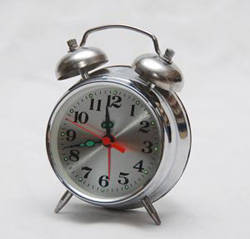
 Time is an abstract concept that is difficult for young children to understand. When my son Daniel was still in preschool, he would tell me about things he did weeks ago and start his sentences with, “Alam mo, Mommy, kanina…”
Marah Vasquez-Estuesta, part owner and administrator of Mindbuilders Preschool, affirms that all children go through the stage of being confused about time. “Young kids have difficulty reading and measuring time since time involves three indicators of the measures—second, minute and hour—moving in a circular manner, compared to linear measurements such as height, length, and distance.” Correspondingly, Myla Lee-Tolentino, a family life and child specialist and school directress at the Pail and Shovel Integrated School, explains, “Preschoolers have little concept of conventional time. They also will not have an understanding of instruction in relation to time until they are well over seven or eight years old.”
Phases
Tolentino and Estuesta provide the following time-concept stages young children go through:
• During the first two years, a child begins to understand the concept of day and night. He can follow simple routines and pay attention to changes in the weather (e.g. rainy, sunny, stormy, etc.)
• By the age of three to three-and-a-half, a child’s understanding of time becomes more personal and subjective. He now uses time words such as those used for sequence (“I am the first”), frequency (“I eat five times”), rhythm (“Every Monday is P.E. day”), and duration (“It’s taking a long time”).
At four or five years old, a child can now recall past events and plan for the future. He can arrange events of a day and use words such as “day,” “week,” “time,” “every day,” or “next week” when he actually means “in a minute.” He is also starting to have a sense of birthdays and holidays.
• During the fifth and sixth years, a child is more aware of past events and future ones. He can now tell the days of the week, what day it is, what day comes next, what time he usually eats or sleeps, and what’s the date on the calendar. Although he is now more familiar with telling time by the hour, half, and quarter, there are moments when he will still have difficulty grasping the idea fully.
• By age six, a child is now ready for instruction in time concepts and likes to think about things in sequential patterns.
• Beyond seven years old, real competence with the clock will be evident in children provided that this is supported by having consistent, cyclical, recurring, and sequential events of their day. “Mastering the concept of time doesn’t generally develop until the later elementary years,” states Estuesta.
Click here to learn more about teaching time to your preschooler.
[previous|page|next]
Read on to learn more about teaching time to your preschooler.
Teaching time
According to Tolentino, for children to fully understand conventional time during adolescence, they must be presented with various activities even at a very young age. Some ideas to help preschoolers better understand the concept of time:
1. Label routines with time words. Routines established at an early age assure your child of things that will happen next. Label these tasks with time words he can respond to and eventually use himself. “This will help build his confidence when faced with a new situation like attending his preschool program,” shares Tolentino. “When a child knows that he will see his parents again after class, it helps him trust others like his teachers.”
2. Create a photographic timeline. Tots like seeing cute pictures. Use this interest as a key for learning time. Let him make a timeline with photos that have the time written numerically on each one. This will help him sequence the events in a typical day. You can also mark tasks with a picture of the clock set at a particular time.
Tape these photos on a wall next to a real clock. It becomes an easy reference tool for understanding reminders like, “You must take a nap first before watching TV.” Knowing his daily schedule helps your tot feel safe and orderly. It also helps him associate time with daily events and routines.
3. Use sequential words to describe events or tasks. Don’t just say, “We’ll go to the mall at three o’clock.” Provide him with activity-based explanations such as, “We will eat our lunch first, then we’ll take a nap and when we wake up, we will go to the mall.”
By using sequential words, your child helps connect events with the order of time. This strategy will be more experiential to a child and let him realize the most awaited time on his own. Emphasize words such as soon, later, early, yesterday, today, tomorrow, next week, morning, noon, and evening.
4. Use a calendar to mark special events. This will help your kid learn time concepts as days pass by. He learns to anticipate an upcoming event such as Daddy’s birthday or Christmas and will help him think of the future and set goals or plan for their actions. A calendar can further help him differentiate the past from the future.
You can also make paper chains to count down days until an approaching occasion. Remove one link at the same time each day to illustrate the notion of a 24-hour day.
Calendar activities further help children recognize day, week, and month patterns. These activities must be meaningful and functional in order for your child to connect it with his life rather than merely reinforcing information about the calendar system.
Click here to learn more about teaching time to your preschooler.
[previous|page|next]
Read on to learn more about teaching time to your preschooler.
5. Play “time” games. Let your child make his own version of a clock. Introduce the long and short hands as well as the numerals. Once he understands the concept of numerals, ask him, “Which number is the long hand on? Where is the short hand now?”
Relay races and food eating contests allow children to experience time without punishing them for not being fast enough. The sorrow of defeat will be a great time management lesson for a child who comes in last. “Through these activities, children begin to understand the value of speed and appreciate the need to slow down when necessary,” describes Estuesta.
6. Read books about time. Some suggested readings:
• The Grouchy Ladybug by Eric Carle
• Telling Time with Big Mama Cat by Dan Harper
• Clocks and More Clocks by Pat Hutchins
7. Compare lengths of time using meaningful activities known to children. Say, “You can swim for 30 minutes more. That’s about one Barney show on TV,” or “We’ll stay at the party for one hour. That’s about as long as it takes us to drive to Lola’s house.”
8. Talk about the weather. This and the seasons are observable and changing events that mark the passage of days. Children can easily recall that yesterday was sunny, today is cloudy, summer is hot, and Christmastime is cold.
Estuesta counsels parents to be consistent with routines like homework time, dinner time, and bedtime. “Have your child remind you once in a while so he is involved and not always led in learning a routine,” she advises. Tolentino adds, “Take note that the concept of time is not only confined to the understanding of the clock itself. Logical thought and seeing the relations of succession and duration must also be developed in children.” She adds, “It’s more important to let your child master the concept of yesterday, today, and tomorrow rather than rote learning ‘telling time on a clock.’ Remember that basic foundation is essential in order to build complex ideas in a child’s mind.”
Click here to learn more tips on how to deal with time-related problems with your preschooler.
[previous|page|next]
Read on to learn more tips on how to deal with time-related problems with your preschooler.
Time-tested
Preschool teachers Myla Lee-Tolentino and Marah Vasquez-Estuesta share tips on how to deal with the following:
1. When you’re running late
Explain to your child that you have to go. Never escape as this might result to trust issues. If a child is to accompany you, make sure he understands why he is being rushed. “Let’s move quickly because we need to catch the school bus!”
The photographic timeline will be useful in this instance to establish a sense of urgency in the child as he can concretely see what the next activity will be. As a result, he will realize that he should not be late because there is a sequence and routine to follow at a certain time.
2. When it’s time to slow down
Sequencing tasks will be beneficial if a child has step-by-step activities he can follow. Tell him, “We have a lot of time in our hands today so you can take your time in doing things.”
3. When your tot looks forward to something like a trip to the beach
Tune down the anxiety, but build the anticipation. Using a calendar, have a countdown before the trip, and count the number of sleeps before the event. Let him in on the planning by checking what you need to buy and scheduling when to buy them to build excitement.
Photo from sxc.hu
SOURCES:
• Marah Vasquez-Estuesta, part owner and administrator, Mindbuilders Preschool, Las Piñas City
• Myla Lee-Tolentino, family life and child specialist; school directress, Pail and Shovel Integrated School, Quezon City

Lorem ipsum dolor sit amet, consectetur adipisicing elit, sed do eiusmod
Lorem ipsum dolor sit amet, consectetur adipisicing elit, sed do eiusmod