As Vangie Sanchez puts her two boys - Rafael, 8 years old, and Milo, 4 years old - to sleep, she cannot help but think about how surprisingly similar they are. Her two angels have mestizo-like features, soft brown hair, contagious energy that lasts the whole day, and smiles that can light up an entire room. Aside from their love for playing Logico and listening to their mom read stories, the boys are also alike in other ways. “Raffy and Milo are very curious and fast learners. They listen well and ask questions when they do not understand something,” she adds. They could easily be mistaken for twins (if it weren’t for the age difference) and yet Vangie knows that as far as similarities go, as with all children, theirs have limits.
More than the Disney versus Spongebob debate that goes on between the two boys in front of the television, Vangie says that the two are also very different individuals in their attitude towards learning. “Raffy enjoys doing his schoolwork, while Milo needs a bit more pushing to do so,” she says. The reason as to why innumerable day-and-night differences exist between them, however, cannot be a simple matter of having different tastes. What brings about these differences in what attracts or interests them has something to do with how they perceive things, how they think and feel, and all in all, how they learn.
Learning Styles
Learning styles center more on the how of learning and less on the what. Instead of focusing on content and end-products, the different styles in learning are much more concerned with the individual differences of how people think or feel, or in a nutshell, the process of learning.
Monica Verdadero, a preschool teacher at an exclusive all-girls private school in Antipolo, stresses this by saying that a learning style refers to an approach to learning. “It is a way or a strategy in carrying out or applying a mental task,” she says. There have been a lot of researches on the different classifications of learners but Verdadero focuses on the three basic ones: visual learners, auditory learners and kinesthetic learners.
[previous|page|next]
Visual
Vangie reveals that Raffy is much more visual as he is observed to be more engaged in videos, videogames, and books as compared to Milo. “Visual learners learn through seeing,” shares Verdadero. These children are able to process information better when they can see what is being taught to them. Parents and educators may address these learners in different ways. “Help can be given to them by providing notes for children to see while studying, providing written instructions and not just verbal ones when explaining a task, highlighting important ideas and providing colorful pictures and big fonts,” she shares.
Auditory
Verdadero says that auditory learners learn best through listening or making use of their ability to hear and process what they hear. “They typically take a longer time to read a selection,” she says. Aside from providing written and verbal instructions, or using videos and music as a means of providing information, Verdadero also suggests that encouraging group discussions, role playing and recording lectures (either audio or video), may also help these learners.
Kinesthetic
Milo, as Vangie shares, is a much more active child compared to Raffy. “He seems more impatient with activities that require him to sit down, write and read. He likes learning through playing and observing things around him,” she says. These qualities (like having a hard time sitting and listening) fall under the traits of a kinesthetic or a tactile learner, who processes information best through moving, doing, and touching. “They must be provided with activities that will let them experience learning,” says Verdadero. Activities such as art, cooking, sports, dance, role play, and those that allow them to touch or manipulate materials are just a few ways on how to make learning easier and more fun for them.
[previous|page|next]
The Multiple Intelligences
From these basic qualities of learners, researchers have been exploring other learning styles, and one of the most widely accepted studies are those conducted by Howard Gardner on Multiple Intelligences. In his book Multiple Intelligence: The Theory in Practice, he goes beyond the traditional definition of intelligence as a trait that simply consists of ability in logic and language but progresses to the idea of multiple intelligences where variations in capabilities, as well as ways of processing information exist. These learning styles show that children have different ways of exploring the world and that they use their different intelligences to perform different tasks. From his book Frames of Mind: Theory of Multiple Intelligence, Gardner speaks of different intelligences or learning styles that children possess.
Linguistic
These children learn best through speaking, hearing, or seeing words. They have a good memory for names, places and trivia. Activities that can help make learning more interesting to them are word games, reading and writing, using print-rich materials and debates.
Logical-Mathematical
These learners make use of analyzing, reasoning, patterns and relationships to learn and understand information. Possible activities would include experiments, asking questions, strategy games and working with numbers.
Visual-Spatial
Children with this learning style are able to process information by conceptualizing experiences in spatial terms. They learn by visualizing and responding to visual details and they excel in imagining, doing puzzles, using art materials, and creating things.
Musical
Musical learners utilize their sensitivity to sounds, pitches and beats, as well as their ability to remember melodies and rhythms to be able to process what they experience. Through activities that involve singing, or chanting and playing instruments, they make sense of information around them.
Interpersonal
Learning happens for these children through bouncing ideas with other people. They display skills in leadership, diffusing conflicts, and effective communication with others. Group activities are tools for learning for them.
Intrapersonal
These learners are self-motivated, work at their own pace and have a deep connection with themselves. Because they learn best alone, possible activities suitable for their learning process include individualized projects.
[previous|page|next]
Multisensory Learning
With the multitude of findings about learning styles, it is easy to get lost and confused in attempting to classify where our own children fall under. In fact, it even gets easier to start comparing which style is “better” than the others or which one our children must be using to learn. However, Verdadero reminds us that no learning style is better than the other. “Everyone has strengths but different people have different strengths. Therefore, the learning style of an individual becomes effective for learning depending on his or her own strength,” she says.
Children come to understand the world by attentively interacting with it through their senses, as author Peck explains in his book Multisensory Strategies. Their multisensory way of learning not only stresses that learning must be incorporated into everyday life experiences, but also that no two children learn in the same way. “Children learn best in different ways. Children have preferences on how they can apply the learning task. Educators just need to find out their learners’ learning styles,” says Verdadero. Yet, despite the individual strengths and tendencies of children to learn a certain way, it should never be forgotten that they always use a combination of senses to learn. “Children can have more than one learning style. They can be a combination of different learning styles or depending on the need or the task demanded of them,” Verdadero adds.
All this, then, poses the good news that a child’s potential has no limits. This potential, however, will be put to waste if a nurturing environment fails to exist for him. To avoid such a disaster from occurring, getting to know the individual learning styles of children will allow parents to become aware of how to provide them with the right support. Vangie stresses that when a significant adult in a child’s life recognizes his uniqueness and takes it as a gift, the child is being given a chance to maximize his potential. “Be flexible to their unique needs. Accept each child’s limitations and encourage their strengths,” she states. Acceptance of the differences in children and in the ways that they learn allows each child to not only effectively process information but also successfully carry out tasks. Recognizing that he has the freedom to do so, with the use of his own strengths, gives him a chance to believe in himself more, to enjoy the process of learning and to never take any experience with the world for granted.
References:
Gardner, Howard. Frames of Mind: Theory of Multiple Intelligence. Basic, NY:1983.
Gardner, Howard. Multiple Intelligence: The Theory in Practice. Basic, NY: 1993.
Peck, M. and Edgar McIntosh. Multisensory Strategies. Scholastic, NY: 2005.
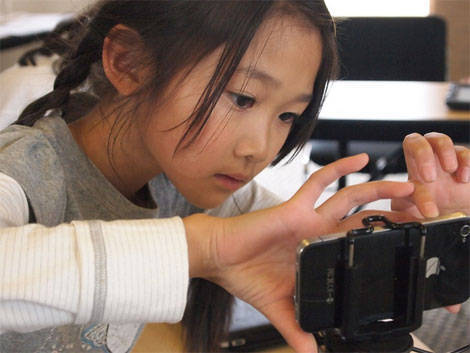
Photo by flickingerbrad from flickr creative commons

Lorem ipsum dolor sit amet, consectetur adipisicing elit, sed do eiusmod
Lorem ipsum dolor sit amet, consectetur adipisicing elit, sed do eiusmod