

About nine out of ten Filipino children aged 10 struggle to read or understand basic text. This is one of the indicators that there is a high learning poverty rate in the Philippines, as found in a recent World Bank report.
Add to that, the country's ranking in the 2022 Program for International Student Assessment (PISA). The Philippines is in the bottom 10 out of 81 participating countries for the second consecutive assessment. Although this study was the first to assess the impact of the COVID-19 pandemic to students worldwide, our students' performances in reading, math, and science were already downward since 2018.
This, among others, is the reason why the Department of Education started the initiative called "Catch Up Fridays" in schools, to help students master reading comprehension by devoting one school day for it. While it seemed promising during its nationwide launch on January 12, recently, teacher groups have been calling on DepEd to stop the program, as more and more students have been skipping school due to low engagement and lack of reading materials, according to a report.
Can transformative education solve PH's learning poverty problem?
One approach to address the failure of education in the country is through transformative education. UNESCO defines transformative education as one that involves teaching and learning geared to motivate and empower happy and healthy learners to take informed decisions and actions at the individual, community, and global levels.
According to UNESCO, education can only be “transformative” when students feel valued, acknowledged, safe and are included in the learning community as full and active members. This begins with the prevention and handling of violence in schools, including bullying, gender-based violence, and discrimination related to health and gender against both students and teachers.
This was the point of discussion during the media launch of Life Academy International last February 29, where Edric Mendoza, managing director of LAI, offered that aside from learning poverty, there is a need to also address the values and leadership poverty in the education sector.
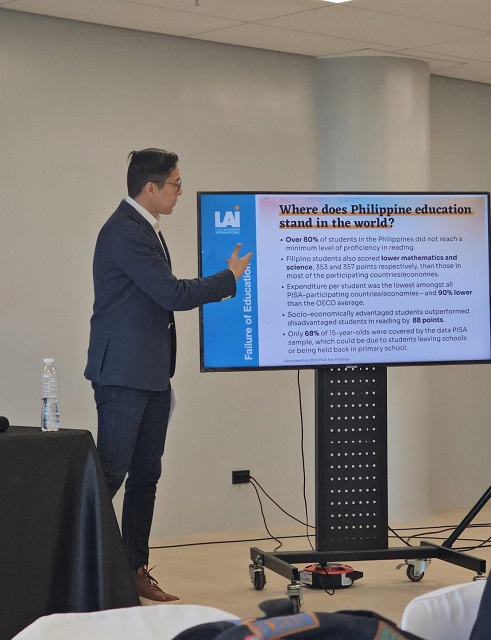
Edric Mendoza explains the need to improve the PH's education system at the LAI media conference
LAI is a Christian K-12 international school that pushes a distinct framework of transformative education through value formation, real-world learning, and servant leadership.
Successful venture capitalist, senior US diplomat, Ivy-League professor, and Fullbright scholar to Asia The Honorable Gregory Slayton graced the event as its keynote speaker, emphasizing what servant leadership is, and its significance in addressing learning poverty in the country.
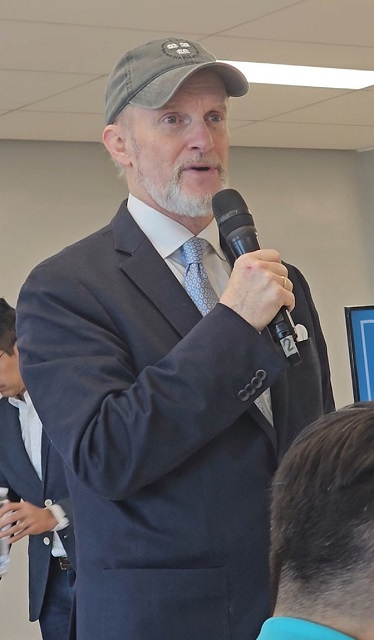
The Honorable Gregory Slayton during the LAI media conference
“Servant leadership is leadership by example, not by command. It is also unity in key areas, and respect for diversity in others," Slayton said in a statement.
Expert shares practical tip for parents to contribute to transformative education
He also offered practical tips to parents on how they can help contribute towards achieving transformative education.
"When your kids are young, starting at the age of 2, 3, 4 all the way up to 15, read to your children," Slayton said.
The best-selling author of the book, Be A Better Dad, continued, "Sit in their bed, let them sit on your lap, read. You don't have to read for an hour, just 5 to 10 minutes, but that's how kids learn to love to read. When mom or dad is sitting there, reading some kid's story, they just associate reading with good feelings. That is one of the biggest advantages we can give our children."
He emphasized that the role of parents is to help their kids make sense of the world, as young as they are, "You cannot be a leader if you are not a reader, that's the truth. You have to understand how the world works. You have to understand the past."
Slayton continued, "Even if you are not a great reader yourself, just help them understand how the world works."
How parents can get involved in their kids' education
Moreover, Mendoza emphasized the role of fathers in their kids' education. Speaking to Smart Parenting, he offered three important tips.
1. Be a good role model.
The things we've want them to do, we need to do ourselves, said Mendoza. "At pag hindi natin ginagawa, we need to be honest in saying, "Dad messed up, will you forgive me?"
2. Build relationships.
Find out what your kids like, and what are their interests. Mendoza suggests parents show genuine interest in them so that your kids will feel like you want to build strong relationships with them.
3. Be intentional.
Mendoza emphasized that parents should determine the goal of their kids' whole learning experience, and make sure it is clear not only to them but also to the kids, "So that dad and mom are moving and making all the decisions surrounding that goal that will help the child get there," he explained.
Check out these 7 teacher-recommended preschooler reading activities you can enjoy with your kids here.
More from sp

Lorem ipsum dolor sit amet, consectetur adipisicing elit, sed do eiusmod
Lorem ipsum dolor sit amet, consectetur adipisicing elit, sed do eiusmod
