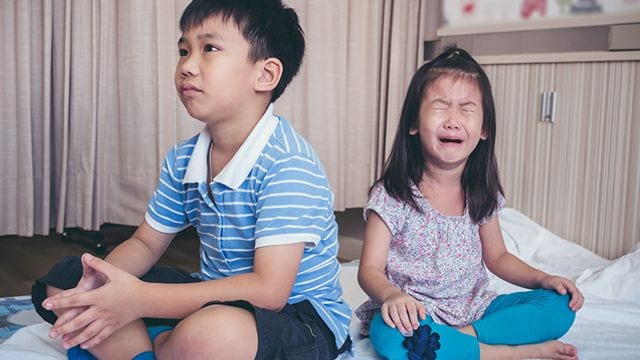
If you have a sibling, you know what it is like: you cannot help but fight or bicker with each other. Maybe it stops when you grow up (hmmm), but sibling arguments cannot be avoided. As parents, you now see your kids scream at each other because they do not want to share toys or they have different personalities and temperaments. It is inevitable for kids to occasionally fail to see eye to eye, just like adults do.
Many professionals say it is better for parents to allow the children to make up with each other on their own, but children usually don’t have the skills yet nor the willingness needed to understand their sibling’s points of view, so it is necessary for a parent or guardian to intervene.
When to step in your kids’ arguments
Kids Health says that always involving yourself in sibling squabbles can lead to a plethora of issues, such as them never learning how to work out their problems by themselves. Still, in some cases, without your intervention, the argument might only get worse and more challenging to resolve. Learn more about those instances below.
If one (or both) of them are physically hurt
There are instances when, during fights, siblings hurt one another — maybe by pushing, shoving, hitting, punching, or slapping each other. In situations like this, it’s crucial for an adult to intervene and separate them to prevent things from escalating even more. I will also allow them to calm down.
What other parents are reading
If there is a risk they might get hurt
You may have also encountered situations where one of your children is daring his or her sibling to do, eat, or drink something potentially dangerous. In other cases, maybe one child, for some reason, thinks it would be fun to lock his or her sibling in a closet or a box or even outside the house. Obviously, all of those instances can be hazardous to your child’s safety and well-being.
If they are being disruptive
Let’s be real: It can be challenging to keep your cool when you hear your children yelling at each other non-stop inside the home. For the sake of your own mental wellbeing, step in, and put the screaming to a halt.
If they use inappropriate words
Hurting one another might not just involve physical actions — some kids might also resort to using mean statements and words to their siblings. These can include insults like “Ang pangit mo!”, threats like “Paluin kita d’yan!”, and even swear words. Unless you step in and make clear that those words are not to be used in your home, the kids might just keep saying them when they get angry.
What other parents are reading
If it involves someone else’s child
When your kids’ friends are at your home or when you are outdoors, your children’s arguments might end up involving other kids that they are playing with. You might know how to deal with your children’s fights, but your rules might not necessarily apply to the other kids, which means that you — and maybe even the parents of that other kids — might really have to step in.
If there is an unequal power dynamic
If you have an older child who is picking a fight with their sibling who is much younger than them, the younger child might not know how to defend himself or herself and end up feeling like he or she has the shorter end of the stick. In these cases, allowing your kids to resolve their conflicts by themselves might not be such a good idea.
If they ask you for help
This doesn’t mean those times when your kids invoke your name to justify their actions (“Sabi ni Mommy, akin itong toy eh!”) or to taunt their sibling (“Isusumbong kita kay Mama!”). Rather, it means those times when your child calmly and politely approaches you and asks for your assistance, to help them resolve the conflict. It might take a while to instill this habit in them, but it’s a good way for them to learn that you’re willing to help if they ask you nicely, and for you to teach them how to make up peacefully.
What other parents are reading

Lorem ipsum dolor sit amet, consectetur adipisicing elit, sed do eiusmod
Lorem ipsum dolor sit amet, consectetur adipisicing elit, sed do eiusmod