
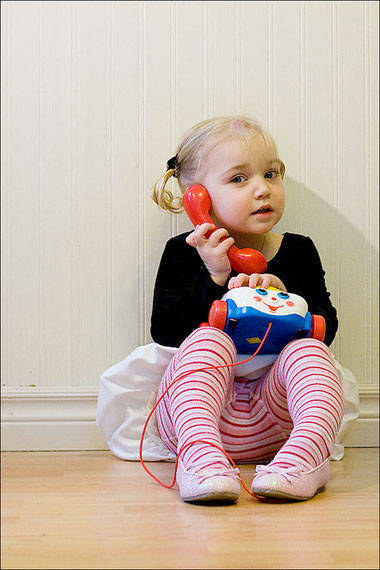
 Many parents reading this would probably agree with me that good manners are a sign of being “civilized,” and that showing respect and consideration towards other people is a crucial social skill that children should learn.
Marian Wright Edelman, an American activist for the rights of children, president and founder of the Children’s Defense Fund, and author of several books, including I Can Make a Difference: A Treasury to Inspire Our Children, even said: “Being considerate of others will take your children further in life than any college degree.”
Truly, when it comes to teaching our kids manners and respect, we parents have an important role to play. The way our children behave when they are at home or visiting other people’s homes, and yes, even “simple” things like using the phone, can be an indicator of how they will be as adults.
To help all the parents out there (including me), here are a few tips for teaching phone manners to children:
Homeschool mom Sim Casalme Dumlao, says she teaches her kids — Mark, 11, and Monica, 10 — how to be courteous on the phone by setting a good example for them. “Kids will only do what they see and hear from the adults at home,” she shares. “Especially (when it comes to) answering phone calls, including on cellphones. This is one of their favorite ‘mimic play’ activities, so make sure you demonstrate how to take calls during playtime.”
Marge Aberásturi, an independent virtual assistant and owner of VASupportPro.com, says her kids Xia, 12; Bea, 8; and Jude, 7 answer the phone for her most of the time. She always reminds them to “use po and opo and ask who the caller is politely.”
“If the caller refuses to identify himself or herself, I tell them to just put down the phone without any fuss,” Marge continues. “If the caller does identify himself or herself though, the kids ask who he or she wants to talk to politely, then ask him or her to wait for a minute while they get Mommy.”
Marge says she also taught her kids to never give other information, such as what people in the house are doing. “Dati kasi nakikipagkwentuhan pa sila sa caller,” she explains.
[previous|page|next]
Most etiquette coaches or ”gurus” agree that kids need to be taught proper phone manners early on. Aimee Symington, founder of Finesse Worldwide, Inc. and creator of the award-winning board game on manners called “Blunders,” and renowned international etiquette expert, shares how parents can teach their children polite telephone manners in five easy steps:
1. Teach them how to answer the phone.
Symington suggests we teach children not just to say “Hello,” but to also say their name. (Symington suggests they say their full name.) They should also say, “Who’s calling, please?”
For example:
“Hello, this is Timothy. May I ask who’s calling, please?”
In this way, the person who is calling can know who it is exactly he or she is talking to and he or she can have a conversation accordingly.
2. Teach them how to take a message.
If your child is at home and answers the phone, and the person whom the caller is calling for is not there, she needs to learn to take a message. Symington says to refrain from saying things like, “My mom’s not home. Call back later.”
Instead, it would be better to have a pen and paper available near the phone and to teach your child to write the person’s name, telephone number and a brief message that he or she would want to leave. (Of course, this applies only to children who can already write legibly.)
3. Teach them to be safe.
In situations where children are left home alone, even for brief periods of time, Symington advises parents to tell their kids not to let callers know that they are alone at home, as this could be unsafe.
Instead of saying, “My mom and dad aren’t home right now,” teach kids to say, “My parents can’t come to the phone right now. May I please take a message?”
4. Teach them to use a respectful tone of voice.
When your child answers the phone and the caller requests to speak with Mom or Dad, teach them not to hold the phone and shout to get your attention (e.g. “Mom! Phone for you!).
Remind them to quietly put the phone down, and go and find the person that the caller is looking for instead.
Also, teach them to use their best manners, especially to say “please” and “thank you.” (For us Filipinos, the use of po and opo is also encouraged.)
5. Teach them when they should be making phone calls.
If your children are already old enough to make their own phone calls, Symington advises parents to teach them the general rule, i.e. not to call other people before 9 a.m. and after 9 p.m. Although there may be exceptions to this rule, we must always take into consideration other people’s daily routines.
Following pointers such as these on a consistent basis will most likely help our children become more respectful individuals who other people will surely enjoy relating with — even when they are already grown adults.
Source:
www.finesseworldwide.com
Photo by bubbabyte from flickr creative commons

Lorem ipsum dolor sit amet, consectetur adipisicing elit, sed do eiusmod
Lorem ipsum dolor sit amet, consectetur adipisicing elit, sed do eiusmod
