

I grew up calling my parents 'Mama' and 'Papa'. My mom was a government employee, while my dad was a jack-of-all-trades: artist, electrician, driver, all in one. Growing up in Metro Manila, I thought that only well-off kids called their parents 'Mommy' and 'Daddy,' while 'Nanay' and 'Tatay' didn't resonate. I didn't fully understand it then, but in my young mind, Mama and Papa felt just right—somewhere in between.
When we became parents, my husband and I decided to teach our children to call us Nanay and Tatay. The reason? It sounds simple, humble, and low-key—exactly how we want to raise our family. As our first child learned to talk, she would call her father 'Tats' and me 'Nay'; it was music to our ears.
Most of my friends and even strangers admire us when our daughter, now a grade-schooler, comes up to us and calls us Nanay and Tatay. She also speaks Filipino eloquently, just like we raised her.
It turns out we're not alone in this choice. More and more millennial parents are making the conscious decision to teach their children to address them with the same Filipino terms of endearment, not only because it sounds pleasant but also because it carries a deep pride in our Filipino roots.
Interestingly, sources say that the word Nanay originates from nantli, meaning "mother" or "womb" in Nahuatl, a Uto-Aztecan language spoken in Central Mexico. Variations of Nanay and Tatay, such as Inay and Itay, are also used. Despite Western influences that brought Mommy and Daddy, here's why young Filipino parents choose to revive the use of Nanay and Tatay.
Why young Filipino parents choose 'Nanay' and 'Tatay'
LK Tupaz from Manila has two kids, ages 9 and 3. She shared with Smart Parenting that she and her husband realized that a different kind of warmth comes with being called Nanay and Tatay, especially since they are not widely used in this generation.
"When I hear the word Nanay, the characteristics of a Filipino mother come to mind—loving, resilient, and selfless. Iba ang Nanay lalo sa kultura natin," she adds. "Anytime mo kailangan ang Nanay, dadating 'yan sa kahit anong stage ng buhay mo," LK explained.
'Gusto kong makita nila yung beauty ng Filipino language and yung depth ng bawat salita. At 'yung i-embrace nila 'yung identity nila as Filipino.' —LK Tupaz
Meanwhile, Tzarina Gaoiran, a mom of a 5-year-old girl, shared that they deliberately included Tatay and Nanay in the first Tagalog words they wanted their daughter to learn. "She hears us say these words when we talk to my mother-in-law and father-in-law. And it's part of our Filipino culture, closely tied to "mano po" as we described it to her."
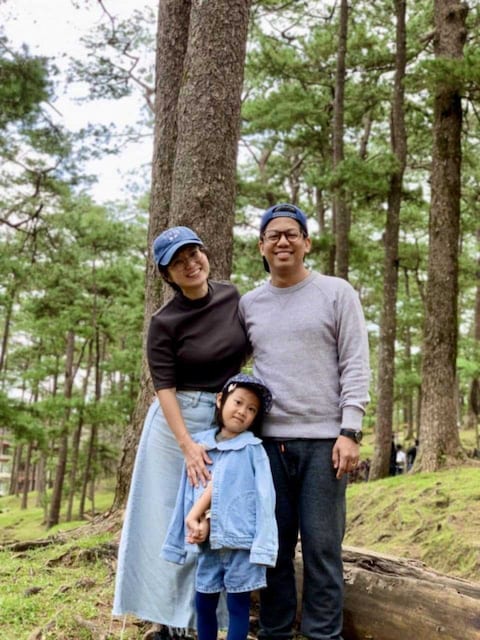
Though Tzarina didn't grow up calling her mother Nanay, she associates the word with fondness because her mother calls her own Nanay Anita. "When Dani, my daughter, calls me 'Nanay Tzarina,' it's so endearing, especially when she's trying her best to speak to me in Tagalog."
Love for the Filipino language and culture
LK and Tzarina shared that aside from teaching their children these Filipino terms of endearment, they hope to pass the values of love for our language and culture.
"Many children from Dani's generation sound like native English speakers, which can cause them to lose interest in their native language. But I think it does not have to be the case. I believe they are capable of many things, such as speaking many different languages, and they can continue to show love and respect to our culture in the generations to come," Tzarina shared.
While it can be a matter of preference, choosing to be called 'Nanay' and 'Tatay' can also be a powerful practice that instills pride in your child's Filipino identity.
LK meanwhile said, "Honestly, mas ma-English 'yung kids namin lalo ngayon kasi English na mag-salita halos lahat ng nakakausap nila sa school, o mga friends nila. But siguro, kami, we made it a point na nakakaintindi at marunong din naman sila magsalita ng Filipino. Gusto kong makita nila yung beauty ng Filipino language and yung depth ng bawat salita. At yung i-embrace nila 'yung identity nila as Filipino."
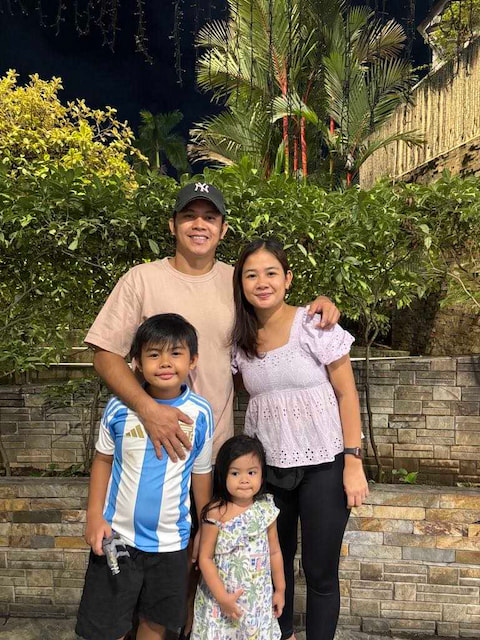
How to teach your child to call you Nanay, Tatay
Based on experience, here's how to build your child's interest in learning the Filipino language and, ultimately, teach them to use these Filipino titles at home.
1. Cultivate a love for reading books in Filipino.
Introduce Filipino books to your child as early as possible. Books published by Adarna House, Anvil, or Summit Books are in English and Filipino. Having these at home will familiarize your child with both languages.
2. Start using the terms in daily conversations.
Exposing kids to a bilingual environment can help them speak Filipino confidently. Be consistent; eventually, kids will pick up what they hear often.
3. Share stories about your Nanay and Tatay.
Whether you address your parents differently, sharing stories about them gives your children the impression that they should be treated respectfully. They will begin to see those titles as meaningful as they associate the words Nanay and Tatay with reverence and love. Mention how your Nanay used to cook your favorite dish when you were sick, or how your Tatay would bring you to school. These personal memories can shape how they see the roles of parents in their own lives.
Raising children who are proud Filipinos
Ultimately, what may seem like a simple decision carries much meaning. While it can be a matter of preference, choosing to be called 'Nanay' and 'Tatay' can also be a powerful practice that instills pride in your child's Filipino identity. It's a reminder that no matter where life takes them or who they become, they will always have a Nanay and Tatay who will remind them where they came from.
As I hear my daughter say Nanay every time she calls me, I know we made the right choice—not just in how we're addressed but also in how it creates affinity for our country.
Read five ways you can help your kids love the Filipino language here.
More from sp

Lorem ipsum dolor sit amet, consectetur adipisicing elit, sed do eiusmod
Lorem ipsum dolor sit amet, consectetur adipisicing elit, sed do eiusmod
