Suspended na Naman? Parents, Educators on Lost School Days
Remember: A flood is not a lesson in resilience nor is a dangerous commute a character-building exercise.

Published on Sep 11, 2026
“Walang Pasok.”
It’s a familiar announcement on Facebook and in school group chats during the rainy/monsoon season. And honestly, there’s still a part of us that feels relieved.
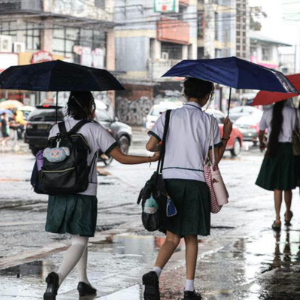
No need to brave flooded roads. No worrying about slippery commutes. No need to send our children out when the weather is dangerous. When the rain is pouring and the streets are becoming difficult to navigate, keeping children home is the responsible thing to do.
But after the third, fourth, or fifth disruption, another thought can creep in: What happens to learning when school keeps stopping? How do we strike a balance between protecting children from excessive screen time and recognizing that, when classes are suspended, their gadgets may be their only connection to learning?
And perhaps an even bigger question for the government units canceling classes: Are we protecting our children, or are we slowly protecting them from every opportunity to learn how to cope with difficulty?
Too many suspensions? Parents weigh in
For many Filipino parents, June has long marked the start of another school year.
For the 2026–2027 school year, public schools officially opened on June 8, with DepEd moving to a three-term school calendar that will conclude on April 8, 2027. But starting the academic year in June also means students immediately face one of the country's most unpredictable weather periods.
The result? The school calendar may say that the children are back in class, but nature doesn't always cooperate. And that's where the challenge begins.
Parents from the Smart Parenting Village began weighing in after a series of class disruptions due to inclement weather. One parent commented, “Iba pa din talaga ang face-to-face. Kung face-to-face nga hirap na ang mga teachers magturo, so imagine kung anong quality ng natutunan ng bata sa online. Hindi pa rin enough ang online or asynchronous class. At sa totoo lang, ang daming suspension na hindi naman dapat i-suspend, lalo na dito sa amin. Normal naman na maulan kasi tag-ulan. Ang nangyayari eh umulan lang ng ilang minuto, tapos suspend agad.“
It also becomes a challenge for working moms and dads. Childcare and everyday responsibilities often become so intertwined that finding a balance can feel like yet another challenge on an already endless daily to-do list. Another Smart Parenting Villager shares sentiments, “It's just frustrating for me because I work full-time every day kaya nga hindi ko pinag-homeschool anak ko, yet it's turning out like this. Ang hirap bantayan ang anak to focus on studies while I am also focusing on my own meetings and tasks. On top of that, we are paying school service fees and learning support teachers na hindi naman nagagamit dahil sa online classes. Isa pa, since we have two kids, then we need two separate gadgets to accommodate these online classes.”
DepEd May Allow Schools to Resume Classes Despite Broad Suspensions
DepEd eyes flexible suspension rules to protect safety and learning time.
READ MOREContent creator and 2024 mom squad member Elinor Ann shares the same sentiments, “I couldn’t even focus sa business na matagal ko na pinaplano because my kids are my priority now kasi kung hindi, ano pa matututunan nila? Luckily, I can still make a way to attend events and shoots during weekends. Pero kapag nag-Saturday classes na, cancel lahat niyan.”
To add fuel to the fire, her daughter does not make it easy for her when classes are
suspended, “Pag walang F2F o di nakikita teachers niya, she’s really sad. ‘Pag wala nga homework iiyak din. ‘Pag ako nagtuturo sa kanya, nag-iiyakan kami kahit di naman ako nagagalit. So imagine, pareho kaming stressed. This is us during class suspensions na akala ng iba sinasaktan o sinisigawan ko siya kasi umiiyak talaga siya. Damay minsan pati kuya niya.”
With a series of suspensions, some parents feel worried about how this impacts their overall learning experience.
“I don’t know if ako lang nakakaramdam nito, but sometimes I actually feel a little bad for this generation. Naalala ko kasi noon, kapag maulan, allowed pa kaming mag-tsinelas basta makapasok lang sa school. Ngayon, konting ulan or may forecast lang ng bad weather, suspended na agad,” another parent from the village shares.
“I understand naman that safety should always come first, especially when the weather is really bad. But sometimes I feel like kids today are becoming a little too sheltered. Kasi eventually, ‘pag graduate nila and they start working, they will still have to face the same rain, traffic, inconvenience, and unexpected situations in real life. Hindi naman laging pwedeng i-pause ang responsibilities kapag hindi ideal ang weather," she said.
She adds, "My daughter is enrolled in a private school, and in our case, small class lang naman sila. Most of the students also live nearby, usually around 10 minutes away from school, and hindi naman nagbibiyahe nang malayo. That’s why minsan, I wish private schools were given a little more freedom to decide based on their actual situation, location, and students. Para hindi automatically interrupted ang classes when the conditions around the school are still okay."
During the September 10 class suspension, she says weather was not unsafe in her area. "Like today, for example, maaraw naman dito sa Metro, but classes are still suspended. Of course, I’d rather have my child safe than take unnecessary risks. I think there should be a better balance between safety and allowing children to experience a little inconvenience, adjustment, and resilience too,“ she concludes.
Learning levels declining due to school closures
Perhaps there really is a reason to be worried.
In October of last year, Philstar reported that according to the Second Congressional
Commission on Education (EDCOM 2), Grade 4 students' Math and Science grades dropped by 12 to 14 percent amid repeated school closures. “The school closures have a big effect on the grades of a student,” EDCOM 2 noted, underscoring just how much repeated disruptions can affect a child’s ability to keep up with lessons.
But for other parents, this is more than just a suspension. It is a symptom of a more serious issue with the country and governance.
“...sa totoo lang dapat maayos ang flood control at drainage kasi kaunting ulan grabeng baha na agad. Hindi lang naman kasi dahil sa ulan bakit suspended pero dahil rin sa baha,” one parent said.
Educators share their points of view
“As someone who has to think not only about the well-being of each student but also of every teacher and staff member, I believe we cannot treat weather forecasts as certainties. When lives are at stake, it is always wise to err on the side of safety. At the same time, we have to acknowledge that frequent suspensions come at a significant cost to learning, so I don't think the answer is to suspend less, but rather to work toward more localized decision-making,” according to Eliza Constantino-Del Rosario, Reading Clinician and Head Teacher and Owner of R.E.A.D. Center PH.
She adds, “If actual conditions show that a school and the majority of its students and staff are in areas that are not affected by flooding or other safety risks, perhaps schools could be given more flexibility to decide whether they can safely open, with adjustments made for those who are unable to travel. The situation is different when the majority of the school community is physically unable to attend, in which case suspension may clearly be the safest and most practical decision. Ultimately, we need to move toward a more nuanced system that assesses actual local risks, communicates decisions clearly, allows schools greater flexibility, and ensures
that learning continues in whatever safe form is possible—whether through synchronous learning, face-to-face classes, asynchronous learning activities, simultaneous face-to-face and online classes to accommodate everyone or just plain regular classes.”
For Carmen Gorrez-Roman, R.E.A.D Center PH Co-Owner, “Learning interruptions
can be minimized by giving schools, particularly private schools, greater flexibility to make localized decisions on class suspensions while still following government guidelines and prioritizing safety. School administrators are in a good position to assess conditions because they know their students, families, staff, location, and usual travel situations.”
She continues, “The same discretion should extend to teachers, staff, and parents. Even if the school itself is safe, employees may be coming from areas experiencing flooding or unsafe travel conditions, while parents may also be dealing with hazardous roads or situations that make it unsafe for their children to travel. When feasible, schools should allow work-from-home, online teaching, modular work, or other arrangements based on individual circumstances. As a teacher and center administrator, I believe the goal is neither to suspend classes at the slightest sign of rain nor to continue simply because there is no city-wide suspension. The goal is to make responsible, localized decisions based on actual safety conditions while giving schools, families, and staff enough flexibility to respond appropriately and keep learning going whenever possible.”
The reality for parents and children amid class suspensions
True enough, a flooded street is not a resilience lesson. A dangerous commute is not a character-building exercise. And asking children to attend school despite unsafe weather conditions isn't teaching independence—it can simply put them at unnecessary risk. They don't need to experience unsafe situations to develop grit.
But there is a difference between protecting children from harm and protecting them from discomfort. And we shouldn't use resilience as an excuse for systems that need fixing.
If the weather makes it unsafe to travel, staying home is sensible. But staying home doesn't have to mean spending the entire day on the couch, waiting for the next announcement. Learning-continuity plans matter.
For Elinor, a system/program readiness for online classes and contingency plans matter. These days, homeschooling also appears to be a less stressful option. The program follows its own schedule and the materials are ready, rain or shine.
For other parents in the Smart Parenting Village, some schools found their way to adjust to the frequent interruptions. “Online sila always. Shortened nga lang, which is good rin kasi nakakapagod nga naman. Small class sila so kaya naman ng teacher. Hindi magulo,” one villager shares. “Then schedules were adjusted. They were supposed to have kind of rest days punta lang sila sa school for their scheduled time for a student-teacher conference pero ginawa na regular class day,” the parent says.
“I work in a private school. We created our own Learning Continuity Plan since last year. We observe blended learning and have one day of online class per week. Pag may class suspensions due to weather, transport strike, earthquake, or air quality, we shift to online class. This is one of the reasons why we kept our blended learning setup this school year so that the children can easily adapt, and there are systems also in place already should an online class be needed,” another villager adds.
.png)
If You're Parenting for Comfort, You're Shortchanging Your Child
A pediatric psychologist explains how confidence in children is built, and it's not just through positive encouragement like 'You can do it!'
READ MORESo, how do we strike the balance?
Maybe the goal isn't to raise children who are completely protected from life's disruptions. Maybe it's to raise children who know what to do when disruption happens.
We can say, “Yes, we're staying home because it's unsafe to travel.” But we can also say, “Now that we're home, let's figure out how we can still make today meaningful and intentional.”
And perhaps most importantly, we can model the very resilience we're asking of our children. Because our kids are watching us, too; they see how we react when classes are suspended, traffic is terrible, work gets disrupted, plans change, and things don't go our way.
If they hear us say, “This is frustrating, but we'll figure it out,” they learn something more valuable than a lesson from a textbook.
They learn that uncertainty doesn't have to be frightening. They learn that inconvenience doesn't have to become a crisis. And they learn that being safe doesn't mean being sheltered from life.
But we, as parents, definitely need to keep demanding better systems that consider all our realities: a habagat-prone country and flood-prone roads, an overpopulated metro, declining academic performance, and making ends meet while setting up our kids for their future. The answers can't come from just one place, whether it’s the school, local government, or our homes.
Okay lang ba paliguin ang bata sa ulan? Here's what experts and moms say.
A doting mother of two, April finds her greatest joy in traveling to new places with her family. When she's not chasing new horizons or penning down her thoughts, she channels her creativity into cooking, baking, or getting lost in the pages of a beloved book.
Read more stories about