
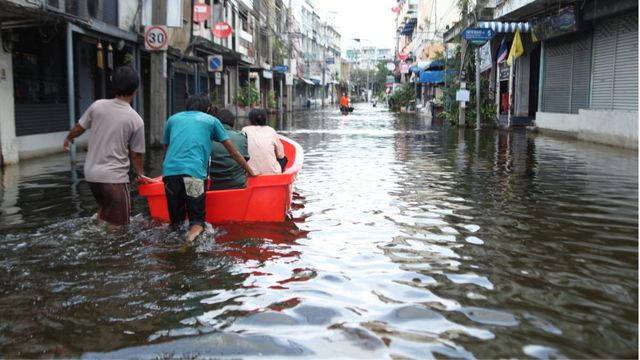
Rainy days in Manila can bring a much-needed respite from the summer heat that lasts for the majority of the year, but too much rain can also cause fear and anxiety. People who have witnessed and experienced the floods caused by typhoons like Ondoy, Ulysses, and more recently, Carina, know the devastating effects these events can have on communities.
Natural disasters like floods resulting from extreme weather, can occur suddenly. It is therefore essential for parents to educate every family member about what to do during such events and to foster sensitivity toward those affected.
How to talk to your children about flash floods
Floods can result to severe consequences such as property damage, community displacement, and even loss of life. Hence, it is crucial for parents to educate their children about these dangers, as doing so helps them understand the importance of preparedness and awareness.
Understanding flash floods: Causes and effects
The first step for parents is to explain to their children what flash floods are and what causes it. Simply put, flash floods occur when heavy rainfall overwhelms the ground capacity and existing drainage systems to absorb water. According to PAGASA, there are several natural causes of floods:
- Meteorological events: This includes typhoons and habagat, which can cause intense and prolonged rainfall. This also includes unusually high coastal and river water levels due to storm surges.
- Seismic activities: Includes tsunamis and land changes due to earthquakes.
- Astronomically-influenced phenomena: High tides that coincide with heavy rainfall.
Safety practices during flash floods
Here are a few essential safety practices that parents should teach their families, including their children:
Before a flood:
- Stay informed: Always keep up with news and weather reports and alerts from trusted sources. Understanding the severity and timing of potential floods is crucial.
- Know your neighborhood: Parents and children can check the Project NOAH (Nationwide Operational Assessment of Hazards) website to learn about potential hazards in their area. Initiated by the Department of Science and Technology (DOST), Project NOAH aims to provide accurate, real-time weather information and flood forecasts to help communities prepare for disasters. Its interactive maps show the location of creeks and waterways, which could overflow into nearby communities during extreme weather conditions.
- Create an emergency plan: Families should develop a plan that includes evacuation routes and a safe meeting place. Ensure that all members are familiar with the plan and practice it regularly. Keep emergency contact numbers, including barangay hotlines and family contacts updated and regularly available.
- Prepare go bags: Emergency kits or go bags that can be taken at a moment’s notice are crucial. Experts recommend including a three-day supply of food that doesn’t need cooking and at least one gallon of water per day for each person. Remember to pack important documents and valuables, and regularly check and update the contents of the go bags.
During a flood:
- Be aware and ready: Always be aware of your surroundings. If you think a flood might be coming, move and secure important items to upper areas or floors of your home and turn off your home’s electrical supply.
- Stay safe: If flooding has begun, move to the highest place you can find. Bring your go bags, and as much food and water as possible. Evacuate even if your home has a second floor, especially if the flood waters are rising quickly. It can become much more difficult to leave once the waters get too deep.
- Avoid floodwaters: If you must walk through flood waters, only do so where the water is still and never walk through moving water. Be wary of potential hazards like sewage,wild animals, or live electrical wires.
- Vehicle safety: If you find yourself caught in a flood while driving, leave your vehicle and move to higher ground if possible.
After a flood:
- Return safely: If you and your family evacuated, only return home when officials give the all-clear.
- Check your home: Whether you stayed home or are returning, the first thing to do is inspect your home for any damage to electrical systems and appliances. Dispose of any food that may have been contaminated by flood water or left unrefrigerated.
- Watch for wildlife: Be alert for any wild animals, such as snakes, that may have been washed into your home by the flood waters.
- Ensure water safety: Flooding can contaminate water supplies, which can cause health issues. Ensure that kids are conscious of this and double check or ask an adult if the water they intend to use for brushing their teeth, making food, and even bathing or washing hands is safe.
Teaching children compassion and empathy in the wake of calamities
Beyond awareness, it’s important for parents to teach children how to empathize with those affected, especially if their family has been relatively unaffected. Here are some ways to instill compassionate and empathy:
Show the reality of the situation: If your family is blessed to be unaffected from the floods, you can still make your kids aware of other people’s situation by sharing with them news reports and even images of the damage (remember to censor distressing images and information based on your children’s ages).
Discuss ways to help: You can start this conversation by asking them for ideas on what your family can do in this situation. You can look for organizations where your family might volunteer or send aid.
Learn about natural disasters: Learning and understanding natural disasters and their impacts would help children know that such occurrences can happen. Aside from furthering their knowledge, awareness of it will teach them its impact on lives and influence their living.
Use role-playing and storytelling: Engage children in role-playing or storytelling to help them understand the impact of natural disasters. Ask them to imagine what they would do and feel if they were in the shoes of the children whose homes were affected by the floods.
Educating children about natural disasters, including flash floods, goes beyond understanding the physical aspects. It includes learning about the causes, becoming aware of resources like Project NOAH, practicing safety measures, and cultivating sensitivity and empathy for those affected. By teaching these lessons, we equip the next generation with the knowledge and compassion needed to navigate and respond effectively to natural disasters.
References: National Geographic
Read here to learn more about what to do before, during, and after a typhoon and other natural calamities.
What other parents are reading

Lorem ipsum dolor sit amet, consectetur adipisicing elit, sed do eiusmod
Lorem ipsum dolor sit amet, consectetur adipisicing elit, sed do eiusmod
