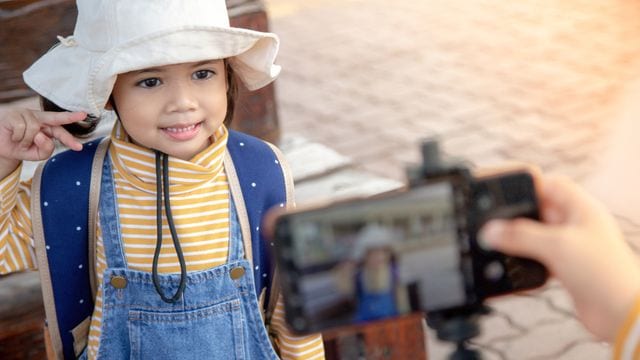
These days, it’s common to say, “pics or it didn’t happen,” meaning you need photo or video proof to document events in your life. The fastest way to share these events with everyone you know is by posting them on social media platforms. Perhaps this is why the majority of parents post everything about their child on Facebook or Instagram, whether it’s celebrations, milestones, or just regular days.
However, in our zeal to capture our child’s photos and videos, it’s sometimes inevitable to capture other people’s kids as well. In case you missed it, a video recently trended on TikTok wherein another parent posted a child who approached him to get a bite of the ice cream he offered to his own child. The mom of the other child considered taking legal action since her son was ridiculed online. So the question remains: should we refrain from posting other people’s kids on our social media accounts? And can we really take legal action if a stranger posts our child on their social media accounts?
Is there a legal basis for this?
Atty. Chel Diokno, in an Instagram post answered a similar question. He began by reading a question, “Atty. Chel, may mali po ba doon sa pag-post ng anak ng iba sa social media, halimbawa nasa public place naman?”
Atty. Chel answered this question by citing the Data Privacy Act RA 10173, saying, “Sa batas, bawat isang tao ay may karapatan sa privacy at may control sa paggamit ng kanyang personal information, kasama ang pangalan, litrato, o video. At may proteksyon pa din dito kahit nasa public place.”
The Data Privacy Act covers the rights of data subjects, or the individual. This means that everyone has the right to data privacy, empowering the person to have reasonable control over the flow of his/her personal data, which includes personal information, photos, and videos. So any violation of this right could be considered a violation of the Data Privacy Act (RA 10173).
What do we need to do if we want to post other people or their kids on our social media accounts?
Atty. Chel explained that, “Bago mag-post ng pictures o video ng ibang tao, kailangan munang hingin ang pahintulot nila. At kung ang kinuhanan ay bata, kailangan ng pahintulot ng magulang o legal guardians. And pagkalat sa social media nang walang ganitong permiso ay maituturing na unauthorized processing of personal information na may parusa sa data privacy act.”
This is covered in Chapter 3 of the Data Privacy Act, Section 12: Criteria for Lawful Processing of Personal Information, which states:
“The processing of personal information shall be permitted only if not otherwise prohibited by law, and when at least one of the following conditions exists:
The data subject has given his or her consent.”
The other conditions specified under the said section for the processing of personal information are when:
- The processing is related to the fulfillment of a contract with the data subject or as requested by him/her.
- The processing is necessary for compliance with a legal obligation.
- The processing is related to anything that corresponds to a national emergency, public order and safety, or functions of public authority.
- The processing is for the purposes of the legitimate interests of the person or organization who is doing the collection, holding, or processing of personal information or a third party to whom the data will be disclosed, unless it directly violates the rights of the data subject.
Penalties for the violation of the Data Privacy Act is stated in Chapter VIII, Section 25, wherein it states that the unauthorized processing of personal sensitive information shall be penalized by imprisonment from 3 to 6 years and a fine that ranges from Php 500,000 to Php 4,000,000.
Furthermore, the violation could be more severe when it involves kids. Atty. Chel says, “Kapag kabataan ang involved, dapat alam na nating mas maingat dapat tayo. Dahil talagang mas vulnerable sila kaysa sa mga matatanda na who should know better. Kung ang ginawa o sinabi sa bata ay may epekto, which ‘debases, degrades, or demeans the intrinsic worth and dignity of a child,’ pwede pa iyang ituring na child abuse (RA 7610) na may hiwalay pang parusa.”
This means that in addition to the penalties stipulated by the Data Privacy Act, individuals can also face charges of child abuse if they post photos or videos of a minor on social media without obtaining consent from the minor's parents or guardians.
Remember, it’s always best to err on the side of caution and think twice before hitting that share button.
More from Smart Parenting

Lorem ipsum dolor sit amet, consectetur adipisicing elit, sed do eiusmod
Lorem ipsum dolor sit amet, consectetur adipisicing elit, sed do eiusmod