
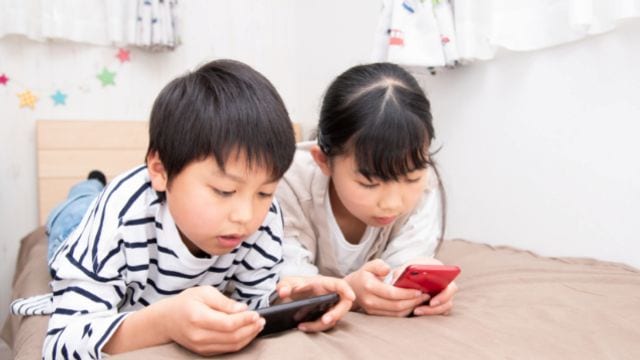
As much as we want to watch over our children’s online activities 24/7, it is simply unrealistic what with the amount of time both parents and kids spend using their respective gadgets whether to work, study or be entertained.
With the onset of the Covid-19 pandemic, not only did the number of online user increase but the time spent on cyberspace also followed, thereby making more children vulnerable to cybercrimes and threats like phishing and cyberbullying.
Filipino children vulnerable to online threats
According to the FBI Internet Crime Center Report (2015-2020), the crime against children in the US increased by 144% in 2020 compared to 2019. This means that 8 children per day face online exploitation. This is a far cry from the 2014-19 rate which is only at 5%-9%.
On a global scale, this picture doesn’t look too good for the Philippines, where Internet user as of January 2022, are at 76.01 million out of the country’s total 111.8 million population.
RELATED: Parents Are Worried About Their Kids' Online Safety, But Aren't Talking About It
According to cybersecurity company Surfshark, children in the Philippines are the second most exposed to online threats globally. The country follows Thailand and, together with Turkey, makes the top 3 countries with the highest online risk exposure levels worldwide.
In contrast, children in Japan, Italy, and Spain have the lowest exposure globally.
The study also shows that the highest exposure list-leading Thailand ranks third from the bottom in children's ability to cope with online risks, following only Uruguay and Saudi Arabia. Local kids don't have the skills to deal with cyberbullying or other common cyber threats.
The same Surfshark study also found that 6 out of 10 children ages 8–12 are exposed to cyber risks online. In addition, 1 in 2 children encounter cyberbullying, and close to one-third experiences other cyber threats such as phishing or hacking.
Children's exposure to cyberbullying and other cyber threats from country to country

Online safety education among countries
Interestingly, the Surfshark study also found out that low and lower-middle-income countries have better online safety education than the rich ones.
High-income countries like Saudi Arabia and Uruguay have basically non-existent online safety education, scoring 6.5 and 2 out of 100.
'Parents have the responsibility to assess where their children are at in terms of their knowledge and emotional preparedness to... protect themselves against different kinds of cyber threats.'
Thus, it does not surprise that children in Saudi Arabia and Uruguay are the least prepared to deal with online threats.
On the other hand, children in Asia-Pacific countries (India, Malaysia, Japan, Australia, and New Zealand) have the strongest online risk management skills. India has 30% stronger online safety education programs than the global average, while Malaysia, Australia, and New Zealand have even stronger online safety education programs than India.

Teaching children online safety
"Through this study, we can see that educating children about cyberthreats plays a massive role in them knowing how to deal with any problems that may arise online,” says Surfshark cybersecurity expert Aleksandr Valentij.
“Every child is an individual. They all seek different things from their online experience, handling danger differently,” he adds.
Valentij provide these tips for parents to jumpstart a conversation about online safety with their children.
1. Educate young children.
Use child-friendly educational sources like the interactive cartoons. Warn them against sharing personal information, photos, and videos online.
2. Discuss internet safety.
Focus on empowering children, not scaring them when it comes to using the internet. Make sure your child knows what is safe to do online and what is not.
3. Build trust.
Let your child know that they can approach you with any questions or concerns. Create a trusting, respectful environment by encouraging children to tell a parent or trusted adult if they encounter a cyberthreat.
4. Use cybersecurity tools.
Use the right tools to help keep them safe (e.g., antivirus, VPN, content blocker, ad blocker, etc.). Help your child to run regular scans together with firewalls and email filters to further decrease the risks, such as ransomware.
5. Change passwords.
If the password for your child's email or gaming platform gets leaked, help your child change it immediately. Even better is to use password managers to generate new passwords and avoid using weak ones.
6. Set up internet rules.
Adjust privacy settings and use parental controls for online games, apps, social media sites, and other websites. Keep your computer in an open area and consider setting time limits on all devices.
Parents have the responsibility to assess where their children are at in terms of their knowledge and emotional preparedness to deal, detect, and protect themselves against different kinds of cyber threats.
RELATED STORIES ON ONLINE SAFETY:
- 5 Effective Ways to Protect Your Child From Online Danger
- 13 Reasons Why You Need To Monitor Your Kid’s Online Activities
- Think You Know What Your Kids Are Doing Online? Think Again
The key is to start with what they know and what they can handle as you educate them about online safety.
“There is no one-size-fits-all approach to discussing online safety with your children,” Valentij says. “Instead, you must discover ways to converse with them and assist them in understanding what to do."
What other parents are reading

Lorem ipsum dolor sit amet, consectetur adipisicing elit, sed do eiusmod
Lorem ipsum dolor sit amet, consectetur adipisicing elit, sed do eiusmod
