While parents know very well the importance of instilling proper hygiene in kids from an early age, that doesn't mean the children understand right away. That's why turning these lessons into habits can be tricky.
Moms Cherdyn Mojica, Ivee Pascual, and Christine Santos can attest to this. Christine even shared that her eldest daughter tends to be distracted and is always in a rush to play with her phone that she forgets to brush her teeth. Meanwhile, Ivee says her kids sometimes eat food even if it fell on the floor because they just didn’t care!
But because these moms knew they had to nip these bad practices in the bud, they did everything they could to make good hygiene habits stick. As Cherdyn puts it, “Everyone needs to keep clean to stay healthy, ward off illnesses, and build better self-awareness.”
Keep reading to find out what these moms did to help their kids develop good hygiene habits. These might just help you, too!
1. Don’t just tell kids what to do—explain to them why they have to do these practices, too.
Instead of just telling your kids to wash their hands or brush their teeth, take the time to explain to them why you’re asking them to do so and why it’s important that they do it, too.
“Once they understand, mas madali mo na sila mapapasunod,” Christine explained.
In addition, she makes use of educational videos to make her daughters Kirsten and Corrine understand things better. It helps that both of them like watching science videos, so, “from there, they learn about germs and bacteria and how they make us sick,” Christine said.
Ivee, who also makes use of this method to teach her kids Jacob and Selena, shared this piece of advice to her fellow parents: “Tell [your children] that they are responsible for their cleanliness—which means that at all times, they should always think that germs are everywhere even if they can’t see them. Therefore, [they have to] always ensure to clean their hands before and after touching anything.”
2. Lead by example.
“As they say, ‘practice what you preach.’ If they see you do something, most of the time, gagayahin ka nila,” Christine said.
Cherdyn echoed this sentiment and recommends parents build a hygiene routine for them and the kids to do together. As part of her and her daughter Ceana’s routine, the two would wash their hands while singing nursery songs and make bubbles using liquid soap during bath time.
“For younger kids, it’s better to do those routines together so you can supervise them [and] ensure [that] they are [doing things properly],” she explained.
3. Always remind kids about these practices.
Like many parents, Ivee struggled with making her kids follow her reminders about hygiene practices because her kids preferred to play more and do things their own way. But she knew she had to be patient and just keep on teaching and reminding her kids until those tasks become habits.
“I know it is not easy to remind them to be clean at all times as they are kids and they prioritize playing rather than cleanliness. [But] when they are constantly reminded to be clean, to wash their hands, to be responsible in everything that they do, good hygiene practice [becomes second nature] to them,” she said.
Aside from making verbal reminders, Christine has also created a checklist and put it inside the bathroom, as suggested by her eldest daughter.
“Since I would always scold her whenever she forgets, I asked her how to help her remember kasi ayoko naman na lagi ko siyang napapagalitan dahil lang she forgot to flush the toilet or brush her teeth,” the mom added.
The checklist includes taking a shower, brushing teeth, and washing hands after using the toilet. And since her bunso is still starting to learn how to read, Christine added cute images beside each reminder to help her understand.
4. Make it fun for the kids.
Every week, Cherdyn would prepare different activities that allow her to incorporate a lesson or two about proper hygiene. For instance, to better teach her daughter about handwashing, she would either host a painting activity or a mini cooking session so her child will have to wash her hands after.
Having a child-size self-care station for Ceana, which is part of the Montessori parenting the mom implements at home, has greatly helped. This self-care station is equipped with a sink with running water, toiletries, a hairbrush, and a mirror, among other things.
“Initially, she played with it as if it’s an ordinary toy. She played with the flowing water in the faucet, pumped the baby-safe handwash non-stop,” Cherdyn pointed out. Eventually, Ceana was able to learn to use it properly and would go to the self-care station by herself and wash her hands after painting activities and before eating her snacks.
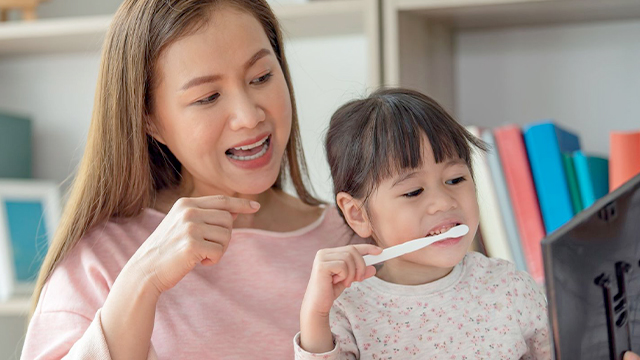
On the other hand, Christine would sing songs with her eldest while they brush their teeth. She said her daughter didn’t really like brushing at first, but when she liked the songs, she started to look forward to doing this activity.
Instilling proper hygiene habits among your children may not always be easy, but you must persevere until they are finally able to do these things consistently and by themselves, moms and dads! After all, with proper hygiene comes less exposure to illness-causing germs and a lower risk of infections—which means fewer sick days and more days for them to grow and develop well.
Aside from observing proper hygiene, it’s important to give children well-balanced meals along with regular exercise and a good night’s sleep. Don’t forget to give children ages 3 and above an oral nutritional supplement like PediaSure Plus to help support their growth and development!
Ivee herself includes PediaSure Plus in her kids’ diet. “For my son, this is always included in his breakfast table and before going to sleep,” she said. This mom also observed how this nutritional supplement has helped increase her daughter’s appetite, who used to be a picky eater.
Watch this video to see how good hygiene habits influence children's growth and development:
Cherdyn, Ivee, and Christine remind their fellow parents: Just be patient and do what you have to do consistently. Remember that every child is different and would, therefore, learn at different paces.
“It may take time for some hygiene practices to become habits. Be patient and understanding; try to avoid criticism and confrontation when working with little kids to [help them] develop good hygiene habits,” Cherdyn concluded.
Be part of the growing community of moms in Alagang Abbott Parentship!
For more information visit pediasure.com.ph and the Alagang Abbott Parentship Hub, call Abbott’s nutrition hotline for free Nutrition Counselling at 8995-1555, or send a message to Alagang Abbott on Facebook.
PH.2021.17312.PDS.1