
Welcome to Real Parenting, a space where parents can share the joys, pain, and the mess of parenthood. Want to get something off your chest? Share your parenting journey? Email us at smartparentingsubmissions@gmail with the subject "Real Parenting." Click here to read more 'Real Parenting' stories.
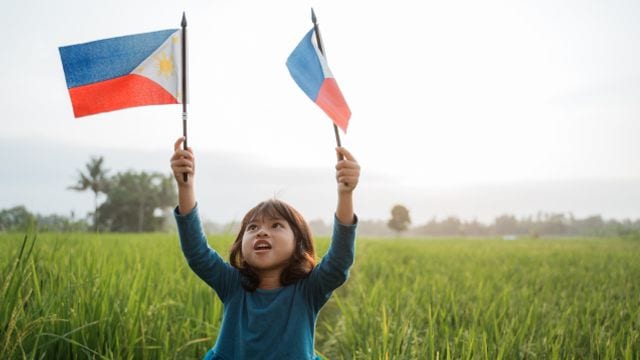
In 1997, the month of August was declared as the national language month by the late President Fidel V. Ramos. In support of Buwan ng Wikang Pambansa, schools hold various activities to ensure that the younger generations value the importance of local language and Filipino nationalism. Within the month of August, students come to school wearing traditional Filipino clothing. Aside from this, schools hold various events, such as, poster and slogan making, poetry and essay writing in the national language. Parents, who are invited to participate in these school events, take delight in playing traditional games they grew up with like palosebo, tumbang preso, luksong tinik.
Despite these efforts, there are students who find it difficult to express themselves in the native language. I recall that when my own children were in the grade school, they needed to take a special class after dismissal time to help them cope with the Filipino subject. Without much confidence in speaking Filipino, they rarely recited in class and felt very frustrated in writing their insights about local issues discussed in their Araling Panlipunan classes. Since most of their peers spoke in English and media and popular culture promote the use of English language, I had to design something with them that would motivate them to communicate in conversational Filipino.
How I helped my kids learn Filipino: The L.E.O. Project
When my son, Leo, was 10-years-old, we conceptualized The L.E.O. Project. L-E-O stands for Laro, Edukasyon, at Oras. He was inspired by an article they learned in his Araling Panlipunan class that described Efren Peñaflorida’s, “My Hero Project.” The idea of resourcefully teaching poor children by the side of the street, with his cart-full of books, left an impact on Leo.
.jpg)
Laro
Laro or play is a child’s instinctive way of exploring the world. It has no language barriers. Easily, it builds rapport and relationships with others. One day after school, I pre-arranged a playdate with a community mother and asked her to gather about four children younger than Leo to teach them how to play Rubik’s cube. It didn’t matter that instruction were in broken Filipino, what was important was they were communicating.
'Nurture nationalism by making your child realize that love of country is more than just speaking the language. It also means sharing your talents and putting others ahead of oneself.' —Gail Galang, PhD, RPsy
On another occasion, I asked the same community mother to gather about 12 children for a play session in their multi-purpose hall. I gave instructions to Leo and his younger brother, Luis, to facilitate the games. We carefully rehearsed how they would go about delivering the instructions in Filipino. I recall that even without music, they managed to play musical chairs. True enough, children use a lot of their imagination, curiosity, and creativity when playing. Gaining more confidence, Leo and Luis were eventually able to facilitate group games during a big dengue awareness campaign for children in two barangays in Quezon City.
.jpg)
Edukasyon
Realizing that he is good in some things, Leo used flashcards to teach Math to community children. This comprised the Edukasyon part of The L.E.O Project. In Filipino, he instructed them to perform simple math computations indivudally, taking a step forward for every correct answer. They all enjoyed the the games they would invent together. Later on, they read Filipino stories aloud together. Leo read the Filipino version of the story, while the community children read its English translation. You can hear snickering in between mispronounced words because there was no judgment in the way they read their parts, just pure joy. It was a win-win situation!
.jpg)
Oras
From these experiences, my kids saw for themselves that spending quality time with their new friends to learn and play together was important in the process. Meaningful encounters like these promote bonding, strengthen relationships, and enhance communication skills. Inventing games and how to make learning fun foster creativity, problem solving abilities, and social development.
Though my initial intention as a parent was to create the opportunity for my kids to speak in Filipino, they actually gained much, much more in those meaningful experiences. In becoming teenagers, it did not feel awkward for them to communicate with other peers who are not from their school. They are naturally kind and generous with others, always eager to organize something to help victims of natural calamities. Being comfortable in engaging with others in Filipino, though imperfect, paved the way to nurture nationalism at a very young age.
RELATED: 12 Fun Books to Get Kids to Read and Speak in Filipino (5 to 9 Years)
In summary, here are eight steps to encouraging your kids to create meaningful projects that inspire national pride:
F - ind something your child is good at. It could be a favorite subject like math, or playing basketball, rubik’s cube, etc.
I - nvite your child to discuss possible projects you can carry out together.
L - isten to the feelings of your child to check for readiness. Do not force your agenda on your child, especially if you sense some social anxiety or fear of being judged by others.
I - nvolve other people who can help you carry out the project. It could be a friend or a person you know who has access to your target beneficiaries.
P - ractice how the program will flow and what to say using Filipino as the medium of instruction. Condition your child’s mind to face other children and adults, emphasizing that what’s important is to have fun in the process.
I - ncrease your child’s confidence in speaking Filipino and interacting with others by staying behind the scenes, only coming in when you are requested by your child to intervene. Otherwise, let your child run the show.
N - urture nationalism by making your child realize that love of country is more than just speaking the language. It also means sharing your talents and putting others ahead of oneself.
O- bserve your child and process his thoughts and feelings after each experience. Document the experience to monitor your child’s progress.
Gail Reyes Galang is a licensed psychologist. She has a PhD in Child and Family Studies. Dr. Gail is a member of the Board of Experts of Smart Parenting. She is a proud mother of four. You can follow her through her IG @gailfrancesgalang.
What other parents are reading

Lorem ipsum dolor sit amet, consectetur adipisicing elit, sed do eiusmod
Lorem ipsum dolor sit amet, consectetur adipisicing elit, sed do eiusmod
