
 Most parents nowadays are always on the lookout for ways to help their kids be “the best” that they can be. Some even feel pressured to provide anything and everything their children may need to develop their talents.
Although this pressure may cause us to worry that we’re not helping our kids discover their God-given gifts and abilities, parents must remember that as long as they do their best to provide appropriate activities for their kids, everything else will seem easier and more manageable.
For those who feel that their children are artistically-inclined here are some tips from parents, who also happen to be educators and/or teachers too.
First, veteran educator and teacher-trainer Myra Menguito, who also happens to be a mom to Paola Maria (13), Joaquin (8), and Tanya Maria (4), suggests her “6 P’s”:
“First: Be PRESENT. Be a hands-on parent who is keenly observant of her children’s interests. One can only identify her children’s interests if she is closely aware of what her children love doing. Of course, this should be done in a very natural manner, and that is through the child’s natural environment.
Second: PLAY! To identify and explore the children’s interests, parents should provide plenty of opportunities for play. Play not only helps parents identify their children’s inclinations, but it also helps develop these because through play, the children are not pressured; rather, they have fun doing what they love best. Therefore, it is paramount that the home and school should provide the needed materials and atmosphere that will encourage the children to explore and create.
Third: PROVIDE the environment. Parents should also expose their children to a variety of activities where they are able to enrich their skills, such as art classes, dance classes, voice lessons, playing musical instruments, cooking activities, etc. The key is to provide activities where children’s creativity and resourcefulness are honed. This not only develops their artistic skills, but their cognitive, social, emotional, and physical skills as well.
Fourth: POSITIVE discipline. This means that parents should always be encouraging and motivating, non-judgmental, and non-threatening. It is discipline centered on love and affirmation that helps children develop positive self-regard, which allows them to see their dignity as sons and daughters of God. With this sense of worth, they will believe that they can do so much with the skills and talents given to them by God.
Discipline is also important for children to continuously make an effort to enhance whatever they are good at. It helps them focus and achieve. This being the case, discipline is also important for us adults as well.
Fifth: PRAISE. Show your kids how much you appreciate them. Praise them. Give them unconditional love. Make them feel they are loved and valued ALL THE TIME, regardless of what they have to give.
Sixth and most important: PRAY. As a Catholic parent and educator, I believe that all these are possible only through God’s grace! We pray for ourselves as we serve as stewards of our children. We pray for the children so they grow up with the right motivation and values/virtues.”
[previous|page|next]
Mommy Myra goes on to share about how she and her husband focus on developing the talents of their own kids:
“Our 13-year old Paola is into sketching and drawing. She discovered this early on and her talents were honed through their school club. Together with her younger brother and sister, we also let her attend summer art classes. We also try, as much as we can, to provide her with all the materials she needs to come up with her “masterpieces”. Most of the time, we provide her with opportunities to create items from scrap materials.
On the other hand, eight-year old Joaquin, being a very active boy, is more into expressing his creativity through physical activities. He does this through body movements: making sounds, mimicking through gross and fine motor skills, and facial expressions. Perhaps he’ll be a stage actor one day – who knows? Sometimes, if he feels like being “quiet”, we provide him with plenty of scratch paper and art materials so he can freely express what’s on his mind. He is also into archery, a sport which helps him develop attention and focus.
Our youngest, Tanya is four, and is already showing signs of being “maarte.” Seriously, she loves singing, dancing, and acting. We hone these talents by allowing her plenty of time to sing, dance, and act before a webcam or phone camera. She watches herself with gusto and delight! In addition, we expose her to movies and songs of different genres.”
Myra also suggests that parents show their pride in their children’s “masterpieces” or creations – either by displaying these on the walls; keeping them safe in individual portfolios per child; or documenting them with a camera.
“They feel good about it. They feel good about themselves,” she explains. “We also make it a point to encourage our kids to thank the Lord for the gift of THEMSELVES - for who they are – believing that they are God’s masterpieces. Our prayer is for them to give back to God by using their skills to help and serve others, and make other people happy. As they share their talents, we make them realize that they reflect the Lord’s goodness and majesty. I believe this is what really matters,” Myra ends.
[previous|page|next]
Dindi Besinga-Manlapaz, who describes herself as an “art entrepreneur / art teacher / mommy (to nine month old Dato) / wifey” shares the following additional tips:
• “Always make sure that there are (fun and safe) art materials available for your children, depending on their ages of course. Any kind of coloring material and scratch paper will do. Make sure they are also accessible for them at any time of the day.”
• “For babies, solid-colored blocks, balls, and stacking toys that they can group together are great! Have real pictures (not illustrations) of plants, animals, places, and people available around the house for you to help them identify at random occasions. This applies to older kids as well. These photos and picture books are actually better alternatives to coloring books. Coloring books actually limit a child's imagination to follow a certain template only.”
• “Differently-shaped (and safe) containers can be made into home-made rattles that they can discover together with you – these also double as “toys” that can help promote their creativity.”
• “Take any opportunity to bring your babies and kids outside to see and `feel’ the world. The more places they go to, the wider their imagination will become.
Family trips outdoors are also crucial in developing creativity. Remember: exposure is the key! Also, bringing children to colorful events and places will give them a lot to draw about plus help them learn first hand about certain things.”
Dindi shares further that the simple act of making these art materials available at all times can help children hone their artistic skills. She explains: “Kids’ imaginations are very vivid and random so they might want to create certain things or draw certain ideas at any time of the day.” That’s why parents need to make sure that they always have something to use when they have these artistic urges.
As an artist-mom, Dindi applies these tips in their own family too. “Even if my son is only nine months old now, my husband and I make sure that we expose him to a lot of things. Two to three weeks after he was born, we hung out in UP Sunken Garden and spent the afternoon there just watching people. He's been to Laguna, Baguio, Singapore, Pangasinan and Pampanga with us already! This not only hones his social skills (he seldom gets iffy around strangers and he loves the attention people give him) but I also get to show him a lot of colors and make him feel and try a lot of things at an early age.”
Dindi is blessed to be a full time mom, so it's easy for her to always be there beside Dato whenever he gets overwhelmed, scared or tired. “Playing with him at home, making sure he gets to spend time in the garden and reading stories to him (during his feeding time) will hopefully help develop his creativity as well,” she shares. “But as a mom, nothing beats the feeling of always being there whenever my son learns and starts doing new tricks. And seeing that smile that he shares when he's happy about a new discovery is not that bad either!”
[previous|page|next]
Meanwhile, special needs teacher and daddy blogger Francis Buenaventura and his wife, Claire, have this to say about identifying and developing the artistic talents of their kids Patricia Nicole, 12; Freedom Angelo, 7; Miguel Tomas, 6; and Fides Sophia, 1 month old:
“We have an advantage since we have backgrounds in education, scholastic chess, rehabilitation, communication arts and performing arts (music). However, it is too simplistic to say `observe and the talent will show;’ rather, observe and be sensitive to what your eyes will see,” Francis says.
“Our eldest child Patricia is into piano, taekwondo and very much into academics. Our second child is homeschooled and at an early age has shown us his inclination to music (singing and piano) and logic games (chess, puzzles Sudoku). Our third child is very kinesthetic and has always been into running, football and biking,” he continues. “We take mental notes of what they love doing without our `parental pushing’ and those that they do just because we ask them to do.”
Francis and Claire agree though that parents must provide the necessary environment for their children to hone their talents if they are able to do so. “Play music while your kids are playing etc. Recently, my third child discovered a book I brought home about `Basic Drawing.’ He borrowed it and for the last two weeks, has been tracing figures and copying shapes from the book. There was a time when we had to ask him to stop drawing and go to sleep,” Daddy Francis says.
Parents should also provide support emotionally. “Our simple chats and kamustahan often lead to conversations about their daily activities, and we take this chance to give verbal praises and moral support. Our first born is in the honor roll and it is important we provide feedback every now and then,” Claire says. “A lot of times we have to ask her to manage her time because she tends to stay up late at night. We tell her the adverse effects of being `puyat’ on her performance, and this helps make her realize the importance of a healthy body and a healthy mind.”
On how they encourage the chess, piano, and drawing skills of their children, Francis shares that they bought a musical keyboard because they believed they would need the gadget or instrument so their kids could practice regularly at home aside, from their lessons provided by professional teachers.
“We also make sure our two boys set aside at least 2.5 hours a week for chess, working on basic checkmating patterns etc. Again, with practice comes exposure and this is an important element of mastery in any field. They have watched chess tournaments I have directed before and this gives them the `idea’ of what happens in a chess tournament,” Francis says.
“Most importantly, we `shoo away’ our kids so they can play outside our house with our neighbors. There, they play almost anything with kids of different home backgrounds and ages. They learn a lot about socialization and although sometimes they bring home words that tend to be "bastos" in our family circle, it is another chance for us parents to open our kids’ eyes to what’s happening in the real world,” this teacher-dad shares. “This can be scary but it is a fact of life. Playing with our neighbors’ kids also allow them to gauge what they know and don't know, and find out that most of what we tell them are also taught to their playmates by their parents”
Indeed, there are many ways that parents can encourage their children to “shine” through their talents and abilities. At the end of the day though, parents need to remember that no matter what it is their kids can or can’t do, each child is unique and special, especially in the eyes of the One who created them.
The most important thing we parents need to do is to show our kids that we accept and appreciate them; we are available for them and accountable to God for them; and we exercise our authority over them because we love them.
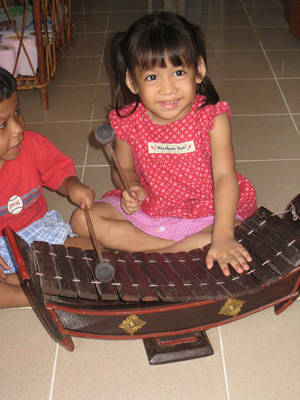
Photo from flickr creativecommons

Lorem ipsum dolor sit amet, consectetur adipisicing elit, sed do eiusmod
Lorem ipsum dolor sit amet, consectetur adipisicing elit, sed do eiusmod
