
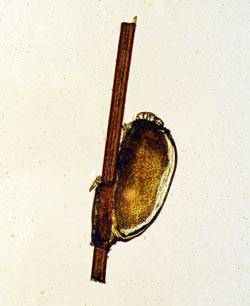
 Contrary to popular belief, summer heat has nothing to do with head lice outbreak, stresses Patricia Pelingo, M. D., a pediatrician at the Manila East Medical Center. “It is just more rampant with kids during summer because during these months, kids spend more time with their friends. So they have more direct contact with other kids, which is am primary cause of head lice transfer,” Dr. Pelingo explains. If your child is incessantly scratching her head, this should tip you off. Dr. Pelingo suggests immedietly checking your child’s head for this nits and lice.
Myths vs. Facts
Myth 1: I should shave or cut my child’s hair if infested with lice.
Fact: Drastically cutting or completely shaving off your child’s hair may only be embarrassing, especially because she has to explain to playmates why she’s suddenly short-haired or, worse, bald. Many believe that lice only infest long hair-but the fact is lice do not have specific hair length preference. However, shorter hair may make the treatment more manageable.
Myth 2: I should do a general house cleaning to get rid of lice.
Fact: Kids get lice through direct contact, not because of a messy be passed on through towels, pillows, beddings, etc. So do wash clothing and beddings used by the infested person in the two-day period just before treatment is started.
Myth 3: Gasoline or kerosene is an effective head lice killers.
Fact: The fumes of kerosene and gasoline are hazards to lice—AND TO YOUR CHILD, AS WELL. These should be never be used on any part of a child’s body
Click here to read on about guidelines when treating head lice.
[previous|page|next]
Read on about guidelines when treating head lice.
Dr. Patricia Pelingo, a pediatrician at the Manila East Medical Center, gives the following guidelines when treating head lice:
- Remember that all lice-killing products are pesticides. Read and follow the directions carefully, and use with extra caution.
- Prescribed cream or shampoo for lice control should be used for at least seven to 100 days to ensure that lice and nits (lice eggs) are completely exterminated. Consult your doctor before applying or using lice treatment when the person involved is pregnant, nursing, has pre- existing Medical conditions like asthma or epelipsy and prone to allergies.
- Never use lice treatment products near the eyes.
- According to Dr. Peligo, a head lice outbreak poses no serious health problem. “But when their kids are scratching their heads intensely due to itchiness caused by head lice, they are prone to a secondary bacterial infection,” Dr. Pelogo explains.
GOODBYE, LICE!
Simple steps to follow for removing head lice from your toddler’s hair:
- Work under bright light, preferably natural sunlight.
- Wash hair using prescribed cream or shampoo for lice control. Follow your doctor’s directions.
- Use an ordinary comb or hairbrush to remove tangles, then divide the hair into sections.
- With a lice comb (suyod), comb through each hair section from the scalp and roots to the ends. Nits are oval-shaped and are generally laid close to the scalp but can be found anywhere on the hair shaft.
- Dip the comb in water or use a paper towel to remove lice or nits between each passing.
- Wash recently used beddings and clothing in hot water. Use a hot dryer to remove excess water. Avoid lice sprays!
- Combs, ponytail holders, and other objects used by the infected person for his or her hair should be soaked in a mixture of hot water and lice control shampoo.
Inspect your child’s hair and scalp to ensure you’ve eradicated the problem
Sources:
- Patricia Pelingo, M.D., D.P.P.S., Manila East Medical Center
- Louisiana State University Medical & Public Health law, biotech.law.lsu.edu 13615
Photo from commons.wikimedia.org

Lorem ipsum dolor sit amet, consectetur adipisicing elit, sed do eiusmod
Lorem ipsum dolor sit amet, consectetur adipisicing elit, sed do eiusmod
