
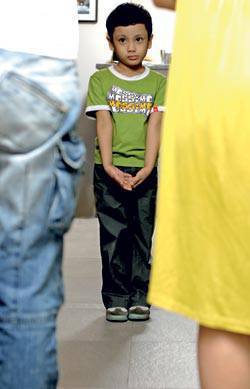
 Ensuring discipline is a complex responsibility. It is not just about punishment for bad behavior but also a process involving the many facets of childhood. It is a way of teaching children how to manage their own behavior. Valya Telep, Ph.D., child development specialist at Virginia State University, enumerates three main tasks that parents should keep in mind:
- Help children learn to get along with family and friends
- Teach them to behave in an agreeable way
- Allow them to learn from their mistakes and experience the consequences of their decisions.
Preschool teacher Lolita David seconds Telep’s view and further explains that discipline is all about teaching your child good decision-making skills, while encouraging good communication skills and promoting feelings of self-worth and self-control.
What’s Your Child Discipline Style?
Admit it, the discipline style you’re using on your children right now does not stray all that far from what your parents used on you when you were growing up. That’s perfectly okay, according to David. That is how most parents deal with the first sign of misbehavior. We inherit styles from
our parents—if their styles worked on us, we don’t see any reason why they shouldn’t work on our kids.
Both Telep and David agree that times have changed as well. What worked 20 years ago may not necessarily work on kids today. David adds that corporal punishment is no longer the only option parents have, thanks to advances in research by many developmental psychologists. In a landmark study during the late 1960s, clinical and developmental psychologist Diana Baumrind, Ph. D., developed a typology of parenting styles and patterns of discipline based on love and limits—authoritarian, authoritative, and indulgent. According to Baumrind, discipline should be a balanced exercise of parental control and affection. This makes a huge difference when it comes to effective discipline.
Click here to read more about guidelines for child discipline and the importance of different discipline styles.
[previous|page|next]
Read on for more guidelines on child discipline and the importance of different discipline styles.
General Guidelines For Discipline To Be Effective
According to Dr. J. Burton Banks of the James H. Quillen College of Medicine, East Tennessee State University, some general guidelines have to be followed for discipline to be effective:
- Consistency. Both parents and their kids’ caregivers should agree on uniform rules, approaches, and rewards each day. Changing the rules of the discipline game can confuse your child, and may lead them to try your patience and see how far they can go with different adults.
- Immediacy. Children will better understand consequences when discipline is applied at the first sign of misbehavior.
- Understanding. More than just enforcing rules, a parent should seek the root of misbehavior and ask, “Why is my child behaving this way?” Some actions that adults find annoying may be a behavior typical of a child’s age and developmental stage, so a parent’s expectations should be tempered accordingly. Even the individual child’s temperament and reactions should be considered when choosing the proper course of action. Even though these basics may help get parents’ point across that they mean business, what often makes or breaks the behavior lesson has to do with how and when the specific discipline techniques are applied.
The Importance Of Trying On Different Discipline Styles
Parents may have a slew of discipline methods up their sleeves. But as a child matures and becomes more independent, some of these techniques will cease to work and new ways to discipline become crucial. Parents will have to be on their toes and adapt accordingly if they wish to effectively instill discipline at home. Is there just one style that works? David is quick to say that research has shown that parents don’t exclusively exercise one style over others. She recommends that parents mix and match discipline styles depending on how their child reacts to discipline and what works. So go ahead and be creative with how you discipline your kids. They
will thank you for it someday.
Photography by David Hanson Ong
SOURCES:
• Lolita David, preschool teacher, Toddler’s Camp
• Valya Telep, Ph.D, child development specialist, Virginia State University
• Building Strong Families Positive Discipline Participant Work Book by Mary Gosche
• How to Behave So Your Children Will, Too! by Sal Severe, Ph.D.
• Website: focusonyourchild.com

Lorem ipsum dolor sit amet, consectetur adipisicing elit, sed do eiusmod
Lorem ipsum dolor sit amet, consectetur adipisicing elit, sed do eiusmod
