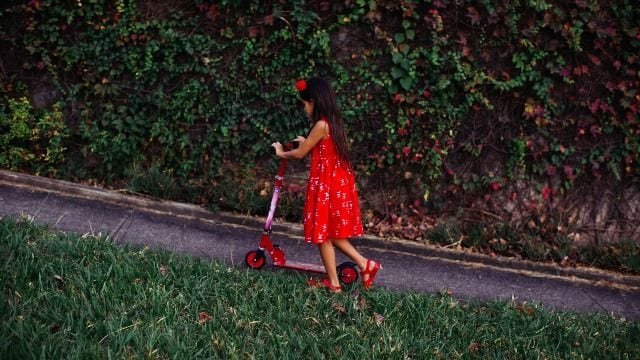
A recent study by scientists from the Hasselt University in Belgium found that children are more likely to become more intelligent when they are exposed to nature.
The study involved 620 children age 7 to 15 years. According to the scientists, increasing green spaces in the neighborhood raises children’s IQ score by 2.6 points on average. The results of the study were published in the journal Plos Medicine.
But, there’s a caveat.
Does nature really make people intelligent?
The increase in IQ was only apparent among children living in urban areas, not those living in rural areas.
“Our results indicate that residential green space may be beneficial for the intellectual and the behavioral development of children living in urban areas,” said the researchers.
Ever since Harvard biologist Edward Wilson proposed in the 1980s a theory of biophilia —lwhich suggests humans are instinctively drawn to nature — numerous studies have come out exploring the effects of nature on human development.
Role of physical or aerobic activity in a child's IQ
In a separate study published in February 2020 in Frontiers in Psychology, Dr. Laura Berra-Hernandez found a link between connectedness to nature and children’s happiness.
But it may have little to do with plants or parks.
In 2014, a research explored the connection between children’s outdoor activity and their test scores. According to the study led by researchers from the University of North Texas, aerobic activity among kids led to higher scores on reading and math tests.
New research must be conducted to explore the connection between green spaces in urban areas, the amount of children’s outdoor activity, and their IQ.
This story originally appeared on Esquiremag.ph.
*Minor edits have been made by the SmartParenting.com.ph editors.
What other parents are reading

Lorem ipsum dolor sit amet, consectetur adipisicing elit, sed do eiusmod
Lorem ipsum dolor sit amet, consectetur adipisicing elit, sed do eiusmod