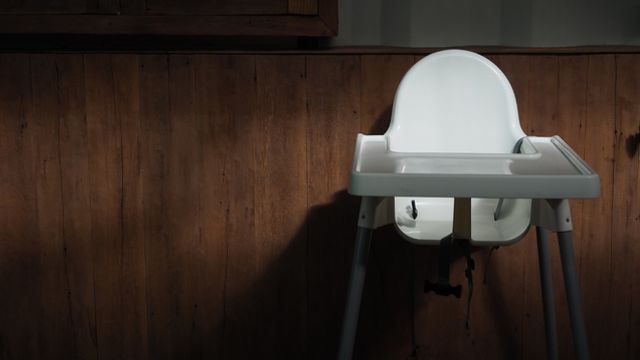
In Johor Baru, Malaysia, a 2-year old boy died from an unfortunate high-chair accident. The said accident happened in October 4, 2022, while the family was eating inside a restaurant, reported by Channel News Asia.
Superintendent Fariz Ammar Abdullah, Johor Bahru North’s deputy officer in charge of the police district, said in a statement, “Police investigations at the scene on October 4 revealed that at around 2pm, the deceased’s parents brought him to the restaurant and put him in the baby chair. At around 3pm, while eating, the boy acted in a manner outside the control (of his parents) by pushing against the table with his feet, causing the baby chair he was in to fall and he hit his head against the floor. The incident caused the deceased to cry loudly and lose consciousness. The incident was witnessed by restaurant staff.”
Afterwards, the father of the child brought him to a private clinic, where the doctor advised him to go to the hospital’s emergency room “as his condition appeared serious”.
The police officer continued, “The deceased’s father then brought him to a private hospital in Iskandar Puteri where he was pronounced dead by medical officers on duty.”
High-Chair Safety
What happened to the child in Malaysia is an unfortunate accident, and as parents, our utmost fear is for our children to get hurt.
As a precaution and reminder to parents, here are the basic high chair safety tips to ensure our little ones are safe, as issued by the American Academy of Pediatrics:
- Make sure the high chair cannot be tipped over easily.
- If the chair folds, be sure it is locked each time you set it up.
- Whenever your child sits in the chair, use the safety straps, including the crotch strap. This will prevent your child from slipping down, which could cause serious injury or even death. Never allow your child to stand in the high chair.
- Do not place the high chair near a counter or table. Your child may be able to push hard enough against these surfaces to tip the chair over.
- Never leave a young child alone in a high chair, and do not allow older children to climb or play on it because this could also tip it over.
- A high chair that hooks onto a table is not a good substitute for a freestanding one. If you plan to use this type of chair when you eat out or travel, look for one that locks onto the table. Be sure the table is heavy enough to support your child's weight without tipping. Also, check to see whether your child's feet can touch a table support. If your child pushes against the table, it may dislodge the seat.
Signs of an Emergency
Though this is the thing that we avoid the most, learning the basic information about children’s emergency is one of the parents’ must-do. It’s also helpful to learn and research basic first-aid techniques like CPR, what to do in cases of choking, Heimlich manuever and such.
RELATED: Sugat, Bukol, and More: First Aid for Child Injuries at Home
The early years of a child’s life might be challenging for health concerns, because they can’t fully communicate what they feel. Here are some scenarios and incidents that may require a visit to the emergency room, according to National Library of Medicine:
Call the local emergency number to have the emergency team come to you right away if you cannot wait, such as for:
- Choking
- Stopped breathing or turning blue
- Possible poisoning
- Head injury with passing out, throwing up, or not behaving normally
- Injury to neck or spine
- Severe burn
- Seizure that lasted 3 to 5 minutes
- Bleeding that cannot be stopped
Go to an emergency room or call an emergency number for help for problems such as:
- Trouble breathing
- Passing out, fainting
- Severe allergic reaction with trouble breathing, swelling, hives
- High fever with headache and stiff neck
- High fever that does not get better with medicine
- Suddenly hard to wake up, too sleepy, or confused
- Suddenly not able to speak, see, walk, or move
- Heavy bleeding
- Deep wound
- Serious burn
- Coughing or throwing up blood
- Possible broken bone, loss of movement, primarily if the bone is pushing through the skin
- A body part near an injured bone is numb, tingling, weak, cold, or pale
- Unusual or bad headache or chest pain
- Fast heartbeat that does not slow down
- Throwing up or loose stools that do not stop
- Mouth is dry, no tears, no wet diapers in 18 hours, soft spot in the skull is sunken (dehydrated)
RELATED: What You Need to Teach Your Child if He Hits His Head After a Fall
All parents desire their children’s safety, and sometimes all it takes is for us to be well-informed about basic safety tips.
Save these tips and forward this to one parent today!

Lorem ipsum dolor sit amet, consectetur adipisicing elit, sed do eiusmod
Lorem ipsum dolor sit amet, consectetur adipisicing elit, sed do eiusmod