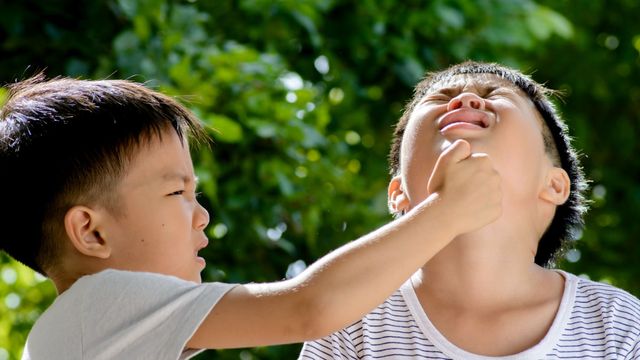
Can you even call yourself a parent if your child never hit you? Getting hit by our children can be a common experience in parenting. There are days when we might easily dismiss it as “bata kasi,” but there are also days when it can evoke a wide range of emotions–from frustration and shame to even despair.
The reality is that toddlers and young children often hit others, including their parents, at some point during their development. And it’s important for parents to understand the root causes of this behavior in order to manage and respond to it effectively. Here’s expert advice on understanding why children hit and what can parents do about it.
Why young children hit
Toddlers may hit their parents for various reasons, most of which are often related to their limited ability to manage and express their emotions. Here are some factors to consider:
- Toddlers often don’t know how to handle their feelings or express them in acceptable ways.
- Toddlers are still developing their language skills and impulse control, both of which are needed for them to manage their emotions effectively.
- Toddlers might hit to fulfill a need or achieve a desired outcome, “They want to get their needs met, often without thinking about the consequences.”
- Toddlers might hit to test the limits of what is acceptable. Discovering that hitting a parent is not the same as hitting a plush toy can be a part of their learning process.
- Toddlers might hit because they haven’t yet developed self-control. Impulse control is often nonexistent in toddlers, and they can express emotions such as happiness or boredom through hitting.
What to do when your child hits you
The way parents react and respond when their children hit them is crucial in managing the behavior and preventing future incidents. Here are a few tips:
Restrain your child
If your child responds positively to being restrained physically when they’re acting out, then you can hold him gently once they start hitting. You can calmly and firmly hug them without causing any pain, letting them know that you are holding them because you cannot allow them to hurt anyone.
However, if your child reacts negatively to being restrained, you might need to consider other options.
Remove your child from the situation
Another option is to remove your child from the situation. If you are in a public place, take your child to your car or a quieter area. At home, move them to a different room away from any other activity. Once removed, take a few minutes to help your child calm down and discuss the situation with them.
Establish clear rules
Create and communicate clear household rules regarding respect and acceptable behavior. Clearly state that any act of physical aggression, including hitting, kicking, or biting, is not allowed.
Try to frame your rules positively, such as saying, “Use respectful or soft touches” instead of “Don’t hit.” Whenever your toddler hits, you can firmly say, “No hitting. Hitting hurts,” to consistently communicate that hitting is painful and unacceptable.
Use consequences to enforce your rules
If your child continues to hit despite knowing the rules, it might be necessary to use consequences such as:
Time-out: This method removes your child from the situation and teaches them how to calm down, making it one of the most effective ways to discourage hitting.
Suspend privileges: Temporarily limiting access to favorite activities or toys can also be an effective discipline strategy.
Teach your child to say sorry: Use this opportunity to teach your children the importance of apologizing or making amends after hitting. You might ask them to draw a picture or do extra chores as a way to apologize.
Reinforce positive behavior
Actively look for times when your child is behaving well or engaging in positive behavior and praise them as a way to encourage them to avoid negative behaviors such as hitting. Reinforcing the behaviors that you want to see in your kids can increase the likelihood of them engaging in that behavior in the future.
Teach appropriate behaviors
Guide your children towards more acceptable behaviors, such as using “gentle hands” or expressing their feelings verbally instead of through physical actions, or instead of outright telling them to “don’t hit.” Helping children develop anger management techniques, such as deep breathing or engaging in a calming activity, can also be beneficial.
Avoid corporal punishments
Using corporal punishment, such as spanking, can confuse your child about why you are allowed to hit while they are not. Instead of discouraging hitting, spanking and similar punishments might actually increase your child’s aggression.
Children learn significantly through observation, so demonstrating and modeling how to handle emotions like anger and disappointment in socially acceptable ways is more effective than merely telling them how to behave. As noted in an article from Parents, “Children learn more about behavior from what they see you do, rather than what they hear you say.”
Seek professional help
For older children who tend to hit, or if you think that your young child is demonstrating extreme aggressiveness, it might be time to consider seeking professional help. Discuss your concerns with your child’s pediatrician to determine if an evaluation and specialized interventions are necessary.
While facing aggression from your child can be disheartening, understanding the reasons behind the behavior and responding appropriately can make a significant difference. Parents can use these strategies to effectively address and reduce aggressive behaviors in their children. Ultimately, the goal is not merely to stop the children from hitting, but to teach them how to express their feelings in healthy and acceptable ways.
Read here to learn how to handle your toddler’s aggressive behavior.
What other parents are reading

Lorem ipsum dolor sit amet, consectetur adipisicing elit, sed do eiusmod
Lorem ipsum dolor sit amet, consectetur adipisicing elit, sed do eiusmod