
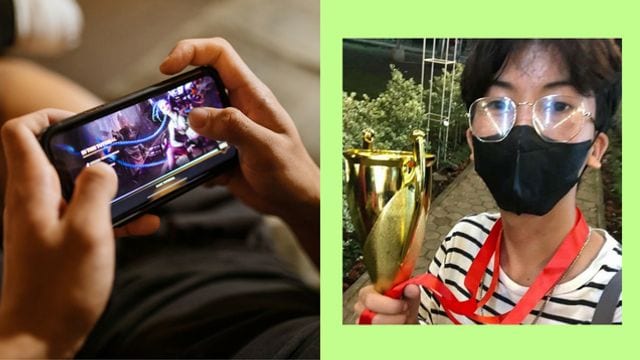
The stigma that gaming will never yield to something beneficial has slowly been debunked over the years, as the growth of the esports industry led to massive prize pools and viable professional careers for gamers, which ultimately allowed them to help their families.
However, other means for helping gamers were introduced.
A Grade 11 student named Israel was able to receive a scholarship program all thanks to Mobile Legends. He currently studies in Liceo de Cagayan University in Misamis Oriental, taking up a track related to computer engineering.
But of course none of this would've happened had Israel not ventured into the Land of Dawn.
"Nagsimula ako maglaro around Grade 8 po, tapos for fun lang dapat yun. Sama-sama sa mga cousin ko tapos pinagtatawanan po nila ako noon kase hindi ako marunong maglaro," related Israel to Spin.ph.
"Tapos dumating yung quarantine, yung COVID, doon nakapaglaro ako [nang] walang sagabal. Wala kasing school noon, tapos nakapagbatak ako, hanggang na-reach ko yung rank na Mythic."
READ ALSO: PHP 3.3M Tuition Fee! Vlogger's Teen Daughter Gets In To Prestigious US College
How gaming has changed his life
But besides the discount in his education, Israel recounted how MLBB has changed his life.
Like most gamers, Israel received the usual negative stigma about gaming from his parents.
"Against po sila sa paglalaro ko ng ML kasi hindi maiwasan magpuyat, tapos minsan nag-skip ako ng kain," he said.
RELATED: Playing 'Violent' Video Games Won't Necessarily Make Your Child A Violent Person
He added: "Diba naiiba yung pagtulog ko? Morning natutulog ako tapos gabi gising ako. Nasasabihan pa nga nila ako na 'aswang' kaso baliktad nga yung pagtulog ko. Tapos yung pagkain ko, minsan isang beses lang, dalawa, ganun."
But as he slowly garnered success through his passion for gaming, his parents became slowly convinced that, indeed, gaming was good for him.
"Hanggang nag-support na lang sila kasi may nage-gain na kasi ako, may nauuwi na ako. Minsan nauuwi ako, isang week hindi ako napapauwi, tapos pagbalik ko, may dala ng trophy," said Israel.
"Tapos yun, last year lang, ok na sa kanila kase may nage-gain na ako."
But beyond the parental support, Israel also gained new peers... as well as a boost in their MLBB careers as they were tapped by managers.
READ ALSO: Guess How Much The Tuition Fees Of These 7 Celebrity Kids Studying Abroad Reportedly Cost
Balancing gaming and studies
With the benefits that he received from Mobile Legends: Bang Bang, will this mean that Israel will have a lot of time to grind and perhaps follow all that with a pro esports career? Given the academic requirements needed, it would be difficult to balance both.
"Gusto kong sumali sa pro-scene, kaso mahirap kasi ang laki ng requirements tapos mababa lang yung rank ko. At the same time, hindi ako pwede mag-focus sa ML lang kasi nag-aaral din ako," said Israel.
He's keeping all his options open. "In the future if ever hindi ako maging pro player, yung dream probably is computer engineering pero hindi pa rin sure yung desisyon ko kase marami pang pwedeng pagpilian."
READ ALSO: Mom Of 4 Had Enough, So She Locks Herself In A Room To Play Video Games For One Day
Setting boundaries in playing video games
While playing video games may have benefits for other children, and violent video games are not proven to make your child a violent person, here are some tips on how you can help your child set boundaries, especially if it can affect their studies.
1. Remind them when they can play
It's important that you tell them that they can only play once their homework or assigned chores are done. Playing video games should be treated as a reward rather than an absolute right, according to Nancy M. Petry, PhD, a behavioral scientist.
2. Agree on a maximum play time for video games
According to the American Academy of Pediatrics, having 30 to 60 minutes of playing time is enough, especially during school days. Up to two hours of video games during non-school days or weekends is okay.
But if your child is 6 years old and below, it is advised to set a maximum of an hour of screen time on any device.
3. Make sure that you set the rules together
In case your child finds your rules too strict, or if you feel like you can adjust them, feel free to do so. In case your child breaks the rules repeatedly, provide them with a realistic and related punishment for playing video games. For example, banning them from playing for a few days, versus not giving them their allowance or not letting them see their friends. For more tips, read here.
This story originally appeared on Spin.ph. Minor edits have been made by the SmartParenting.com.ph editors.
What other parents are reading

Lorem ipsum dolor sit amet, consectetur adipisicing elit, sed do eiusmod
Lorem ipsum dolor sit amet, consectetur adipisicing elit, sed do eiusmod
