
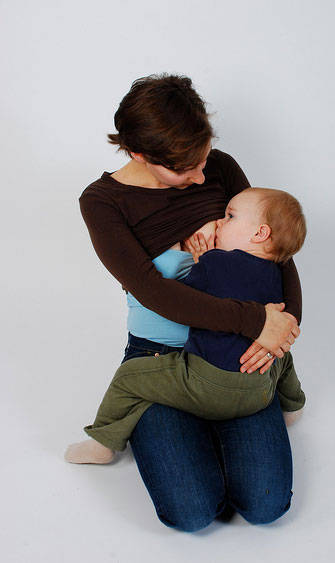
 The May 2012 TIME Magazine cover sparked a lot of discussions, both positive and negative, about attachment parenting as a parenting style. The article gave readers a better understanding of what attachment parenting is and how it can positively affect the growth of the child. The photograph of a mother breastfeeding her three-year-old son did its job to not only get the world’s attention towards attachment parenting, but it also put breastfeeding - and extended breastfeeding - into the limelight as well.
What is attachment parenting then? Attachment parenting (AP) as a style, as the name implies, focuses on creating a strong bond between parent and child where the child’s individual needs are met, which, in time, creates a relationship where parents eventually develop a knowledge and wisdom to make choices that are best for both the parent and the children. Advocates of AP believe that it brings out the best in not only the children but the parents as well.
Experts agree that these seven Bs define AP:
1. Birth Bonding
2. Breastfeeding
3. Babywearing
4. Bedding close to baby
5. Belief in the language value of your baby's cry
6. Beware of baby trainers
7. Balance
Dr. Bill Sears, who is known as the father of attachment parenting, writes a blog in reaction to the TIME Magazine article. He clarifies that “attachment parenting is not an all-or-nothing, indulgent style of parenting” just as the high impact cover photo shows. He shares that the seven baby B’s are tools to help parents and children get to know each other better, but they are not rules that cannot be modified to suit each family’s uniqueness and situation.
How relevant, then, is attachment parenting as a style to the Filipino parent? Is it something natural to us because of our culture? Is it a parenting style that we subscribe to or agree with? And what are Filipino moms’ thoughts about extended breastfeeding up to toddlerhood and beyond? This author interviewed a number of breastfeeding moms to find out.
[previous|page|next]
Mom of two with another one on the way, Aila Sim-Yonzon says that she is a very staunch advocate for breastfeeding up to the age of two. She has successfully breastfed both her children up to this age, and even a bit beyond since the younger proved a harder to wean. She shares though that it may be a little weird if breastfeeding continues on until four years old and older. She also shares that she and her husband support and agree with AP as a parenting style. They are very hands-on with the children, even if they have a yaya to help them. She also says they are lucky that their jobs allow them to be with the kids 24/7 as they work from home.
Pika Yonzon-Villafuerte, mom of a twelve year old and two month old is taking breastfeeding one step at a time. She says she regrets not having breastfed her first born but is making it her commitment to exclusively breastfeed her younger son up to 6 months first, but is open to breastfeeding up to the age of two. As for attachment parenting, she says it just feels right and appropriate. She also shares that to her, it is the most natural way of taking care of children.
Trina De Guzman-Garcia admits that she didn’t have the patience to breastfeed her first born but opted to be without a yaya, and care for her seven-year-old and her four-month-old infant on her own. She says that she takes pride and enjoys caring for them. She is currently breastfeeding her second child and believes in attachment parenting.
Mom to Amber, Jenny Orias-Arcellana breastfed up to 10 months and stopped only because her milk supply had waned. She also shares that extended breastfeeding is truly the choice of the mom and depends on her willingness to ‘make sacrifices’ for her child. Breastfeeding up to the preschool years and beyond does not sit well with her though. As for her parenting style, she still maintains a very hands-on approach as best as she can.
[previous|page|next]
Mom of two, Jackie De Vera-Lim shares that her goal with Kian, her first born, was to breastfeed up to a year old but ended up breastfeeding up to 15 months because it was difficult for him to switch to formula. She is hoping to breastfeed her newborn up to two years though, and even hopes to switch her son to breast milk if her supply permits. She believes that extended breastfeeding really is the choice of the mother but she should be prepared for the disapproval and judgment by other people if she opts to feed directly from the breast instead of pumping and giving it though bottle or by glass. She shares that unfortunately, we do not live in an ideal world and situations like these are things that mothers just have to face and accept.
As for her parenting style, she subscribes by the ‘whatever works best for your family’ approach and dislikes the idea of labeling. She frowns against parents that are very idealistic and judgmental about the ‘proper’ way to raise children so she supports that each family should find the style or mix of styles that will suit them best.
Mom of two Marnie Pulumbarit-Manicad breastfed her two daughters for a year each. She supports those that opt to do extended breastfeeding provided that their supply is ample enough. She also sees the benefits of extended breastfeeding to the child in terms of their growth and development. As a parent, she believes in striking a balance - she believes in really spending time with the children to get to know them, explore with them to broaden their views and instill good values, but she also values giving the children the space to learn and be independent individuals.
Rizza Reyes-Yenko is a mom of three young children. She breastfed her second son for 13 months and is currently breastfeeding her 6-month old daughter with hopes that she could extend her breastfeeding experience with her until natural weaning occurs. She also shares that she salutes those that subscribe to and practice attachment parenting and she has no negative thoughts and feelings about this parenting style.
[previous|page|next]
First time mom Judy Castillo-Neri plans to breastfeed her daughter for a year or two. She supports and salutes moms that opt to extend breastfeeding up to toddlerhood and beyond and shares that it really depends on the mutual relationship between the mom and child. As per her views on attachment parenting, she believes and supports it. She really believes in being a hands-on mom and looks forward to being there for her daughter as she goes through each of her milestones.
Tracy Dela Cruz-Borce is a mom of two school-age girls and practiced extended breastfeeding with both. She believes that so long as there is ample milk supply, then breastfeeding up to toddlerhood and beyond is fine. She believes in really being there for her kids and spending time with them, even if she is working. She does what she can to adjust her schedules to have quality time with them.
Generally speaking, and from what I learned from these great moms, attachment parenting as a parenting style is not alien to many Filipino moms and dads, and is in fact practiced by many in varying degrees. With the help of the extended family and yayas, attachment parenting is how Filipinos raise their children. The Filipino parenting style is one what focuses on a lot of touch and interaction between the caregiver (mom, dad, grandparents, or yayas) and the child. Co-sleeping, though discouraged by the American Association of Pediatrics due to the risk of SIDS, is still the norm of most Filipino families, whether it be due to one’s views and convictions or plain necessity because of lack of funding or space, or both. Lastly, touch and affection between parent and child is part and parcel of the culture of the Filipino, so children are never lacking them.
Attachment parenting may be misunderstood sometimes to be a very extreme and all-or-nothing style - especially in light of the recent TIME Magazine cover and article - but the reality of parenting is that it is unique to each family. We all find ways and means to raise good children and make family living work for our own life experiences. What is constant and what matters is how we get to know our children, and how we care for them and make a difference in their lives.
Sources:
http://www.askdrsears.com/topics/attachment-parenting/what-ap-7-baby-bs
http://www.askdrsears.com/topics/attachment-parenting
http://attachmentparenting.org/blog/2012/05/17/dr-sears-comments-on-time-magazines-attachment-parenting-cover-article/
Photo by Mothering Touch from flickr creative commons

Lorem ipsum dolor sit amet, consectetur adipisicing elit, sed do eiusmod
Lorem ipsum dolor sit amet, consectetur adipisicing elit, sed do eiusmod
