
All of us in the Philippines have most probably seen — and, for a great number of us, experienced — the devastation that can be brought about by heavy rains and floods. Just recently, Tropical Storm ‘Maring’ wreaked havoc on our country, and as I write this article, it’s ‘Nando’ that is bringing about heavy rains in Northern Luzon.
We experience this every year — tropical storms, typhoons and heavy monsoon rains come into the Philippines, causing heavy downpours of rain, which almost always results in floods, landslides and other disasters.
These in turn bring about emergency situations, and thousands of people are often displaced from their homes and seek shelter elsewhere, usually in evacuation centers. It is during emergencies like these that the importance of breastfeeding should be emphasized, along with the calls for donations of relief goods.
Why breastfeeding is important during emergencies
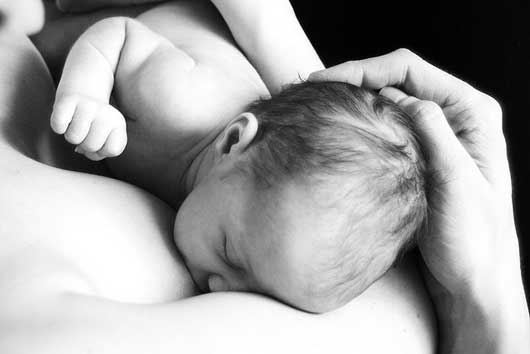
During typhoon-induced emergencies in recent years, such as those brought about by `Ondoy’, `Sendong’ and `Pablo,’ breastfeeding advocate Jenny Ong of “Chronicles of a Nursing Mom” wrote about the importance of encouraging mothers to continue breastfeeding their babies, and the need to educate the public about giving formula milk donations to relief centers.
Here are some important points to remember from Ms. Ong’s emergency-related posts, all of which you can read by clicking here:
• It is not true that stressed or malnourished moms cannot breastfeed. What is needed is support and education of the breastfeeding mothers in evacuation centers.
• Breast milk is clean, costs nothing and is always available. If you are breastfeeding mom who can donate breast milk, choose to do so instead of donating formula milk or milk in tetra packs or cans. However, breast milk donations must be given through the proper channels and at previously designated drop-off points.
• If you see any calls for milk formula donations, please take note that these are a violation of the Milk Code. The only way to donate legally is to give it straight to the Department of Health. However, we must remember that our countrymen who are in evacuation centers do not have access to a potable water source and cleaning supplies which are essential for making sure that the formula milk prepared is safe.
[previous|page|next]
Dr. Francesca “Zeka” To, a pediatrician, another breastfeeding advocate and co-founder of L.A.T.C.H. Philippines, recently wrote about how the public can help protect babies during emergencies on her blog, “House Calls.”
In her post, Dr. To explains why infant formula causes more harm than good during emergencies. With her permission, I will be quoting several portions of her article, as she has explained everything quite well in her own words.
As a medical doctor, Dr. To provides the following requirements for “safely feeding an infant with formula”:
1) access to a constant supply of formula
2) access to clean water
3) access to heating implements (proper preparation of formula requires heating of water to a certain temperature)
4) ability to clean feeding implements
However, she goes on to say: “As we know, evacuation centers are often crowded and have very limited water supply. Any available water is likely to be contaminated. Using this water to mix formula leads to diarrhea which, in situations like this, often leads to death.
When infant formula is included in every relief pack given out, it is made available even to mothers who are successfully breastfeeding. Why is this a problem? Mothers who are breastfeeding and displaced due to an emergency are often made to believe that the ‘stress’ from the emergency affects their ability to breastfeed; that their breast milk becomes insufficient and inadequate. They then end up giving formula to their healthy breastfed child.
The truth is that breastfeeding is especially protective in disaster situations. A mother’s breast milk will contain the same amount of calories, with the right proportion of protein and fat, regardless of the mother’s nutritional status. With breastfeeding there is no need to provide water, so exposure to deadly bacteria and contaminants is avoided.”
Some people may be asking these questions: “How about the mothers who are mix-feeding or those who are formula feeding? How will their babies survive without access to formula?”
Dr. To says that the “safest approach for mothers who are breastfeeding to any degree is to support them so they return to breastfeeding exclusively. So, mothers who have just recently weaned can be taught to re-lactate.”
[previous|page|next]
She also says that wet-nursing, i.e. having other breastfeeding mothers feed babies that are not their own, is another option that can be considered in emergency situations such as typhoons and floods.
“Some (very few) babies will need access to formula, and it is important that formula administration is supervised to ensure it is being done properly,” writes Dr. To. This is the same thing that Ms. Ong and other breastfeeding advocates emphasize.
Dr. To, Ms. Ong and other advocates of breastfeeding also want to point out that the Philippine government has already established an Infant and Young Child Feeding Protocol “for identifying those infants that are formula-dependent and monitoring their feedings. The government is responsible for acquiring the needed formula and has the proper channels for doing so.”
Considering all that has been mentioned earlier in this article, it can be said then that it is vital that formula be given only to those “who absolutely need it, and only under correct supervision,” as Dr. To says, “because unsupervised formula feeding often leads to diarrhea, which is the largest cause of death in these situations.”
Another question that may be raised in emergency situations may be: “Can we distribute powdered milk for older children?”
Dr. To’s answer: No. Her reasons: “Distributing any type of milk powder to the general public is not a good idea… because mothers will use this as infant formula, which is bad because 1) it isn’t suited for consumption by children younger than one year, and 2) it again exposes the infant to illness from contaminated water.”
A related article on Irin News supports Dr. To’s arguments — as well as Ms. Ong’s — as it mentions medical studies that show that formula donations have been linked to increased cases of diarrhea during crises.
At the end of the day — whether one is in an emergency situation or not — medical research shows that breast milk is definitely best, and so we must do what we can to spread the news. Who knows? Just by doing so, you may be able to save a baby’s life!
References:
• April 30, 2013. “Pressure in Philippines to end ban on formula milk aid” irinnews.org
• August 20, 2013. “Compilation of Emergency Posts – Again – No Formula Milk Donations Please!” www.chroniclesofanursingmom.com
• August 20, 2013. “Protecting Babies During Emergencies: How the Public can Help” drzeka.wordpress.com
Photo by blinzelblinzel via flickr creative commons

Lorem ipsum dolor sit amet, consectetur adipisicing elit, sed do eiusmod
Lorem ipsum dolor sit amet, consectetur adipisicing elit, sed do eiusmod
